 fannie@nbtorch.com
 +0086-0574-28909873




Introduction
In headlamp markets, product fit often matters more than broad feature lists. OEM and ODM services let brands shape beam patterns, battery systems, housing materials, and wearability around the needs of specific users, from industrial crews to outdoor athletes. This article explains how customized manufacturing supports clearer market positioning, faster development, and more efficient scaling without requiring in-house production infrastructure. It also shows where design control, component selection, and manufacturing expertise influence performance, durability, and brand differentiation, providing a practical foundation for understanding how tailored headlamp solutions move from concept to competitive product.
How OEM and ODM Services Strengthen Headlamp Products
The global illumination market demands increasingly specialized headlamp solutions, pushing brands to move beyond generic catalog offerings. Engaging with Original Equipment Manufacturer (OEM) and Original Design Manufacturer (ODM) services allows companies to engineer lighting tools tailored specifically to end-user environments, whether for subterranean mining, tactical operations, or ultra-endurance trail running. By leveraging external manufacturing expertise, brands can scale production efficiently while focusing internal resources on marketing and distribution.
The integration of advanced LED arrays and high-density power sources requires sophisticated assembly capabilities that most brands cannot maintain in-house. Utilizing established manufacturing partners grants access to state-of-the-art production lines capable of handling complex micro-electronics and precision-molded housings without the massive capital expenditure of building a dedicated facility.
Why Custom Positioning Matters
Custom positioning is no longer a luxury but a fundamental requirement for market penetration. A headlamp designed for industrial mechanics requires vastly different specifications—such as a broad 120-degree flood beam and chemical-resistant polycarbonate housing—compared to a tactical headlamp requiring a focused 10,000-candela spot beam and aerospace-grade 6061-T6 aluminum construction. By utilizing OEM and ODM services, brands can precisely dictate these material and optical parameters to align with their target demographic.
This granular control over the bill of materials ensures the final product directly addresses the specific pain points of the intended user base. Furthermore, custom positioning allows brands to establish unique selling propositions based on proprietary user interfaces or specific weight-to-output ratios. For example, dictating a maximum weight threshold of 85 grams including the battery for a trail-running headlamp requires meticulous component selection that only a dedicated manufacturing partner can facilitate.
How OEM and ODM Speed Product Development
Speed to market is a critical metric in the rapidly evolving consumer electronics sector. Engaging an ODM can compress the product development lifecycle from a traditional 12 to 18 months down to a mere 3 to 6 months. This acceleration is achieved by leveraging pre-engineered circuit boards, existing tooling, and validated optical designs, which the brand can then customize with bespoke exterior housings or specific firmware adjustments.
ODMs maintain extensive libraries of pre-certified components, bypassing the lengthy prototyping and regulatory testing phases typically associated with ground-up development. Conversely, while OEM projects inherently require longer lead times due to custom tooling and fresh printed circuit board (PCB) layouts, experienced manufacturing partners utilize rapid prototyping technologies like Stereolithography (SLA) and multi-axis CNC machining to expedite the validation phase. This allows brands to receive functional aesthetic prototypes within 14 to 21 days of finalizing the CAD models, significantly streamlining the iteration process.
What OEM and ODM Mean for Headlamp Products
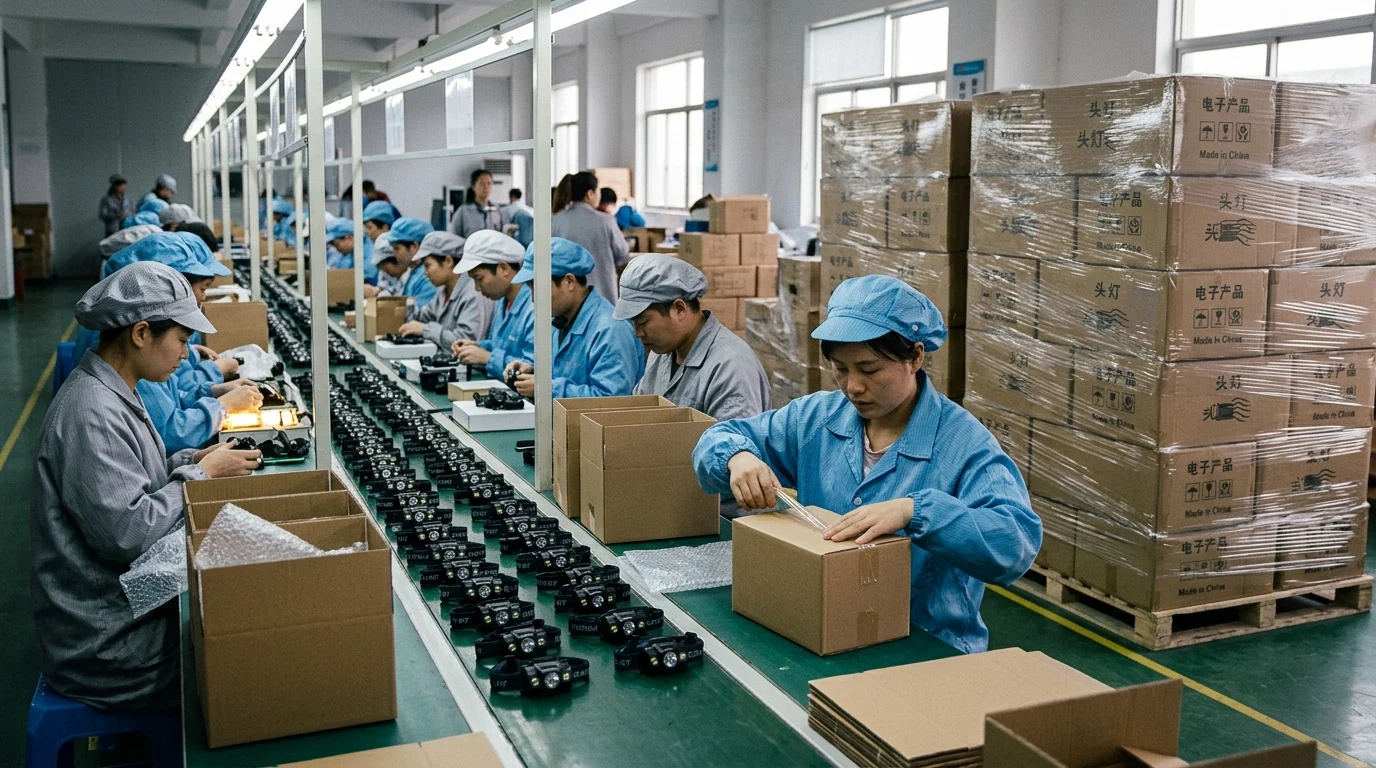
Navigating the manufacturing landscape requires a clear understanding of the structural and legal distinctions between OEM and ODM engagements. In the context of headlamp production, these two models dictate the flow of intellectual property, the allocation of engineering responsibilities, and the overall capital investment required to initiate mass production. Selecting the appropriate manufacturing model is a foundational decision that impacts every subsequent phase of the product lifecycle, from initial conceptualization to final quality assurance.
How to Define OEM and ODM Responsibilities
In an OEM relationship, the purchasing brand assumes total responsibility for the product’s design, engineering, and intellectual property. The brand provides the manufacturer with comprehensive technical data packages, including PCB schematics, optical lens prescriptions, and 3D CAD files for the housing. The OEM factory acts strictly as a build-to-print facility, executing the manufacturing process according to the provided specifications.
Conversely, an ODM relationship shifts the bulk of the engineering burden to the manufacturer. The ODM develops and owns the foundational design of the headlamp, offering it to brands as a white-label product or a customizable platform. The brand’s responsibility is typically limited to specifying cosmetic alterations, firmware tweaks, or branding elements, relying on the ODM’s internal research and development team to handle the core electromechanical engineering.
Key Trade-Offs Between OEM and ODM
The primary trade-offs between OEM and ODM models revolve around capital expenditure, time, and exclusivity. OEM projects demand significant upfront Non-Recurring Engineering (NRE) costs, often ranging from $15,000 to $50,000 for complex multi-cavity injection molds and custom optical tooling. However, this investment secures total exclusivity and absolute control over the product’s architecture.
ODM projects drastically reduce NRE costs, frequently falling between $0 and $5,000, as the brand utilizes the factory’s existing tooling. The trade-off is a lack of exclusivity; the ODM may sell the identical core hardware to competing brands, differentiated only by colorways and logos. Additionally, OEM models allow for aggressive unit cost optimization at high volumes, whereas ODM unit costs are often fixed by the manufacturer’s standardized component sourcing networks.
Essential OEM vs ODM Comparison Points
To systematically evaluate the appropriate manufacturing path, brands must weigh these variables against their strategic objectives. The following table delineates the core operational differences between the two methodologies in headlamp manufacturing.
| Comparison Metric | Original Equipment Manufacturer (OEM) | Original Design Manufacturer (ODM) |
|---|---|---|
| Intellectual Property | Owned entirely by the purchasing brand | Owned by the manufacturer (factory) |
| NRE Tooling Costs | High ($15,000 – $50,000+) | Low to Zero ($0 – $5,000) |
| Time to Market | Extended (9 to 18 months) | Rapid (3 to 6 months) |
| Exclusivity | Absolute | Limited (Shared base platforms) |
| Engineering Burden | High (Brand provides all schematics) | Low (Factory provides validated designs) |
Technical Specifications and Quality Control for Custom Headlamps
Establishing rigorous technical specifications and quality control protocols is paramount when producing high-performance headlamps. The reliability of illumination gear is often a matter of occupational safety for industrial users or survival for extreme outdoor enthusiasts. Consequently, manufacturing partners must possess the metrology equipment and procedural discipline required to validate complex optical, thermal, and electrical parameters consistently across high-volume production runs.
How to Evaluate Performance Requirements
Evaluating performance requirements begins with defining the core electro-optical specifications. Brands must specify the exact LED binning requirements—such as mandating emitters with a Color Rendering Index (CRI) exceeding 90 for medical or detailed electrical inspection applications where color differentiation is critical.
Thermal management is equally critical; high-output headlamps generating over 1,000 lumens require precise thermal step-down algorithms in the firmware and physical heat sinks to keep external surface temperatures below 48°C (118°F) to prevent user injury. Power supply specifications must dictate battery chemistry and capacity, such as mandating UN38.3 certified 18650 or 21700 lithium-ion cells with a minimum capacity of 3400mAh, ensuring reliable discharge rates even in sub-zero operational environments.
Manufacturing and Quality Assurance Checkpoints
Robust Quality Assurance (QA) and Quality Control (QC) checkpoints must be integrated throughout the assembly process. Incoming Quality Control (IQC) should sample all raw components, utilizing integrating spheres to verify LED flux and color temperature before surface mounting. During In-Process Quality Control (IPQC), automated optical inspection (AOI) machines verify solder joint integrity on the printed circuit boards.
Final Quality Control (FQC) requires rigorous environmental stress screening. This includes subjecting a statistical sample of the production lot to 2-meter drop tests onto concrete and utilizing vacuum chambers to verify ingress protection (IP) ratings. Reputable manufacturers maintain a strict Acceptable Quality Limit (AQL), targeting a major defect rate of less than 0.65% and a minor defect rate below 1.5% for each outbound shipment.
Compliance and Certification Factors
Compliance with international standards is non-negotiable for global distribution. Custom headlamps must adhere to recognized testing protocols to validate marketing claims. Furthermore, products destined for the European market require CE and RoHS certifications, mandating the restriction of hazardous substances in the PCB manufacturing process.
For specialized industrial applications, such as petrochemical refineries or underground mining, headlamps must achieve ATEX or IECEx certification for explosive atmospheres. Achieving ATEX Zone 0 compliance requires specific engineering interventions, such as utilizing anti-static housing materials with a surface resistance of less than 10^9 ohms and incorporating intrinsically safe circuit designs that cap maximum electrical energy transfer to prevent spark ignition.
| ANSI/PLATO FL 1 2019 Standard Metric | Testing Methodology / Parameter | Measurement Unit |
|---|---|---|
| Light Output | Total luminous flux measured in an integrating sphere at 30 to 120 seconds | Lumens (lm) |
| Beam Distance | Distance where peak beam illuminance equals 0.25 lux | Meters (m) |
| Run Time | Time until output drops to 10% of the initial value | Hours / Minutes |
| Peak Beam Intensity | Maximum luminous intensity measured at the center of the beam | Candela (cd) |
| Impact Resistance | Drop height onto concrete with no functional or structural damage | Meters (m) |
How to Manage Sourcing, Costs, and Supply Chain
Effective management of sourcing, costs, and the broader supply chain is critical to maintaining margins in the competitive illumination sector. The bill of materials (BOM) for a modern headlamp is highly globalized, relying on semiconductor fabricators in Taiwan, lithium cell manufacturers in Japan or Korea, and precision injection molding facilities in mainland China. Orchestrating this network requires meticulous planning to mitigate currency fluctuations, component shortages, and logistical bottlenecks.
Main Cost Drivers in OEM and ODM Projects
Understanding the primary cost drivers is essential for accurate financial forecasting. In a high-performance headlamp, the LED emitters and their associated optics typically account for 15% to 20% of the total BOM cost. Custom lithium-polymer battery packs and advanced power management integrated circuits (PMICs) represent the largest expense, often consuming 25% to 30% of the budget.
The external housing, particularly if utilizing CNC-machined aerospace aluminum rather than injection-molded ABS plastic, accounts for another 10% to 15%. Minimum Order Quantities (MOQs) heavily influence unit pricing; ODMs may accept MOQs as low as 1,000 units by utilizing shared components, whereas OEM projects generally require MOQs of 5,000 to 10,000 units to amortize the setup costs of custom assembly lines and bespoke component sourcing.
Supplier Selection, Capacity, and Logistics
Selecting the right supplier involves evaluating their production capacity, facility certifications, and logistical infrastructure. A tier-one headlamp manufacturer should hold ISO 9001:2015 certification for quality management and ISO 14001 for environmental compliance. Evaluating capacity is crucial; a factory must demonstrate the ability to scale production to 50,000 or 100,000 units per month to accommodate holiday demand spikes without compromising quality.
Logistics planning must account for the substantial difference in freight costs and transit times. Sea freight typically costs between $1.50 and $3.00 per kilogram with a 30 to 45-day transit time, making it ideal for high-volume inventory replenishment. Conversely, air freight, essential for rapid product launches or critical stockouts, can escalate costs to $6.00 to $10.00 per kilogram, significantly impacting the landed cost of the product.
Process Steps to Control Procurement Risk
Mitigating procurement risk requires proactive process engineering. Brands must insist on dual-sourcing strategies for critical components like microcontrollers and PMICs to prevent production halts caused by single-point supply chain disruptions.
Establishing buffer stock agreements with the manufacturer ensures that long-lead-time components—which can require 12 to 16 weeks for procurement—are held in inventory, reducing the overall production lead time to a manageable 45 to 60 days. Furthermore, implementing strict vendor-managed inventory (VMI) protocols and executing routine third-party audits of the factory’s sub-tier suppliers provides visibility into the deeper supply chain, safeguarding against unauthorized material substitutions that could compromise the headlamp’s performance or safety certifications.
How to Choose the Right OEM or ODM Path
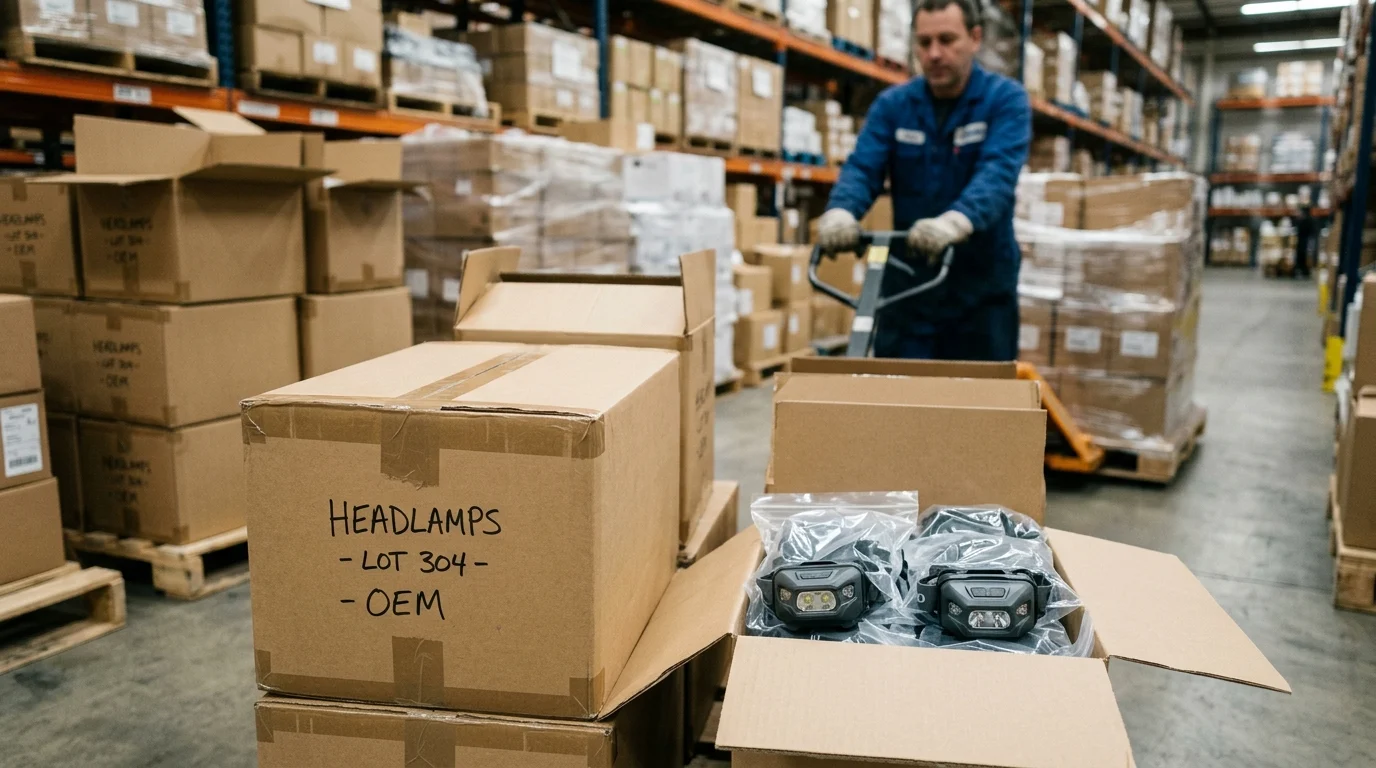
Determining the optimal manufacturing path requires a rigorous assessment of internal capabilities, market dynamics, and financial resources. The decision between pursuing an OEM or ODM strategy is rarely binary; it often depends on the specific product tier being developed within a brand’s broader portfolio. By aligning the chosen manufacturing model with overarching business objectives, companies can optimize their capital deployment and maximize their competitive advantage in the illumination market.
How to Match Customization Strategy to Business Goals
Matching the customization strategy to business goals requires a clear understanding of the target market segment and anticipated return on investment (ROI). For a startup or a brand entering a highly price-sensitive segment, an ODM strategy minimizes upfront capital risk and allows for rapid market entry. This approach is highly effective for testing market viability or filling portfolio gaps with mid-tier products where extreme differentiation is not strictly necessary.
Conversely, established brands aiming for the premium sector—where products retail for over $150—must justify their pricing through proprietary technology and unique industrial design. In these scenarios, the OEM model is mandatory. If a brand’s financial modeling dictates a target gross margin exceeding 40% on a flagship model, the heavy initial investment in OEM tooling is amortized over the product’s multi-year lifecycle, ultimately yielding higher profitability and strengthening brand equity through exclusive intellectual property.
Decision Criteria for Choosing OEM or ODM
The final decision criteria hinge on a matrix of timeline constraints, IP sensitivity, and internal engineering bandwidth. If a brand faces a strict six-month launch window to meet a seasonal retail reset, the ODM path is often the only viable option due to the compressed development cycle. However, if the product incorporates highly sensitive intellectual property, such as a patented dual-beam optical lens or proprietary battery-swapping architecture, the OEM model is critical to legally isolate the design and prevent the factory from integrating those innovations into their white-label catalog.
Additionally, brands must honestly assess their internal engineering capabilities. An OEM project requires a dedicated team of mechanical, electrical, and optical engineers to generate the requisite technical data packages and troubleshoot design-for-manufacturing (DFM) issues. If a brand lacks this specialized internal bandwidth, partnering with an ODM that provides comprehensive turnkey engineering services is the most pragmatic approach to ensuring a successful product launch and sustainable lifecycle management.
Key Takeaways
- The most important conclusions and rationale for Headlamp Usage
- Specs, compliance, and risk checks worth validating before you commit
- Practical next steps and caveats readers can apply immediately
Frequently Asked Questions
What is the difference between OEM and ODM for headlamps?
OEM builds your headlamp from your design files and specs. ODM offers an existing platform you can customize with branding, housing details, or firmware changes.
Which model is faster for launching a custom headlamp?
ODM is usually faster. Using pre-engineered boards, tooling, and validated optics can shorten development to about 3 to 6 months.
When should I choose OEM for a headlamp project?
Choose OEM when you need unique optics, materials, beam patterns, or full IP ownership. It suits specialized markets like mining, tactical, or trail running.
Can OEM or ODM services customize headlamp performance for different users?
Yes. You can tailor beam angle, brightness, housing material, battery setup, weight, and interface to fit industrial, tactical, or outdoor use.
How quickly can I get a prototype for a custom headlamp?
For OEM projects, functional prototypes can often be delivered in about 14 to 21 days after final CAD approval, depending on complexity.
Post time: May-14-2026


