 fannie@nbtorch.com
 +0086-0574-28909873



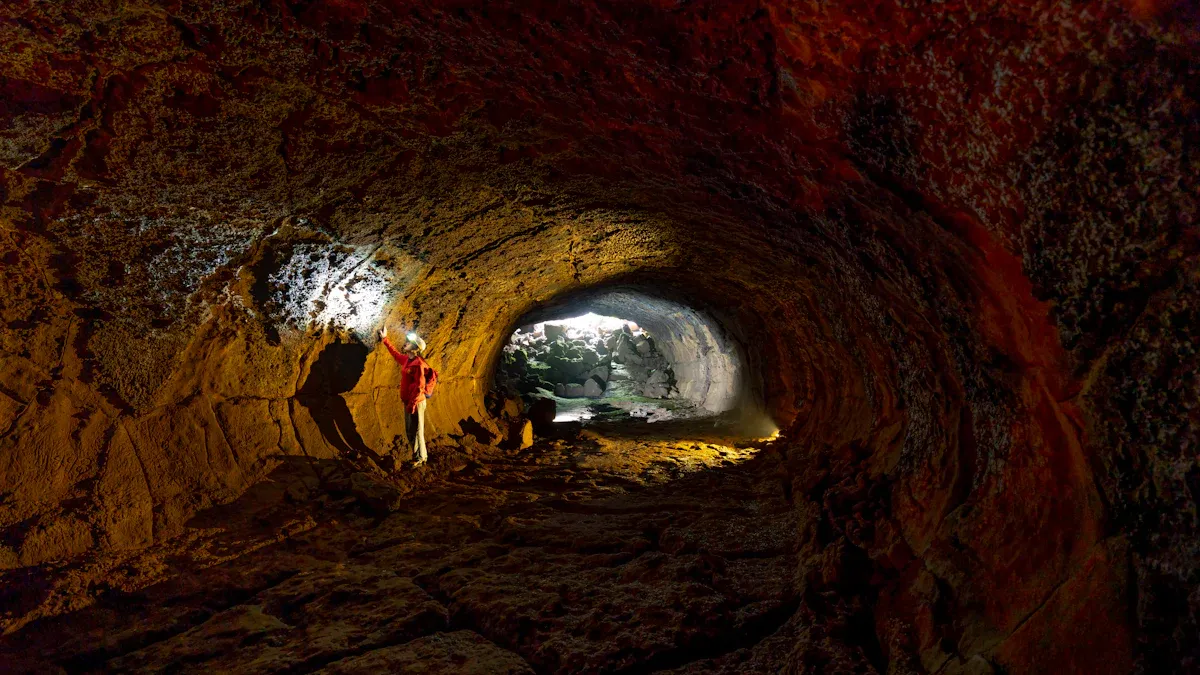
Reliable illumination is critical for safety in cave exploring. The absolute necessity of durability and waterproofing becomes clear in challenging underground environments. A headlamp requires specific features to withstand the rigors of these dark, damp spaces. Explorers depend on consistent light and robust construction. Only a truly suitable headlamp provides reliable performance and peace of mind for safe cave exploring.
Key Takeaways
- A headlamp is very important for safety when exploring caves. It must be strong and waterproof.
- Look for headlamps with high IPX ratings, like IPX7 or IPX8. These ratings mean the headlamp can handle water, even if it goes underwater for a short time.
- Choose headlamps made from tough materials. They should be able to survive bumps and drops in a cave.
- Rechargeable batteries are usually best for cave exploring. They work well in cold places and last longer.
- Always clean your headlamp after each trip. Check it often for any damage to keep it working well.
Why Durability and Waterproofing are Essential for Cave Exploring
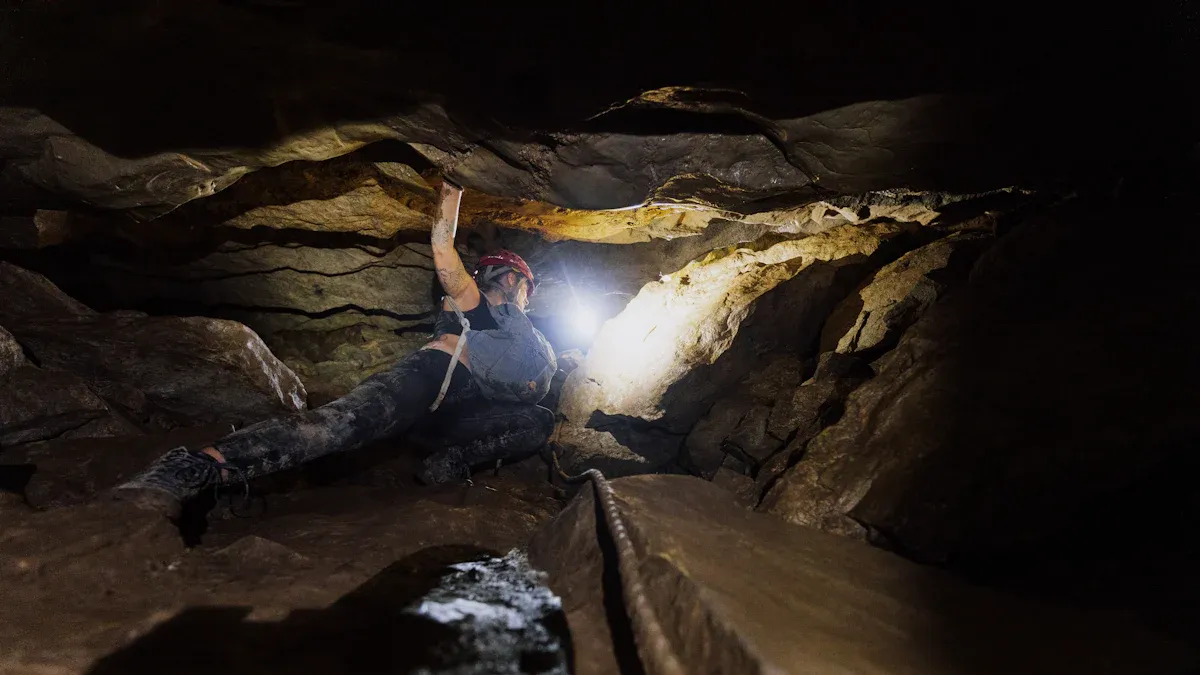
Headlamps serve as a caver’s primary lifeline underground. Their ability to withstand harsh conditions directly impacts safety and mission success. Durability and waterproofing are not optional features; they represent fundamental requirements for any lighting device used in subterranean environments.
Unique Challenges of the Cave Environment
Caves present an array of extreme conditions that test equipment limits. Constant moisture, ranging from dripping water to full submersion, is a pervasive factor. Cavers often navigate through mud, silt, and abrasive rock surfaces. These elements can easily damage delicate electronics or compromise seals. Temperatures can fluctuate significantly, and humidity levels consistently remain high. Tight passages and accidental drops also expose headlamps to considerable impact forces. Equipment must endure these relentless environmental assaults to function reliably.
Risks of Headlamp Failure Underground
A headlamp failure underground creates immediate and severe hazards. Loss of illumination can lead to complete disorientation in absolute darkness. Cavers cannot identify safe paths, avoid obstacles, or read maps without light. This significantly increases the risk of falls, injuries, or becoming lost. A malfunctioning headlamp also hinders communication and rescue efforts. In an environment where visibility is zero without artificial light, a failed headlamp transforms a challenging exploration into a life-threatening situation. Reliable equipment ensures cavers maintain their ability to see and navigate safely.
Key Durability Features for Cave Exploring Headlamps
A headlamp’s ability to withstand the harsh underground environment directly correlates with its design and material choices. Manufacturers engineer these specialized lights to endure physical impacts, extreme climatic conditions, and corrosive elements. Understanding these key durability features helps cavers select equipment that offers reliable performance and longevity.
Impact Resistance and Construction Materials
Headlamps for cave exploring demand exceptional impact resistance. Manufacturers often use robust materials to construct these devices. For instance, Nitecore’s HC70 headlamp features an all-metal battery case and aero-grade aluminum alloy with a HAIII military-grade hard-anodized finish. This construction provides 1.5 meters of impact resistance. Similarly, the FreasyGears HS6R headlamp uses aero-grade aluminum T6061 for extreme rigidity and 2-meter impact resistance. Beyond specific models, a strong outer shell, often made from polycarbonate or fiberglass, effectively absorbs impact and protects against falls or collisions with rocks. Industry standards also reflect this need. ATEX certified headlamps, designed for hazardous environments, frequently incorporate ‘Reinforced Housing’ to shield internal electronics and battery compartments. These headlamps often achieve a ’1–2 meters drop-rated’ impact resistance, a common benchmark in industrial settings.
Performance in Extreme Temperatures and Humidity
Caves present a unique challenge with their fluctuating temperatures and consistently high humidity. A headlamp must maintain optimal performance across a wide thermal range. Extreme cold can reduce battery efficiency, while high heat can stress electronic components. High humidity levels also contribute to internal condensation, potentially short-circuiting unprotected circuits. Manufacturers design headlamps with sealed compartments and specialized materials to prevent these issues, ensuring consistent light output regardless of the environmental conditions.
Corrosion Resistance Against Water and Minerals
The subterranean environment contains various corrosive elements. Water, often laden with minerals, mud, and acidic compounds, can quickly degrade unprotected metals and plastics. Headlamps require materials and coatings that resist corrosion. Anodized aluminum, stainless steel components, and high-grade plastics prevent rust and material breakdown. Effective sealing also stops corrosive substances from reaching sensitive internal parts. This resistance ensures the headlamp’s structural integrity and electrical functionality throughout its lifespan in cave exploring.
Understanding Waterproofing Ratings for Cave Exploring
Cavers rely on their headlamps to function flawlessly in wet, challenging environments. Understanding waterproofing ratings is crucial for selecting a headlamp that withstands the unique conditions found underground. These ratings provide a standardized measure of a device’s resistance to water ingress.
Decoding IPX Standards for Headlamps
IP ratings, or Ingress Protection ratings, are standardized codes from the International Electrotechnical Commission (IEC). These codes classify the protection level of electrical equipment enclosures against foreign objects like dust and moisture. The rating uses two digits: the first digit indicates dust protection (0-6), and the second digit indicates moisture protection (0-8). A higher number signifies greater protection. IPX ratings are a special case where ‘X’ indicates no specific dust protection rating, focusing solely on moisture protection. For example, an IPX5 rating means a device is protected against low-pressure jets of water but does not have a specific dust protection rating.
The following table details the various levels of protection:
| Protection Level | Dust Protection Description | Moisture Protection Description |
|---|---|---|
| 0 | No protection | No protection |
| 1 | Protects against objects larger than 50mm | Protects against dripping water |
| 2 | Protects against objects larger than 12mm | Against vertically dripping water |
| 3 | Protects against objects larger than 2.5mm | Against spraying water |
| 4 | Protects against objects larger than 1mm | Against splashing water |
| 5 | Protects against dust penetration | Against low-pressure jets of water |
| 6 | Dust tight | Against high-pressure jets of water |
| 7 | N/A | Against immersion in water (up to 30 minutes at a specified depth) |
| 8 | N/A | Against prolonged submersion in water |
When comparing IPX ratings to full IP ratings, such as IP68, the distinction becomes clear. An IPX8 rating focuses exclusively on water resistance, indicating protection against prolonged submersion. An IP68 rating, however, provides both dust-tight protection (level 6) and protection against prolonged submersion (level 8).
| Aspect | IPX8 Rating | IP68 Rating |
|---|---|---|
| Water Resistance | Beyond 1 meter depth | Beyond 1 meter depth |
| Depth Variability | Manufacturer specified | Manufacturer specified |
| Duration of Immersion | Varies (30 mins to 4+ hours) | Varies (30 mins to 4+ hours) |
| Dust Resistance | No specific dust resistance | Dust-tight protection (highest level) |
| Dust Ingress | Not applicable | Prevents dust particles from entering device |
| Typical Products | Underwater cameras, waterproof speakers | Smartphones, smartwatches, fitness trackers, etc. |
Minimum Recommended IPX Rating for Caving
Caves are inherently wet environments, making a high IPX rating non-negotiable for headlamps. A headlamp must withstand various forms of water exposure, from dripping water to accidental submersion. Manufacturers perform specific tests to certify a headlamp with a particular IPX rating, ensuring its reliability.
For instance, IPX4 testing involves subjecting devices to water splashes from all directions for a specified duration, mimicking rain conditions. During an IPX4 test, the headlamp is positioned on a griddle and continuously sprayed from all directions for a minimum of 5 minutes using a rotating hoop equipped with spray nozzles. The headlamp must show no damage whatsoever after this procedure to pass. IPX6 testing requires devices to withstand powerful water jets sprayed from particular angles. For IPX7 testing, devices are submerged in water up to 1 meter deep for 30 minutes to assess for any leaks.
Given the unpredictable nature of underground environments, a minimum IPX7 rating is generally recommended for headlamps used in Cave Exploring. This rating ensures the headlamp can survive temporary submersion, a common occurrence when navigating through puddles or shallow streams. For more demanding conditions, higher ratings offer enhanced protection.
Real-World Waterproofing in Cave Exploring Scenarios
The practical application of IPX ratings becomes evident when considering real-world scenarios in caves. Different levels of water exposure demand specific protection.
- IPX6: Protection against powerful water jets (high-pressure), suitable for scenarios with heavy spray.
- IPX7: Protection against immersion in water up to 1 meter for 30 minutes, applicable for temporary submersion.
- IPX8: Protection against continuous immersion under controlled pressure, for prolonged or deeper submersion.
For heavy spray in caves, an IPX6 rating is required. This means a device must withstand a 100-liter-per-minute jet at 15 psi for several minutes. When temporary submersion is a possibility, an IPX7 rating ensures protection, allowing immersion in one meter of water for 30 minutes. For continuous and deeper submersion, an IPX8 rating becomes necessary. This rating allows for long-term immersion at specified depths, such as 60 meters for a GoPro, at pressures up to 87 psi. IPX8 is suitable for submersion deeper than 1 meter, with the exact depth and duration specified by the manufacturer. This rating is crucial for devices used near water bodies or where prolonged exposure to water is anticipated, directly addressing submersion scenarios in caves. Choosing a headlamp with an appropriate IPX rating directly correlates with the level of water exposure anticipated during a caving expedition, ensuring reliable illumination when it matters most.
Essential Performance Features for Cave Exploring
A headlamp‘s core function is to provide light. However, for the demanding environment of underground exploration, specific performance features elevate a headlamp from a simple light source to an indispensable safety tool. Cavers rely on these characteristics for effective navigation and prolonged use.
Brightness, Beam Patterns, and Light Modes
Optimal illumination is paramount in dark cave systems. Headlamps offer varying brightness levels, measured in lumens, allowing cavers to adjust light output based on their immediate needs. Different beam patterns also serve distinct purposes. A focused spot beam penetrates deep into passages, revealing distant features. A wide flood beam illuminates the immediate surroundings, aiding in close-up tasks and general awareness. Many headlamps combine these, offering a mixed beam for versatility. Multiple light modes, including low, medium, high, and sometimes a red light option, conserve battery life or preserve night vision. A strobe mode can also serve as an emergency signal.
Battery Life, Types, and Power Management
Consistent power is crucial for extended underground trips. Headlamps must offer reliable battery life. Different battery types present distinct advantages and disadvantages for cave environments:
| Battery Type | Pros | Cons | Typical Life |
|---|---|---|---|
| Li-ion | High energy density, longer lifespan, faster charging | Initial cost, requires charging mechanism | Several hours on a single charge (light mode/output dependent) |
| Alkaline | Widely available, easy to replace, no charging mechanism | Shorter lifespan, not environmentally friendly (disposal issues) | Shorter run times, generally a few hours (light mode/output dependent) |
| NiMH | Environmentally friendly, long lifespan, rechargeable | Slightly longer charging times than Li-ion, gradual charge loss over time | A few hours per charge, suitable for moderate use scenarios |
Rechargeable and lithium battery-powered products generally perform better in cold conditions. Cavers should avoid alkaline battery-powered products when facing cold weather. Adventurers often keep batteries warm by storing them in layers or sleeping bags to mitigate cold’s impact on battery life. Effective power management systems, including battery indicators and regulated output, ensure consistent light until the battery depletes.
Comfort, Fit, and Ergonomics for Extended Use
Cavers wear headlamps for many hours, making comfort a critical factor. An ergonomic headband design distributes weight evenly. It adjusts securely without creating pressure points. This design is crucial for comfortable wear over extended periods. A redesigned headband also reduces the contact area between the headband and the skin. This contributes to a lighter and cooler fit, enhancing comfort during prolonged use. A well-fitting headlamp remains stable during movement, preventing distractions and ensuring the light stays directed where needed.
User-Friendly Controls for Cave Exploring
Operating a headlamp in the challenging cave environment demands intuitive controls. Cavers often wear thick gloves, and complete darkness makes finding small buttons difficult. Therefore, headlamp manufacturers design controls for ease of use under these demanding conditions.
Headlamps feature large, easily accessible buttons. These buttons remain operable even when cavers wear gloves. This is crucial for cold environments or when hands are muddy. The Princeton Tec Axis Li headlamp exemplifies this design philosophy. It features an ambidextrous design. This allows cavers to orient controls for either left or right-hand access. It makes the headlamp glove-friendly and easy to operate with either hand.
Other models prioritize simplicity. The Petzl Actik CORE offers a straightforward single-button design. This allows effortless cycling through lighting modes. It also includes a phosphorescent reflector. This makes the headlamp easy to locate in the dark. Some headlamps, like those with Black Diamond’s PowerTap technology, enable quick brightness adjustments by tapping the headlamp’s side. While innovative, this feature can sometimes be overly sensitive.
An intuitive interface with convenient buttons and a responsive on/off switch ensures easy control in the dark or with gloves. Some advanced models even feature a gesture sensor. This enables hands-free control. Such innovation enhances user-friendliness. These design choices ensure cavers can adjust their illumination quickly and efficiently, maintaining focus on their surroundings.
Top Recommended Headlamps for Cave Exploring
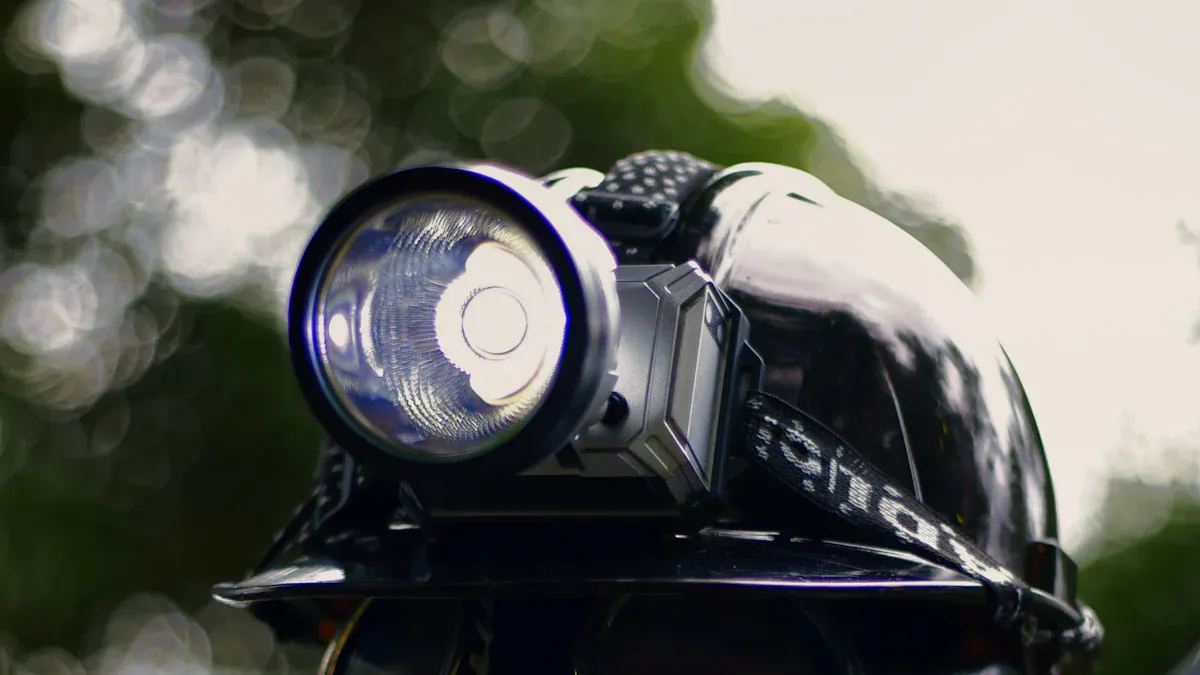
Choosing the right headlamp significantly impacts safety and efficiency underground. Cavers require specific features tailored to the unique demands of subterranean environments. This section explores top recommendations across different price points, ensuring every explorer finds a suitable light source.
Professional-Grade Options for Serious Cavers
Serious cavers demand the highest performance from their equipment. Several professional-grade headlamps meet these rigorous standards. Scurion, a Swiss-made brand, is widely considered among the best. Marble Mountain Lights, specifically the Manley 20, offers a bright and efficient dual-LED light at an economical price point. It features calculated run-times and lumen outputs based on 7000 mAh battery packs, with ‘hybrid’ and ‘flood’ modes. Little Monkey produces dive-rated options like the Rude Nora 3, which uses two Cree XP-L2 emitters for spot and focused flood beams. The Filthy Edna 2 offers similar build quality with a single XP-L2 emitter. For those with older Petzl Duo models, the CustomDuo module provides a high-performing upgrade. The v42 Omni CustomDuo module, combined with a pre-2018 Petzl Duo housing, creates a powerful AA battery-powered headlamp, offering good value.
Robust Mid-Range Headlamps for Cave Exploring
Mid-range headlamps strike a balance between performance and cost. These models offer significant durability and waterproofing suitable for regular use without the premium price of professional-grade units. They typically feature robust construction materials, such as high-grade plastics or aluminum alloys, providing good impact resistance. Cavers can expect an IPX7 or IPX8 rating, ensuring protection against submersion. These headlamps also provide multiple brightness settings and reliable battery life, making them suitable for various underground scenarios.
Reliable Budget-Friendly Choices for Caving
For occasional caving trips, reliable budget-friendly headlamps are available. While some top-tier models, like the Zebralight H600w Mk IV, offer amazing brightness, a wide beam, and unmatched battery life with a “bomber metal casing” and waterproof design, their high cost often includes separate battery and charger purchases. Budget-friendly options prioritize essential features. They provide sufficient brightness for navigation and feature adequate waterproofing, typically IPX6 or IPX7. These headlamps focus on core functionality and durability for less demanding explorations. They offer a practical entry point for new cavers.
Maintenance for Longevity in Cave Exploring
Proper maintenance significantly extends a headlamp‘s lifespan. It ensures reliable performance during critical underground expeditions. Cavers must adopt consistent care routines for their equipment. This proactive approach prevents unexpected failures and maintains optimal functionality.
Post-Caving Cleaning and Drying Procedures
After each trip, cavers must thoroughly clean their headlamps. This removes mud, grit, and mineral deposits. For cleaning non-submersible equipment, conventional cleansers like Woolite® detergent or Dawn® dish soap are effective. These agents help remove sediments and debris. After cleaning, cavers should rinse the equipment thoroughly with clean water. It is crucial to allow all equipment to dry completely before its next use. Proper drying prevents corrosion and mildew.
Battery Care and Storage for Optimal Performance
Correct battery care is essential for headlamp longevity. For long-term storage of rechargeable headlamp batteries, cavers should keep them at a partial charge in a cool place. They must store them away from direct sunlight or other heat sources. Storing fully charged batteries for extended periods can lead to faster degradation. Completely discharged batteries may enter a deep discharge state from which they cannot recover. Cavers should remove batteries from headlamps when not in use for more much than two weeks. This prevents leakage and self-discharge. Store headlamps and spare batteries in a cool, dry environment, ideally below 75°F (24°C). Avoid direct sunlight and extreme temperatures. Rechargeable headlamp batteries require a full charge every 3-6 months, even if not in use. This counteracts natural self-discharge and prevents capacity loss.
Regular Inspection for Wear and Tear in Cave Exploring
Routine inspection identifies potential issues before they become critical. Cavers should regularly check waterproof seals for gaps or damage. Periodic submersion tests are recommended for these seals. The headlamp lens requires cleaning with a soft, lint-free cloth to avoid scratches and maintain light output. Any damage to the lens necessitates immediate replacement. O-rings are crucial for maintaining the waterproof seal. Cavers should check and replace these every six months, especially for headlamps used in wet or dusty environments. Battery contacts also need regular inspection to ensure proper function and light output. Finally, cavers should test beam quality and brightness levels. This confirms even light distribution and adequate illumination for the environment. This prevents unexpected issues during exploration.
Durability and high IPX ratings are paramount for safe underground exploration. A headlamp is not merely a light source; it functions as a critical safety tool. Choosing a headlamp with robust construction and superior waterproofing ensures reliable illumination. This provides peace of mind during subterranean adventures. Explorers must prioritize these features for their safety.
FAQ
What is the minimum recommended IPX rating for a caving headlamp?
Cavers should select a headlamp with at least an IPX7 rating. This protects against temporary submersion. For more demanding conditions, an IPX8 rating offers superior protection against prolonged immersion.
Why is impact resistance crucial for cave exploring headlamps?
Caves present rough environments. Headlamps often encounter drops or collisions with rocks. High impact resistance ensures the device withstands these physical stresses. This protects internal components and maintains functionality.
Are rechargeable batteries better than alkaline for caving?
Rechargeable lithium-ion batteries are generally superior. They offer higher energy density and perform better in cold conditions. They are also more cost-effective and environmentally friendly over time.
How should cavers maintain their headlamps after an expedition?
Cavers must clean headlamps thoroughly to remove mud and minerals. They should rinse them with clean water and allow them to dry completely. Proper battery care and regular inspection of seals are also essential.
Can a regular headlamp be used for cave exploring?
No, a regular headlamp typically lacks the necessary durability and waterproofing. Cave environments demand specialized headlamps. These devices feature robust construction and high IPX ratings. They ensure reliable performance and safety underground.
Post time: Jul-01-2026


