 fannie@nbtorch.com
 +0086-0574-28909873



When I think about camping, I realize how crucial it is to choose a reliable camping light supplier. A dependable camping light manufacturer can make all the difference in ensuring you have quality products like OEM camping lights or wholesale camping lanterns. The impact of quality and reliability extends beyond just one camping trip; it lays the foundation for long-term cooperation.
I’ve learned that successful partnerships hinge on a few key factors. For instance, understanding the capabilities of your camping light factory and their commitment to excellence can lead to a thriving relationship. After all, the right camping light can elevate your outdoor experience significantly, especially when considering options in industrial portable lighting!
Key Takeaways
- Check a manufacturer’s reputation by reading online reviews and asking other campers for recommendations.
- Look for camping lights made with durable materials and smart designs that handle outdoor conditions well.
- Test camping lights in real situations to see how they perform in different weather and how long their batteries last.
- Choose manufacturers that offer quick, helpful customer service and strong after-sales support like warranties.
- Review warranty policies carefully to understand coverage length and how easy it is to make a claim.
- Compare prices but focus on value by considering quality, features, and long-term costs like maintenance.
- Avoid very cheap camping lights that may break easily or have hidden problems, even if they seem like a good deal.
- Pay attention to customer feedback, especially negative reviews, to avoid manufacturers with poor quality or service.
Assessing Manufacturer Reputation
When I start looking for a camping light manufacturer, I always begin by assessing their reputation. A strong reputation often indicates reliability and quality, which are crucial for long-term cooperation. Here’s how I go about it:
Researching Industry Standing
Checking Online Reviews
Online reviews are a goldmine of information. I often check platforms like Amazon, camping forums, and social media to see what other users say about a manufacturer’s products. Positive reviews can highlight the strengths of a camping light, such as its durability or brightness. However, I also pay attention to negative feedback. It can reveal potential issues that I might face down the line.
Evaluating Industry Awards
Industry awards can also be a strong indicator of a manufacturer’s reputation. If a camping light has received accolades for innovation or design, it’s worth considering. Awards often reflect a commitment to quality and performance. I look for manufacturers that have been recognized for their products, as this can give me confidence in their offerings.
Seeking Recommendations
Networking with Other Campers
I find that networking with fellow campers can provide invaluable insights. Whether at a campsite or through online communities, I ask others about their experiences with different manufacturers. Personal recommendations often lead me to reliable brands that I might not have discovered otherwise.
Consulting Outdoor Retailers
Outdoor retailers are another great resource. They often have firsthand experience with various camping light manufacturers. I make it a point to ask staff about their favorite brands and why they recommend them. Retailers usually have a good sense of which products perform well and which ones to avoid.
To summarize, assessing a manufacturer’s reputation involves a mix of online research and personal recommendations. I always keep an eye on key metrics that indicate a strong reputation, such as:
| Metric | Description |
|---|---|
| Value | Balance between cost and performance, ensuring essential features without overspending. |
| Illumination & Light Quality | Assessment of brightness and quality of light, crucial for effective use in outdoor settings. |
| Burn Time | Duration the light lasts on a single charge, important for reliability during camping trips. |
| Weight | Impact on portability and ease of carrying during outdoor activities. |
| Comfort | User comfort during extended use, affecting overall satisfaction. |
| Ease of Use | Simplicity in operation, which enhances user experience in various scenarios. |
| Features | Additional functionalities that enhance the usability and versatility of the camping light. |
By taking these steps, I can confidently choose a camping light manufacturer that aligns with my needs and expectations.
Evaluating Product Quality
When I look for a camping light manufacturer, I pay close attention to product quality. Good quality means the light will last longer and perform better in the outdoors. I break down my evaluation into two parts: the materials and design, and how the product performs in real life.
Analyzing Material and Design
Importance of Durable Materials
Durability matters a lot when it comes to camping lights. I always check what materials the manufacturer uses because they tell me how well the light will hold up over time. The best camping light makers often use stainless steel fasteners and brass contacts with anti-corrosion plating. These materials resist rust and keep the electrical parts working smoothly.
Battery compartments usually have rubber seals and non-conductive coatings to stop corrosion. This is important because moisture can sneak in during camping trips. I also look for heat-resistant materials. Some camping lights sit near campfires or under the hot sun, so the housing needs to handle heat without warping or melting. Many top brands add heat-dissipating designs to keep things cool.
For power, I prefer camping lights with high-capacity lithium-ion or lithium-polymer batteries. These batteries last longer and work well even in cold weather. Plus, good manufacturers include battery management systems that protect against overcharging or overheating.
Other features I notice are reinforced hanging hooks, magnetic bases, and rubber-sealed switches. These small details help the light survive dirt, moisture, and rough handling. Some camping lights even have modular parts, so you can replace lenses or batteries instead of buying a new one. That’s a smart way to extend the life of your gear.
Innovative Design Features
Innovation in design can make a camping light stand out. I look for lights that combine durability with smart features. For example, impact-resistant and waterproof materials make the light reliable no matter the weather.
Battery life is another big deal. A higher capacity means I can use the light longer without worrying about recharging, which is perfect for multi-day trips. Many modern camping lights also offer USB charging. This lets me recharge the light with a power bank or even a car charger, which adds convenience.
Adjustable brightness settings are a must-have. Sometimes I want a soft glow for relaxing, other times I need a bright beam for setting up camp or hiking. Compact and lightweight designs also catch my eye. Foldable or collapsible camping lights save space in my backpack and make packing easier.
Extra features like strobe modes or built-in compasses add value. These little touches show the manufacturer thinks about what campers really need. When a camping light combines these innovations with solid build quality, I know I’m getting a product that will last and satisfy users.
Testing Product Performance
Real-world Testing Scenarios
I don’t just trust specs on paper. I want to see how a camping light performs in real conditions. I test the light in different weather—rain, wind, and cold—to check if it stays bright and reliable. I also try it in various camping setups, like hanging it inside a tent or placing it on uneven ground.
Battery life tests are important too. I measure how long the light lasts on a full charge at different brightness levels. This helps me understand if the light can handle long nights or if I’ll need extra batteries.
I also check how easy it is to use the light in the dark. Controls should be simple and intuitive, even when my hands are cold or wet. If the light has multiple modes, switching between them should be smooth and quick.
Customer Feedback on Performance
Listening to other users helps me get a full picture. Many campers share their experiences online, and I pay attention to what they say about durability and brightness. Some mention delays in shipping or mixed customer service, which can affect their overall satisfaction.
I also read about how well the camping light works in harsh conditions. Some users find certain models less bright for large campsites, so I consider that when choosing a light for bigger groups. Positive feedback often highlights long battery life, sturdy build, and useful features like USB charging or adjustable brightness.
By combining my own tests with customer feedback, I feel confident picking a camping light that performs well and meets real needs. This approach helps me avoid surprises and build a lasting relationship with a trustworthy manufacturer.
Tip: When evaluating a camping light, always balance material quality, design innovation, and real-world performance. This way, you get a product that shines bright and lasts long on every adventure.
Understanding Customer Service
When I think about long-term cooperation with a camping light manufacturer, customer service plays a huge role. I want to know that if I have questions or issues, I can reach out and get help quickly. Here’s how I evaluate customer service when choosing a manufacturer.
Communication Responsiveness
Evaluating Response Times
First, I look at how quickly a manufacturer responds to inquiries. I often send emails or messages to see how fast they get back to me. A quick response shows that they value their customers and are ready to assist. If I get a reply within a day or two, it gives me confidence in their support.
Availability of Support Channels
Next, I check what support channels they offer. Do they have a phone number, email, or live chat? I prefer manufacturers that provide multiple ways to reach them. This flexibility makes it easier for me to get help when I need it. If I can’t find a way to contact them, I start to worry about their commitment to customer service.
After-Sales Support
After I purchase a camping light, I want to know that the support doesn’t end there. Good after-sales support can make a big difference in my overall satisfaction.
Warranty and Repair Services
I always check the warranty policy before making a purchase. A solid warranty gives me peace of mind. For example, leading manufacturers like Nitecore offer warranty policies along with a dedicated customer support team. This kind of after-sales service helps me feel secure in my investment.
Customer Satisfaction Surveys
I also pay attention to whether manufacturers conduct customer satisfaction surveys. These surveys show that they care about feedback and want to improve. If I see a brand actively seeking input from customers, it tells me they’re committed to enhancing their products and services.
In fact, investing in customer support and warranty services fosters brand trust. This trust leads to higher customer retention rates, especially in competitive markets. Here’s how it breaks down:
| Evidence Type | Description |
|---|---|
| After-Sales Service and Warranty | Investing in customer support, warranty services, and community engagement fosters brand trust. |
| Customer Retention Strategies | These strategies are linked to higher ROI, especially in competitive markets, indicating loyalty. |
Reviewing Warranty Policies
When I consider a camping light manufacturer, I always take a close look at their warranty policies. A solid warranty can give me peace of mind, knowing that I’m covered if something goes wrong. Here’s what I focus on:
Length and Coverage of Warranty
Standard Warranty Terms
Most camping light manufacturers offer standard warranties that cover defects in materials and workmanship. For instance, I’ve noticed that brands like Big Agnes and Therm-a-Rest provide a limited lifetime warranty on their products, while their electronics typically come with a two-year warranty. This means they stand behind their products, which is reassuring.
Extended Warranty Options
Some manufacturers also offer extended warranties. For example, Helinox provides a five-year warranty that covers manufacturing defects. This extra coverage can be a game-changer, especially for those of us who use our camping lights frequently. Knowing that I can rely on the manufacturer for a longer period makes me more inclined to invest in their products.
Claim Process
Ease of Filing a Claim
I always want to know how easy it is to file a warranty claim. A straightforward process makes a big difference. Typically, I follow these steps:
- Report the issue within 15 days of receiving the product.
- Troubleshoot with customer service to check if the issue can be resolved.
- Return the product for inspection if deemed defective.
- The product will be tested to verify defects.
- If defective, the item will be repaired or replaced; if not, options for return or store credit will be provided.
- Repairs may take several weeks depending on workload and parts availability.
Manufacturer’s Track Record with Claims
I also look into a manufacturer’s track record with claims. If they have a reputation for handling claims efficiently, I feel more confident in my purchase. For example, many manufacturers will correct defects at no charge and handle repairs at authorized dealerships. This commitment to customer service can make all the difference in my overall satisfaction.
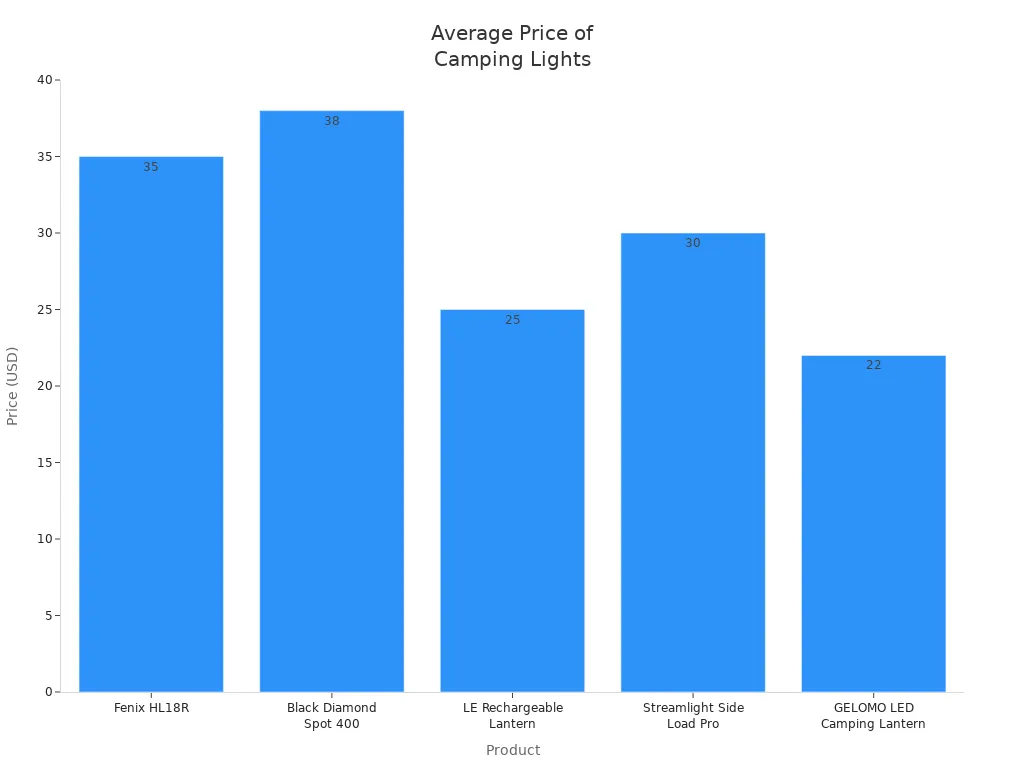
This table helps me see where different products stand in terms of pricing. I often find that spending a bit more can lead to better features and durability.
Evaluating Cost vs. Quality
I’ve learned that higher-priced camping lights usually offer superior features and materials. For instance, they often come with better battery types and higher IP ratings for weather resistance. I’ve seen budget lights that claim high IP ratings but fail in real-world conditions. This is why I focus on quality indicators like:
- Battery type
- IP ratings (e.g., IP67, IP68)
- Construction integrity (like anodized aluminum housings)
These factors help me gauge whether a camping light is worth its price tag.
Long-term Cost Considerations
When I think about the total cost of ownership, I consider maintenance and replacement costs. I want my camping light to last, so I look at how much I might spend over time.
Maintenance and Replacement Costs
Regular maintenance can prevent costly repairs. Here’s a quick overview of how maintenance practices impact costs:
| Maintenance Practice | Impact on Costs |
|---|---|
| Regular Inspections | Prevents costly repairs |
| Cleaning | Extends the life of lighting systems |
| Prompt Repairs | Ensures longevity and efficiency |
| Cost-Effective Solutions | Reduces energy costs significantly (up to 75%) |
By keeping my camping light in good shape, I can avoid unexpected expenses down the line.
Energy Efficiency and Longevity
I also consider how energy-efficient a camping light is. Rechargeable lights may have a higher initial cost, but they save money over time by eliminating recurring battery expenses. I’ve found that lithium-ion batteries can lose capacity after 300-500 cycles, so I keep that in mind when making my choice.
Identifying Common Pitfalls
When I set out to find a reliable camping light manufacturer, I’ve learned to watch out for common pitfalls that can lead to disappointment. Here are two major areas to consider: avoiding overly cheap options and paying attention to customer feedback.
Avoiding Overly Cheap Options
Risks of Low-Quality Products
I’ve seen many campers tempted by low-priced camping lights, but I’ve learned that these options often come with significant risks. Cheap camping lights frequently cut corners on essential features like durability, battery capacity, and weather resistance. Here are some common issues I’ve noticed:
- Durability: Many low-cost lights fail to withstand the rigors of outdoor use. They might burn out quickly or break under minimal stress, which can be a real letdown during a camping trip.
- Waterproof Ratings: Some of these lights lack sufficient waterproof ratings, leading to electrical malfunctions when exposed to rain or moisture.
- Material Degradation: I’ve found that the materials used in cheaper lights degrade rapidly. This results in short battery life and poor impact resistance, making them unreliable companions in the wild.
I’ve also come across user reviews that express concerns about casing durability and inconsistent accessory inclusion. These factors can significantly impact the overall experience, making it crucial to invest in quality products.
Hidden Costs of Cheap Manufacturing
Choosing low-priced camping light manufacturers can lead to hidden costs that I didn’t initially consider. Compromised quality and safety can result in financial losses from returns and customer complaints. I’ve learned that it’s essential to verify product certifications and conduct sample testing to avoid these pitfalls.
Sourcing camping lanterns at the lowest price may seem like a smart move, but it often isn’t the most cost-effective approach in the long run. Focusing on quality, reliable suppliers, and efficient logistics is vital to avoid hidden costs that can arise from poor product performance.
Here’s a quick look at some common pitfalls I’ve encountered when selecting camping lights:
| Common Pitfall | Explanation | Recommended Approach |
|---|---|---|
| Misleading lumen ratings | Often only peak output, not sustainable | Look for sustained lumen ratings |
| Lack of environmental sealing | Risks damage from dust and moisture | Require at least IP65 rating |
| Unrealistic charging time claims | Does not account for real-world conditions | Prefer brands that specify average charging times |
| Non-replaceable batteries | Leads to product obsolescence | Choose models with user-serviceable batteries |
Ignoring Customer Feedback
Importance of Listening to User Experiences
I can’t stress enough how important it is to listen to customer feedback when choosing a camping light manufacturer. I’ve learned that user experiences can provide valuable insights that I might not find elsewhere. For instance, I’ve come across reviews where customers reported receiving products in poor condition, indicating a lack of quality control.
Additionally, issues with customer service often surface in reviews. I’ve seen complaints about unresponsive support and inadequate repairs, which can be frustrating if I need assistance.
Learning from Negative Reviews
Negative reviews can be a treasure trove of information. They often highlight potential pitfalls that I should be aware of. Here are some lessons I’ve learned from reading these reviews:
- Customers reported receiving products in poor condition, indicating a lack of quality control.
- Issues with customer service were highlighted, such as unresponsive support and inadequate repairs.
- Warranty handling was problematic, with claims being denied despite evidence of pre-existing issues.
By paying attention to these experiences, I can make more informed decisions and avoid manufacturers that may not meet my expectations.
Choosing a reliable camping light manufacturer is crucial for a successful partnership. Here are the key factors I always consider:
- Manufacturer Reputation: I check reviews and seek recommendations.
- Product Quality: I analyze materials, design, and performance.
- Customer Service: I value responsive communication and solid after-sales support.
- Warranty Policies: I look for comprehensive coverage and an easy claim process.
- Pricing and Value: I compare costs while ensuring quality.
Thorough research and informed decision-making can lead to a fruitful relationship. I encourage you to invest time in finding the right manufacturer. A strong partnership benefits both parties and enhances your camping experience!
FAQ
What should I look for in a camping light?
I always check for durability, brightness, battery life, and ease of use. Features like waterproofing and adjustable brightness settings are also important for my camping needs.
How do I know if a manufacturer is reliable?
I research online reviews, seek recommendations from fellow campers, and check for industry awards. A strong reputation often indicates reliability.
Are expensive camping lights worth it?
In my experience, spending a bit more usually means better quality and features. Higher-priced lights often last longer and perform better in various conditions.
What warranty should I expect?
Most reputable manufacturers offer at least a one-year warranty. Some, like Helinox, provide extended warranties that cover defects for up to five years.
How can I test a camping light’s performance?
I recommend testing the light in real-world conditions. Check its brightness, battery life, and usability in different weather scenarios to ensure it meets your needs.
What are common pitfalls to avoid?
I’ve learned to avoid overly cheap options and to pay attention to customer feedback. Low-quality lights can lead to disappointment and unexpected costs.
How important is customer service?
Customer service is crucial for long-term cooperation. I prefer manufacturers that respond quickly and offer solid after-sales support, including warranty services.
Can I find eco-friendly camping lights?
Yes! Many manufacturers now offer eco-friendly options, such as solar-powered lights or those made from sustainable materials. I always look for these when shopping.
Post time: Mar-25-2026


