 fannie@nbtorch.com
 +0086-0574-28909873



Headlamps are indispensable tools for outdoor adventurers. A significant majority, 65% of American adults who participate in camping or hiking annually, use LED-based headlamps for safety and convenience. More than 75% of outdoor enthusiasts prefer hands-free lighting solutions for nighttime activities. Mastering headlamp selection, proper wearing, and operation enhances any night excursion. Understanding advanced Usage Tips for specific activities further optimizes performance and safety in the wilderness.
Key Takeaways
- Choose a headlamp that fits your activity. Consider brightness, beam type, and battery life for your adventures.
- Learn how to use your headlamp. Understand its modes, especially red light, to see better and not bother others.
- Keep your headlamp in good shape. Clean it often and manage batteries well to make it last longer.
- Be polite with your headlamp. Point it down when near people and use red light around wildlife or in groups.
Choosing the Right Headlamp for Your Adventures
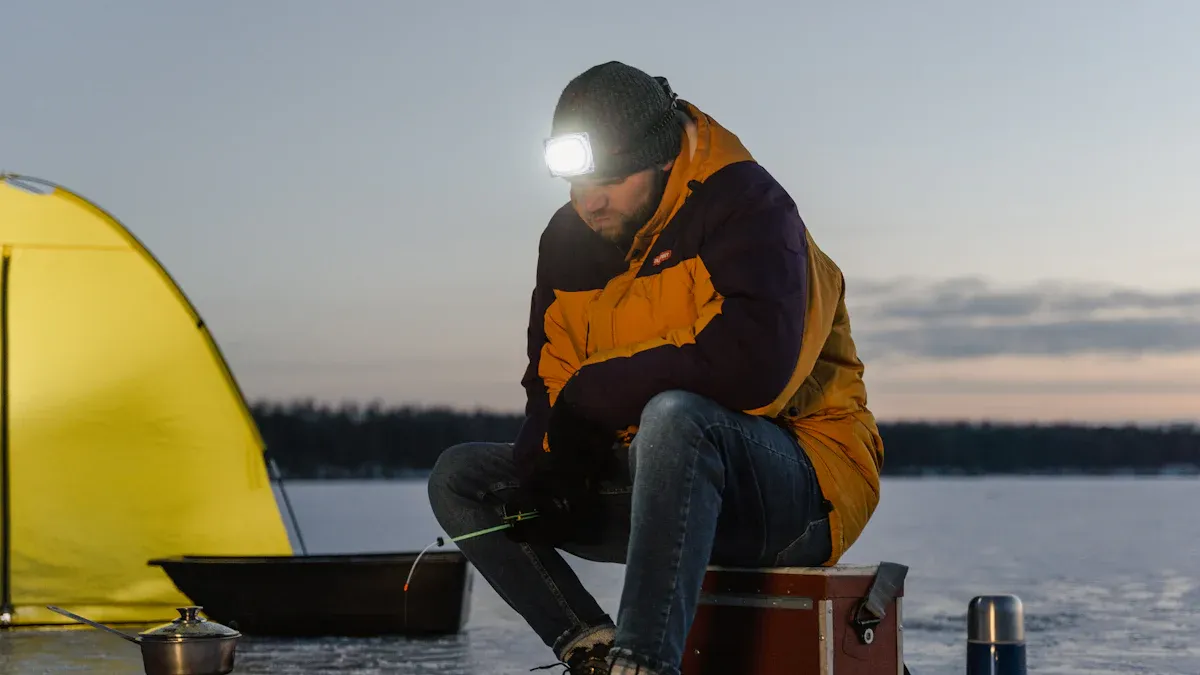
Selecting the appropriate headlamp significantly impacts outdoor experiences. Various features cater to different needs, from casual camping to demanding expeditions. Understanding these specifications helps adventurers make informed decisions.
Understanding Lumens, Beam Types, and Light Sources
Lumens measure a headlamp’s brightness. A higher lumen count indicates a brighter light output. For general hiking on well-marked trails, a headlamp with 100-200 lumens provides sufficient illumination. This range allows users to see obstacles and navigate effectively. However, more technical activities like climbing or trail running often require higher lumen counts for extended visibility.
Headlamps offer different beam types, each serving a specific purpose. Spot beams concentrate light into a narrow, focused beam, while flood beams spread light over a wider area. Many headlamps combine these options, allowing users to switch between them.
| Feature | Spot Lights | Flood Lights |
|---|---|---|
| Beam Angle | Narrow, typically 15–30 degrees | Wide, 40–120 degrees |
| Brightness | Appears brighter due to concentration | Appears softer as light spreads |
| Distance vs. Coverage | Excels at long-distance projection with tight focus | Excels at short-distance coverage with wide spread |
| Outdoor Use Cases | Highlighting landscape features, architectural details, accent lighting | Security lighting, large backyards, parking areas, work zones, even coverage for lawns/facades |
| Primary Function | Focused light for highlighting | Wide beams for security and large areas |
Spot beams excel at long-distance projection, maximizing visibility far ahead. They are ideal for high-speed activities or identifying distant landmarks. Conversely, flood beams illuminate a wide area in the immediate vicinity, making them perfect for camp chores, navigating tight trails, or reading.
| Feature | Spot Beam | Flood Beam |
|---|---|---|
| Optics | Highly specialized, deep reflectors or projector optics | Wider, less focused optics |
| Primary Job | Throw light as far as possible, maximizing long-range visibility | Light up a wide area in the immediate vicinity |
| Best For | High-speed driving in open environments, seeing obstacles far in advance | Slow, technical rock crawling, navigating tight forest trails, work lights around campsite/job site |
| Limitation | Very little peripheral illumination | Very limited effective range |
| Analogy | Sniper rifle | Shotgun |
Modern headlamps utilize various light sources. LED technology is standard, offering efficiency and durability. Some advanced models feature COB (Chip-on-Board) headlamps, which provide clearer and brighter light distribution. Additionally, motion-controlled LED headlamps incorporate sensors that automatically adjust brightness based on movement. This feature not only enhances lighting but also extends battery life, making them highly efficient for dynamic outdoor activities.
Battery Life, Power Sources, and Rechargeable Options
Battery life is a critical consideration, especially for extended trips. Headlamps typically use either rechargeable or disposable batteries. Each type offers distinct advantages and disadvantages.
| Aspect | Rechargeable (Lithium-Ion) | Disposable (Alkaline) |
|---|---|---|
| Energy Density | High | N/A |
| Weight | Lightweight | Heavier with spares |
| Brightness | Consistent | Can diminish |
| Cold Performance | Works well (though can degrade faster in harsh conditions) | Better performance |
| Charging | Versatile options | Single-use |
| Cycle Life | Hundreds to thousands of cycles | One-time use |
| Initial Cost | Higher | Lower |
| Cost per Use | Lower | Higher |
| Total Savings Over Time | Substantial | None |
| Environmental Impact | Reduces waste, supports sustainability | Creates more waste, releases hazardous chemicals (lead, mercury) |
| Safety Risks | Needs careful handling | Fire hazards, leaks, contamination if improperly handled/disposed |
Rechargeable headlamps, often powered by lithium-ion batteries, offer long-term cost savings and reduce environmental waste. They are lightweight and integrate well with existing travel gear, allowing charging via power banks, laptops, or wall outlets. However, they require charging infrastructure for remote or long treks and can lose power faster in cold temperatures.
| Feature | Rechargeable Batteries | Disposable Batteries |
|---|---|---|
| Pros | Lightweight, easy to pack, no need to buy replacements, versatile charging (power bank, laptop, wall), often have advanced features (adjustable brightness, red night vision, waterproofing), integrates with existing travel gear. | Widely available (gas stations, airports, convenience stores), reliable for remote trips without power, better performance in cold temperatures. |
| Cons | Requires charging infrastructure (power bank, solar charger) for remote or long treks, can lose power faster in cold temperatures. | Adds minimal weight with spares, higher long-term cost due to replacements, environmental impact from disposal, risk of forgetting spares or finding them dead. |
Disposable batteries, typically alkaline, are widely available and perform better in cold conditions. They are reliable for remote trips without access to power. However, they contribute to more waste and incur higher long-term costs due to frequent replacements. Carrying spare disposable batteries also adds weight. For extended adventures, carrying a power bank or a solar charger for rechargeable headlamps provides a sustainable solution.
Water Resistance, Durability, and IPX Ratings
Outdoor gear must withstand harsh elements. Water resistance and durability are crucial features for any headlamp. The IP (Ingress Protection) rating system provides an international standard for a device’s resistance to solid particles like dust and liquids like water.
An IPX rating, or Ingress Protection Marking, is a classification standard that rates the degree of protection against intrusion. It is an IEC standard, providing consumers with a clear understanding of a product’s protection level. An IP code consists of ‘IP’ followed by two digits. The first digit represents protection against solid particles like dust, while the second digit describes protection against liquids such as water. When the first digit is replaced by ‘X’, it signifies that the product has not been tested for protection against solid particles.
When “IPX” appears instead of a full IP rating, the “X” indicates that the device has not undergone testing or rating for solid particles (dust). In such cases, the second digit, the number after “X,” becomes the crucial indicator of the device’s water resistance level.
| Level | Protection Against Solids |
|---|---|
| X | Not tested |
| 0 | Not protected |
| 1 | Objects larger than 50 mm |
| 2 | Objects larger than 12.5 mm |
| 3 | Objects larger than 2.5 mm |
| 4 | Objects larger than 1 mm |
| 5 | Dust protected |
| 6 | Dust tight |
| Level | Protection Against Water |
|---|---|
| X | Not tested |
| 0 | Not protected |
| 1 | Dripping water |
| 2 | Dripping water tilted at 15° |
| 3 | Spraying water |
| 4 | Splashing of water |
| 5 | Water jets |
| 6 | Powerful water jets |
| 7 | Immersion up to 1 M |
| 8 | Continuous immersion, 1 M or more |
A headlamp’s watertightness is determined by its IP rating, which classifies the level of protection against ingress by solids (like dust) and liquids (like water or oil). The IEC 60529 standard governs this rating, defining protection levels and testing procedures. The IP rating has two digits: the first indicates protection against solids, and the second indicates protection against liquids (watertightness). If a criterion has not been tested, the number is replaced by ‘X’ (e.g., IPX6 means no testing for solids). For outdoor use, an IPX4 rating or higher is generally recommended to protect against splashing water.
Durability ensures a headlamp withstands the rigors of outdoor environments. Manufacturers commonly use robust materials to construct headlamp bodies.
- ABS plastic
- Aluminum
- Aircraft-grade aluminum
- Durable polycarbonate
These materials provide impact resistance and longevity, protecting internal components from drops and abrasions. A well-constructed headlamp endures challenging conditions, offering reliable performance throughout its lifespan.
Comfort, Fit, and Strap Adjustments
A headlamp’s comfort and fit significantly influence its usability during outdoor activities. An ill-fitting headlamp can cause discomfort, distractions, and even headaches, detracting from the overall experience. Manufacturers design headlamps with various strap configurations and materials to ensure a secure and comfortable fit for different head sizes and activities.
Most headlamps feature adjustable elastic straps. Users can easily tighten or loosen these straps to achieve a snug fit. A well-adjusted strap prevents the headlamp from bouncing or slipping, especially during dynamic movements. Some models include a top strap that runs over the crown of the head, providing additional stability. This design proves particularly beneficial for activities involving vigorous motion, such as trail running or climbing.
The materials used in headlamp straps also contribute to comfort. Many straps feature soft, breathable fabrics that wick away sweat, preventing irritation during prolonged use. Some straps incorporate silicone grips or textured surfaces on the inside to further minimize slippage. These design elements ensure the headlamp remains securely in place without causing undue pressure points.
For high-impact activities, a stable fit becomes paramount. Headlamp strap designs specifically address the need for reduced vibrations and movement. These designs often feature adjustable straps for a customized fit, effectively minimizing any jiggling during intense rides or runs. Manufacturers engineer these straps to integrate seamlessly with the headlamp unit, providing a stable and secure mounting solution. They construct them from premium, lightweight, and breathable materials, ensuring durability and comfort even on rough terrain and in various weather conditions. Innovative fastening mechanisms and high-quality clips allow for quick and secure attachment and removal, enhancing user convenience. A headlamp that stays put allows adventurers to focus on their activity rather than constantly adjusting their gear.
Proper adjustment involves positioning the headlamp centrally on the forehead. The strap should feel firm but not overly tight, allowing for comfortable breathing and blood circulation. Users should test the fit by moving their head vigorously to ensure the headlamp remains stable. A comfortable and secure fit enhances both safety and enjoyment during any nighttime adventure.
Mastering Basic Headlamp Operation and Usage Tips
Effective headlamp operation enhances safety and efficiency during any nighttime outdoor activity. Understanding fundamental controls and proper placement ensures optimal performance. These basic Usage Tips form the foundation for more advanced techniques.
Proper Headlamp Placement and Mounting
Correct headlamp placement ensures maximum visibility and comfort. Users typically wear a headlamp centered on the forehead. This position aligns the light beam with the natural line of sight, illuminating the path directly ahead. Adjusting the elastic strap provides a snug fit, preventing the headlamp from bouncing during movement. A secure fit is crucial for activities like hiking or trail running.
When attaching a headlamp to a helmet, specific steps ensure stability and proper illumination.
- First, adjust the headlamp strap to loosen it.
- Next, place the headlamp on the front or back of the hard hat.
- Wrap the strap around the brim or frame of the hard hat, ensuring it is snug but not overly tight. This prevents damage to the helmet.
- Finally, adjust the angle of the headlamp to direct the beam where needed.
Manufacturers often provide specific instructions for helmet attachment.
- Follow the manufacturer’s instructions for attachment, whether using a built-in clip, an elastic strap, or an adhesive mount.
- Ensure the light is centered and securely fastened. This prevents shifting during work or activity.
- Always check that the headlamp does not interfere with the helmet’s fit or safety certification. Proper mounting ensures the headlamp remains stable and effective, providing consistent light where needed.
Turning On, Off, and Cycling Through Modes
Operating a headlamp involves more than just turning it on. Most headlamps feature a single button or a combination of buttons for power and mode selection. A quick press typically turns the headlamp on to its last-used setting or a default low mode. Subsequent presses cycle through various brightness levels, beam types (spot, flood), and special modes like strobe or red light. A long press usually turns the headlamp off.
Understanding the specific sequence for each headlamp model is important. A frequent user error involves a ‘mode mix-up,’ where users fail to follow the correct activation sequence for headlamp modes. This can involve not holding a button for the required duration, such as holding the ‘+’ button for 3 seconds on some e-bikes. Such incorrect procedures can lead users to mistakenly believe the headlamp has failed, when in reality, it is an issue with the activation sequence. Always consult the user manual to familiarize yourself with your headlamp’s specific operational sequence. This prevents frustration and ensures access to all available features.
Adjusting Beam Angle, Focus, and Brightness
Adjusting the beam angle, focus, and brightness allows users to adapt their headlamp to various situations. Many headlamps feature a hinged body, enabling users to tilt the light beam up or down. This directs light precisely where needed without repositioning the entire headlamp. Some models also offer adjustable focus, allowing users to switch between a narrow spot beam and a wide flood beam.
Adjusting the beam angle significantly impacts both visibility and battery consumption.
- Visibility:
- Narrow beams are ideal for detailed inspections, such as engine work, enhancing precision with focused light.
- Wide-angle beams effectively illuminate large areas like garages or job sites, offering versatility without needing multiple lighting tools.
- Narrow beams can create dramatic lighting effects, highlighting specific objects like artwork.
- Wide beam angles provide a soft, even glow, creating a warm atmosphere without harsh contrasts.
- Proper beam angles enhance user comfort by providing adequate illumination without glare; narrow beams offer focused light without glare in reading nooks, while wide beams ensure even lighting in living rooms.
- Correct beam angles minimize glare; narrow beams reduce direct exposure to bright light, and wide angles soften light to prevent harsh reflections.
- Ensuring proper light coverage is crucial; a too-narrow beam might leave shadows, while a too-wide beam could diffuse light and lose intensity.
- Battery Consumption:
- Narrow beams require fewer LEDs, which conserves energy and extends battery life.
- For instance, a floodlight with a 30° narrow beam can last up to 20% longer than one with a 120° wide beam, given the same battery capacity.
- Optimizing beam angles leads to significant energy savings by directing light where it is needed most, minimizing waste.
- Minimizing wasted light: A targeted approach with narrow beams prevents light spill, reducing the number of fixtures and energy required.
- Energy savings: Using wider beam angles for uniform lighting in large spaces can reduce the need for multiple fixtures, and correct outdoor beam angles can lead to energy savings of up to 30% or more.
Brightness levels also impact battery life. Higher lumen settings consume more power. Users should select the lowest effective brightness for their current task to conserve battery life. Many headlamps feature advanced Usage Tips like motion sensors, which automatically adjust brightness based on movement, further optimizing battery usage. These features provide convenience and extend the headlamp’s operational time.
When and Why to Use Red Light Mode
Headlamps often feature a red light mode, a crucial function for specific outdoor scenarios. Many users overlook this setting, but it offers significant advantages over white light in certain situations. Understanding when and why to activate red light enhances safety, comfort, and effectiveness during nighttime activities.
Red light mode primarily serves to preserve night vision. Unlike white light, red light allows the eyes to remain adapted to darkness. This feature proves crucial for activities like stargazing, night navigation, and military operations. When you switch from red light to darkness, your eyes adjust much faster than they would after exposure to bright white light. This quick adaptation maintains your ability to see in very low light conditions without needing a long readjustment period.
Using red light also significantly reduces eye strain. Red light offers softer illumination, minimizing glare and eye fatigue. This makes it suitable for extended use in dark environments such as camping, hunting, or tactical scenarios. Reading maps, organizing gear inside a tent, or performing close-up tasks become more comfortable with red light. It prevents the harsh contrast that white light creates, which can be jarring to the eyes in complete darkness.
Red light is ideal for wildlife observation and night photography. Animals are less likely to be disturbed by red light compared to white light. This aids wildlife observation and hunting, allowing enthusiasts to approach or watch nocturnal creatures without startling them. Photographers also use red light to adjust camera settings without affecting low-light compositions. It provides enough illumination to see controls without washing out the ambient darkness needed for long-exposure shots.
Furthermore, red light enhances safety in emergency situations. Emergency responders utilize red light because it is highly visible yet less harsh than white light. This allows for signaling without overwhelming visibility in rescue and survival contexts. A red flashing light can attract attention from a distance without blinding rescuers or other group members. These Usage Tips are vital for group safety.
Finally, red light offers advantages for stealth and tactical use. In military and tactical operations, red light provides sufficient illumination for visibility without easily revealing a person’s position. This makes it valuable for law enforcement, security, and discreet nighttime activities. It allows individuals to move and operate with a lower profile, maintaining situational awareness without broadcasting their location.
Advanced Headlamp Usage Tips for Specific Activities

Outdoor enthusiasts optimize headlamp performance by tailoring its use to specific activities. Different adventures demand unique lighting strategies and features. Mastering these advanced techniques enhances safety and efficiency in diverse environments.
Hiking and Backpacking: Battery Conservation and Navigation
Hikers and backpackers prioritize battery conservation for multi-day trips. They utilize lower light levels for general tasks and around camp, such as 25 lumens for camp chores or a few lumens inside a tent. Employing red light mode preserves night vision, especially when inside a tent or checking maps. Hikers reserve high modes (over 150 lumens) for short, essential periods. These periods include off-trail navigation or searching for distant objects, as high modes quickly drain batteries. Carrying spare batteries or a portable charging solution, like a battery pack or solar charger, supports rechargeable headlamps on longer journeys. Headlamps with a battery level indicator help monitor power consumption effectively.
Trail Running: Stable Fit and Dynamic Lighting
Trail runners require a headlamp that remains stable during dynamic movement. An adjustable elastic band secures the lamp. Some headlamps feature a third strap running from the front to the back of the band for enhanced security. A single elastic shock cord offers alternative wearing options for increased stability. A lighter headlamp prevents bouncing and neck soreness, which is crucial for stability during trail running. Every ounce counts. An additional perpendicular strap goes over the top of the head, supplementing the standard around-the-forehead strap. This increases security and reduces slippage. A SPORT Headband Fit System allows for one-handed adjustment with a knob, ensuring a secure fit that stays in place. Lightweight designs, like a 3.7-ounce model with a removable over-the-top strap, minimize bounce and enhance stability. These Usage Tips ensure comfort and focus on the trail.
Camping and Camp Chores: Area Lighting and Hands-Free Use
Campers need effective area lighting for various chores. Headlamps typically cast a wider beam. They effectively illuminate a large, nearby area, which benefits campsite chores. Wide or flood beams are recommended for camp chores and general use. This beam type spreads light over a larger area, ideal for illuminating a campsite. Hands-free operation allows campers to perform tasks like cooking, setting up tents, or gathering firewood without holding a light source.
Climbing and Caving: Durability, Beam Reach, and Helmet Compatibility
Climbers and cavers demand headlamps built for extreme conditions. These activities require exceptional durability to withstand impacts and abrasions. Headlamps for climbing and caving often feature robust casings made from materials like aircraft-grade aluminum or high-impact polycarbonate. These materials protect internal components from drops and harsh environments. A powerful beam reach is also critical. Climbers need to illuminate distant handholds and footholds on rock faces, while cavers require strong, focused light to penetrate deep into dark caverns and identify potential hazards. Headlamps with high lumen outputs and adjustable spot beams serve these purposes effectively.
Helmet compatibility is another essential factor. Headlamps must securely attach to climbing or caving helmets without interfering with their protective function. Many headlamps come with specialized clips or mounting systems designed for helmet integration. Users ensure the headlamp remains stable during dynamic movements, preventing slippage or detachment. A well-mounted headlamp directs light precisely where the user looks, enhancing safety and efficiency in challenging vertical or subterranean environments.
Emergency Preparedness: Signaling and Extended Use
Headlamps play a vital role in emergency preparedness, offering both illumination and signaling capabilities. In a survival situation, a reliable light source becomes indispensable for navigation, shelter building, and first aid. Users prioritize headlamps with long battery life or those compatible with spare batteries or power banks for extended use.
Signaling for help is a critical function. The internationally recognized distress signal for emergency situations using a headlamps is SOS. This signal is transmitted as three short bursts, followed by three long bursts, and then three more short bursts. Many modern headlamps include built-in strobe or SOS modes that automatically transmit this pattern. For manual signaling, short flashes should last approximately one second, and long flashes should last about three seconds. Pauses between flashes within a group should be about one second, while pauses between groups of flashes should be approximately three seconds. This universal signal significantly increases the chances of rescue.
Headlamp Maintenance, Battery Management, and Usage Tips
Proper care and management ensure a headlamp‘s reliability and longevity. Understanding maintenance practices and battery handling extends the lifespan of this essential outdoor tool.
Maximizing Battery Life and Storage Practices
Effective battery management is crucial for consistent headlamp performance. Store headlamps and their batteries in a cool, dry place when not in use. Avoid leaving batteries inside the device for extended periods, especially if not fully charged. Excessive heat accelerates chemical reactions and depletes batteries. Cold temperatures cause batteries to lose charge quickly. Remove rechargeable batteries for long-term storage to prevent unintentional drainage. Store batteries in original packaging or a battery case to avoid short circuits from metal contact. Do not store batteries in humid environments. Discharge batteries before long-term storage if not used immediately. Partial charging is better for prolonged storage of lithium-ion batteries. Never charge batteries in extreme temperatures.
Proper Cleaning and Care for Longevity
Regular cleaning maintains a headlamp’s optimal performance. Use gentle cleaning agents for lenses and casings. Mild abrasives, cleaning solutions, polishing compounds, and protective sealants are safe options. Wipe down the headlamp body with a damp cloth after each use, especially after exposure to dirt or saltwater. Ensure all ports and seals are free from debris. This prevents moisture ingress and corrosion.
Troubleshooting Common Headlamp Issues
Headlamps can encounter various issues in the field. Faulty headlight bulbs are a common culprit, especially as halogen and HID bulbs reach the end of their lifespan. Electrical problems also contribute to malfunctions. These include voltage fluctuations, malfunctioning relays and switches, damaged wiring, and blown fuses. Mishandled installation, such as touching the glass of a new bulb with bare hands, transfers oils that create hot spots and shorten bulb lifespan. Extreme temperatures stress bulbs. Cold makes filaments and glass prone to breakage, while heat weakens filaments. Moisture in the headlight housing corrodes the bulb base, leading to electrical shorts and fogging.
Carrying Spare Batteries or Power Banks
Outdoor enthusiasts always carry spare power for their headlamps. This practice ensures continuous illumination during extended adventures. A dead headlamp can compromise safety and hinder navigation in low-light conditions. Planning for power needs prevents unexpected outages.
For headlamps using disposable batteries, carrying extra sets is a straightforward solution. Users should store these batteries in a protective case. This prevents accidental discharge or damage from contact with metal objects. Keeping them warm, perhaps in an inner pocket, helps maintain their charge in cold environments. Always check the expiration dates on disposable batteries before packing them.
Rechargeable headlamps benefit significantly from portable power banks. These devices allow users to recharge their headlamps multiple times in the field. Power banks come in various capacities. Users select a capacity suitable for their trip duration and the number of recharges needed. A 10,000 mAh power bank can typically recharge a headlamp several times.
Power banks offer versatility. They can also charge other USB-powered devices like smartphones or GPS units. This consolidates charging needs into one device. Users ensure their power bank is fully charged before departure. They also pack the appropriate charging cables for their headlamp and other electronics.
Consider the weight and size of spare power options. Backpackers often prioritize lightweight solutions. A small, high-capacity power bank or a few extra sets of disposable batteries can make a significant difference. Always test spare batteries and power banks before embarking on a trip. This confirms their functionality and charge level.
Headlamp Etiquette: Being a Courteous Outdoor Enthusiast
Outdoor enthusiasts share natural spaces. Practicing proper headlamp etiquette ensures a positive experience for everyone. Thoughtful light usage minimizes disturbance to fellow adventurers and local wildlife.
Avoiding Blinding Others: The “Headlamp Nod”
Headlamps provide essential illumination, but their bright beams can temporarily blind others. Users avoid this by employing the “headlamp nod.” When approaching another person, they simply tilt their head downwards. This directs the beam towards their feet, preventing direct light exposure to another’s eyes. This simple gesture shows respect and prevents discomfort. It allows individuals to maintain their night vision and continue their activities without interruption.
Using Red Light in Group Settings
Red light mode offers significant advantages in group settings. It helps preserve everyone’s night vision. This practice shortens the recovery time for others once brighter white lights are turned off. Using red light in group settings, such as a workshop or around a campfire, prevents blinding fellow campers or hikers. This is especially important when others might be trying to sleep.
- Red light increases safety in low-light group activities.
- It enhances coordination among group members.
- Red light improves communication without the risk of temporarily blinding others.
Respecting Wildlife with Light Usage
Artificial light at night significantly impacts nocturnal wildlife. It disrupts circadian rhythms, affecting sleep-wake cycles, feeding, and reproduction. This disruption reduces melatonin production, leading to stress and weakened immunity. Artificial light also alters foraging behavior, making prey harder for nocturnal predators to locate. It interferes with mating calls in amphibians and disorients sea turtle hatchlings.
Using red light settings on headlamps significantly reduces disturbance to wildlife. Many animals, particularly nocturnal species, are sensitive to bright white light. Red light is less likely to cause such disruption. This allows individuals to navigate natural habitats without startling animals. Red light is also less attractive to certain nocturnal insects compared to white light. This reduces bothersome bugs during overnight trips.
Tip: Always use your headlamp’s red light setting when observing wildlife or moving through sensitive natural areas at night. This minimizes disturbance and promotes a harmonious coexistence with nature.
Mastering headlamp use significantly enhances outdoor safety and enjoyment. Outdoor enthusiasts select the ideal headlamp model for their specific needs. They understand all functions and settings for versatile application. Applying these practical tips allows confident navigation during any low-light adventure. This comprehensive knowledge ensures preparedness and maximizes every outdoor experience.
FAQ
What is the ideal lumen count for a headlamp?
The ideal lumen count depends on the activity. General hiking requires 100-200 lumens. Technical activities like climbing or trail running demand higher lumen counts for extended visibility. Users should match brightness to their specific needs.
Why is red light mode important on a headlamp?
Red light mode preserves night vision. It allows eyes to remain adapted to darkness, unlike white light. This feature is crucial for stargazing, night navigation, and avoiding disturbance to wildlife. It also reduces eye strain.
How do IPX ratings relate to headlamp durability?
IPX ratings indicate a headlamp’s water resistance. An IPX4 rating protects against splashing water. Higher numbers, like IPX7 or IPX8, signify protection against immersion. These ratings ensure the headlamp withstands wet outdoor conditions.
How can users conserve headlamp battery life?
Users conserve battery life by selecting the lowest effective brightness for their task. Storing headlamps and batteries in a cool, dry place also helps. Removing batteries for long-term storage prevents drainage. Carrying spare batteries or power banks ensures extended use.
Post time: Feb-23-2026


