 fannie@nbtorch.com
 +0086-0574-28909873



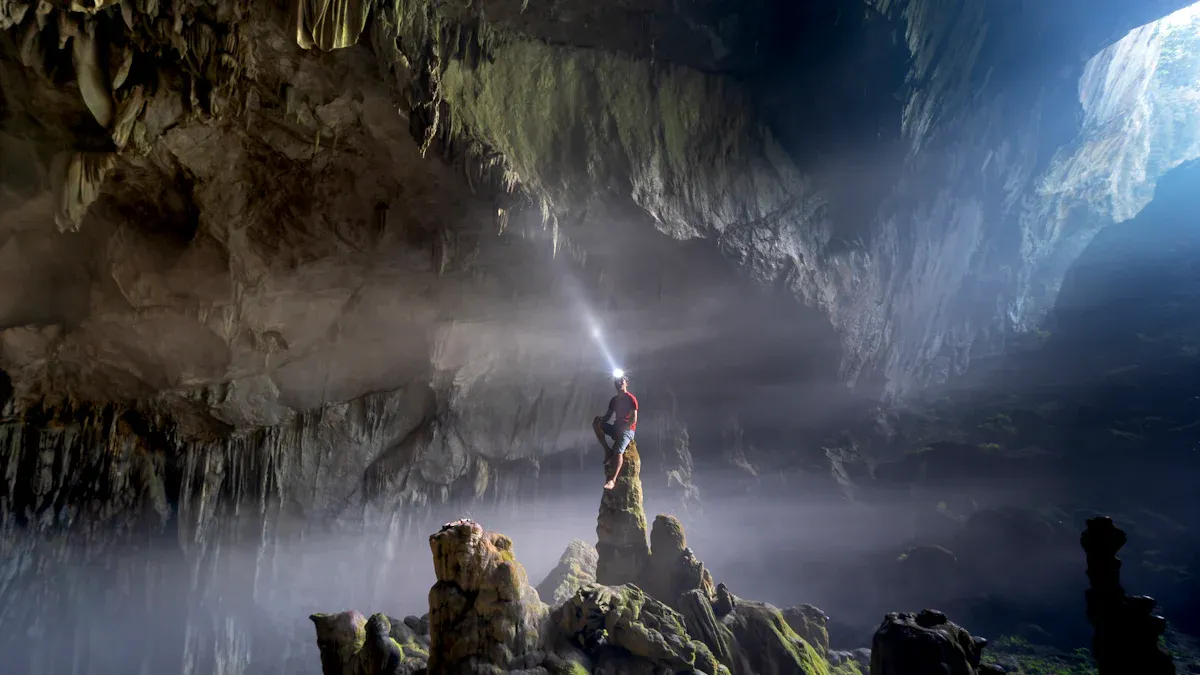
Selecting the right outdoor headlamps for cave exploring is crucial for safety and visibility. This guide focuses on the essential combination of robust durability and powerful brightness needed for underground environments. Explorers depend on reliable illumination in challenging subterranean conditions. A well-chosen outdoor headlamp ensures successful and secure adventures. It provides critical light in dark, confined spaces.
Key Takeaways
- Choose a headlamp that can handle bumps and water. Look for strong materials and high IP ratings like IP67 or IPX8.
- Brightness is more than just lumens. A good headlamp has different beam types, like spot for far away and flood for close-up tasks.
- Your headlamp needs to stay bright for a long time. Pick one with consistent light output and carry extra batteries.
- Red light helps your eyes see better in the dark. It keeps your night vision sharp while you explore.
- Take care of your headlamp. Clean it after each trip, store batteries properly, and always check it before you go caving.
Essential Durability for Outdoor Headlamps in Caves
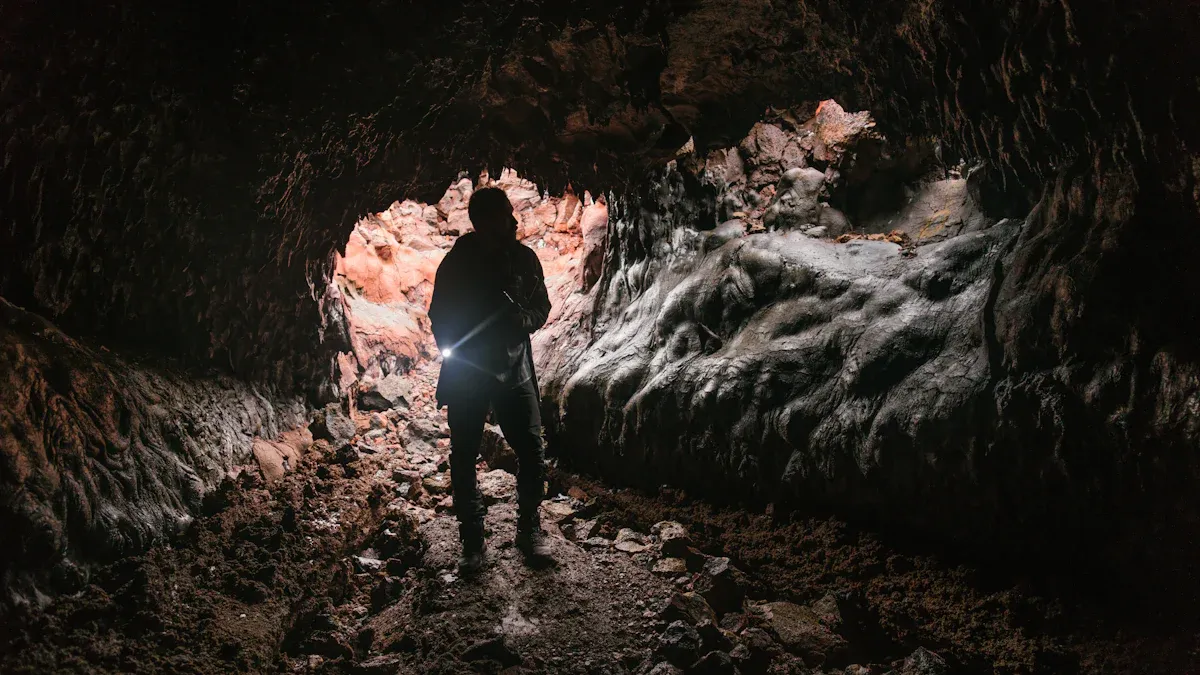
Cave environments present unique challenges for gear, demanding exceptional durability from Outdoor Headlamps. These tools must withstand harsh conditions, including impacts, water, dust, and temperature fluctuations, to ensure reliable illumination throughout an exploration.
Impact Resistance for Cave Exploring Headlamps
Headlamps in caves frequently encounter bumps, scrapes, and accidental drops. Superior impact resistance protects the device’s internal components and maintains its functionality. Manufacturers often construct high-quality headlamps from robust materials. For instance, ABS plastic offers lightweight properties, high tensile strength, and extreme impact resistance, effectively handling routine bumps and occasional strikes. Aircraft-grade aluminum also provides a high-quality, impact-resistant structure. Beyond material choice, design features significantly enhance durability. Reinforced edges provide additional protection against impacts, absorbing shock and preventing damage. Shatterproof lenses ensure the light emitted remains consistent and effective, even after impacts. Polycarbonate, a durable material, is often used for lenses, managing UV effects over long lifespans.
Water and Dust Proofing (IP Ratings) for Outdoor Headlamps
Caves are inherently damp and dusty environments, making water and dust proofing critical for headlamps. The Ingress Protection (IP) rating system classifies equipment’s protection against solids and liquids. The first digit of an IP rating indicates protection against solids, while the second digit indicates protection against liquids. For outdoor headlamps, an IPX4 rating signifies weather resistance, suitable for use in rain, snow, or humid conditions. However, caving demands much higher protection.
| IP Rating | Protection Against Solids (First Digit) | Protection Against Water (Second Digit) |
|---|---|---|
| IPX4 | Not tested | Protection against splashing water from any direction |
| IPX7 | Not tested | Protection against temporary immersion (1 meter for 30 minutes) |
| IP67 | Completely protected against dust | Protection against temporary immersion (1 meter for 30 minutes) |
| IP68 | Completely protected against dust | Protection against prolonged immersion (duration and depth defined by manufacturer) |
Note: ‘X’ in an IP rating indicates that the product has not been tested for that specific criterion (e.g., solids protection for IPX7).
An IP66 rating is sufficient for heavy rain and splashing, but it does not protect against submersion. For full submersion, such as in streams, rivers, or lakes, an IP67 rating or higher is required for dependability. An IPX8 rating signifies protection against submersion up to a certain depth and duration. For technical activities like caving, superior waterproofing, specifically an IPX8 rating, is non-negotiable. This rating is suitable for continuous submersion, ideal for extended exposure to water.
Temperature Performance in Cold and Damp Caves
Cave temperatures remain relatively stable compared to surface temperatures, but they can still vary significantly. For example, the lowest recorded cave temperature was 2 °C in Setergrotta Cave, Norway, while the highest reached 26.7 °C in Talofofo, Guam. These temperatures correlate highly with the average surface temperature of the location.
Extreme cold conditions can significantly affect headlamp performance, particularly battery life. Cold temperatures temporarily decrease battery capacity. Batteries operate less efficiently and deplete faster in cold environments. Lithium-ion batteries are favored by outdoor enthusiasts for their high energy density, light weight, and excellent performance in cold conditions. These batteries maintain their charge better in cold conditions, leading to improved headlamp performance. Keeping a headlamp close to the body when not in use helps keep batteries warm. Carrying extra batteries close to the body and rotating them regularly ensures consistent headlamp efficiency. High heat can also harm batteries and shorten their lifespan, though this is less common in typical cave environments.
Battery Compartment Integrity for Outdoor Headlamps
The battery compartment is a critical component of any headlamp, especially for the demanding conditions of cave exploration. Its integrity directly impacts the device’s reliability and safety. A well-designed battery compartment protects the power source from environmental hazards and operational stresses.
Manufacturers employ robust design features to ensure the battery compartment remains secure and functional. Many headlamps feature sealed enclosure designs. These enclosures use impact-resistant materials like engineering-grade polymers or specialized metal alloys. They house all electrical and lighting components, including the battery compartment. Precision engineering ensures every joint, seam, and potential opening prevents hazardous materials from entering the internal chamber. This design also contains any internal ignition sources. Some headlamps, like the Vizion range, achieve 100% waterproofing through a cylindrical shape and a specialized seal. This design, developed from expertise in creating durable lights for scuba diving, ensures complete protection against water, even in pouring rain. It effectively safeguards the battery compartment.
Thick enclosure walls absorb energy from internal combustion events. They also include flame paths to cool hot gases below ignition temperatures. These designs often achieve high IP ratings, typically IP66 or IP67. These ratings indicate complete dust protection and water resistance for all internal components. Headlamps also feature impact resistance ratings. They withstand drops, collisions, and the physical demands of industrial work. Chemical-resistant materials prevent degradation when exposed to corrosive substances, further enhancing durability.
Despite these advanced designs, battery compartments can face specific failure points during caving expeditions. Accidental activation of electronic push-button switches is a common issue. Modern electronic switches offer more features, but they are prone to being bumped on inside a backpack. This leads to unexpected battery drainage. Users have also reported battery mount breakage. For example, attempting to insert a battery backward to prevent accidental activation can break the mount. This renders the headlamp unusable until repaired. Another user experienced unexpected battery drainage on an expedition despite flipping a battery backward. This shows that this method is not foolproof. It can still lead to dead batteries and damaged terminals. While less common with new switches, older mechanical switches were susceptible to corrosion on contacts. This caused failure or flickering. Therefore, the design and user interaction with the battery compartment are crucial for reliable performance of Outdoor Headlamps underground.
Understanding Brightness for Underground Exploration
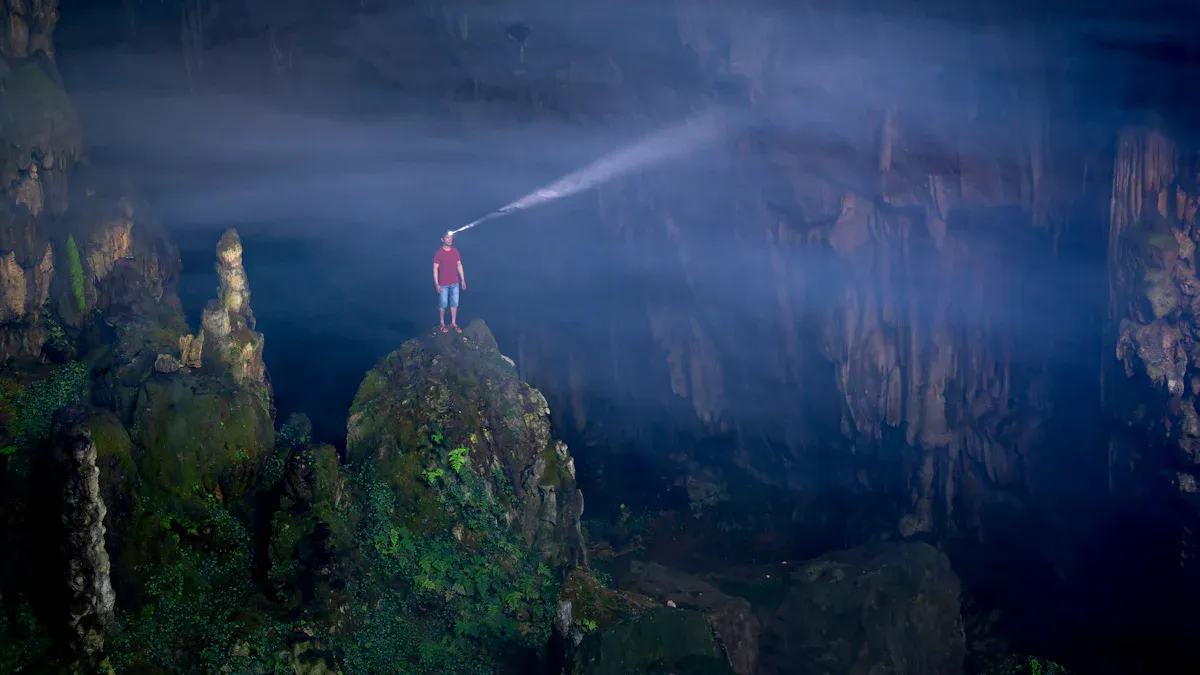
Effective illumination is paramount for safe and efficient cave exploration. Understanding the nuances of headlamp brightness goes beyond simply looking at a lumen number. Cavers must consider how light output translates into practical visibility in dark, complex underground environments.
Lumens vs. Practical Brightness for Cave Exploring
Lumens measure the total amount of visible light emitted by a source. A higher lumen count generally indicates a brighter light. However, raw lumen numbers do not tell the whole story for cave exploring. Practical brightness involves how effectively a headlamp illuminates the surroundings. Factors like beam quality, color temperature, and the human eye’s perception of light significantly influence practical brightness. A headlamp with fewer lumens but a well-focused beam might appear brighter and more useful than a higher-lumen light with a wide, unfocused spread. For specialized tasks like cave photography, explorers often require extremely high light output. For instance, when shooting with skilled models who can hold still, photographers can achieve well-exposed images using 20,000-lumen video lights. This is possible even with slower shutter speeds like 1/15, which helps compensate for limited light availability in cave environments. Therefore, cavers should evaluate a headlamp’s overall illumination capability, not just its peak lumen rating.
Beam Patterns: Spot and Flood for Outdoor Headlamps
Headlamps typically offer different beam patterns to suit various needs. The two primary types are spot beams and flood beams. Each serves a distinct purpose in underground exploration.
- Spot Beam: A spot beam concentrates light into a narrow, intense beam. This pattern provides maximum throw, illuminating distant objects or specific points of interest. Cavers use spot beams for navigating large passages, identifying distant features, or signaling. It helps them see far ahead in open chambers.
- Flood Beam: A flood beam disperses light over a wide area. This pattern offers broad, even illumination for close-range tasks and peripheral vision. Cavers use flood beams for reading maps, examining rock formations, setting up gear, or moving through tight squeezes. It reduces harsh shadows and provides a more natural field of view.
Many high-quality Camping Led Headlamp for caving offer both spot and flood modes, or a combination of the two. Some advanced models allow users to adjust the beam width, providing versatility for different situations encountered underground. This adaptability ensures cavers always have the appropriate lighting for their immediate needs.
Run Time and Consistent Output for Brightness Underground
The duration a headlamp can maintain its light output, known as run time, is critical for extended cave explorations. Cavers often spend many hours underground, making consistent illumination essential for safety and task completion.
When I go caving (surveying) I usually expect to be underground for 10 hours or so. So when I compare headlamps, I compare how many lumens each one will output for at least 10 hours. Maximum output is less important.
This highlights the importance of sustained performance over peak brightness. A headlamp that starts very bright but quickly dims becomes unreliable. For consistent light output, especially when battery voltage drops, cavers should choose a fully regulated headlamp. Regulated headlamps maintain a consistent light output as long as the battery voltage remains within a specified range. This prevents the frustrating experience of a slowly dimming light. In contrast, non-regulated headlamps start bright but continuously dim as the battery depletes. Some headlamps, like most Petzl lamps compatible with the Core™ Rechargeable battery pack, allow users to set the light to never dim over time, providing a regulated beam.
Modern headlamps achieve consistent output through various advanced circuit designs:
- Constant Current Circuits: These circuits use a constant current driver to ensure a steady current flow to the LED. This maintains consistent brightness regardless of battery voltage fluctuations until the battery is nearly depleted.
- Boost Drivers (Step-up Drivers): These drivers increase a lower input voltage to the LED’s operating voltage. They efficiently utilize energy, elevating voltage even as battery voltage drops to maintain high-brightness output and extend runtime.
- Hybrid Buck-Boost Drivers: These drivers combine both buck (step-down) and boost functionalities. They adapt to a broader range of input voltages and convert voltage as needed to maintain consistent output.
- Direct Drive Circuits: In contrast, these circuits connect the battery directly to the LED. As battery charge diminishes and output voltage drops, the LED’s brightness gradually decreases, leading to unstable brightness.
Rechargeable headlamps offer the benefit of consistent power output throughout the entire life of the battery. This makes them a reliable choice for maintaining steady illumination during long underground trips.
Rechargeable vs. Disposable Batteries for Outdoor Headlamps
Choosing between rechargeable and disposable batteries for outdoor headlamps significantly impacts a caver’s experience. This decision involves considering cost, convenience, and environmental responsibility. Each battery type offers distinct advantages and disadvantages for underground exploration.
Cavers often evaluate the cost-effectiveness of battery types over time. Rechargeable batteries, such as 18650 or 21700 lithium-ion cells, prove more economical in the long run. They require a higher initial investment but offer repeated use. Disposable batteries, like CR123A cells, appear cheaper initially. However, their cost accumulates significantly with frequent replacement.
| Battery Type | Cost-Effectiveness | Convenience | Additional Considerations |
|---|---|---|---|
| Rechargeable (e.g., 18650, 21700) | More cost-effective in the long run | Requires access to a power source | Check airline regulations for lithium-ion batteries |
| Disposable (e.g., CR123A) | More expensive over time | Convenient for travel | Check airline regulations for lithium-ion batteries |
Convenience also plays a role. Disposable batteries offer immediate power replacement, which is useful for travel or when charging facilities are unavailable. Rechargeable batteries require access to a power source for recharging. Cavers must also consider airline regulations for lithium-ion batteries, whether rechargeable or disposable, when flying to expedition sites.
The environmental impact of battery choices is another crucial factor. Disposable batteries contribute significantly to landfill pollution. Billions of disposable AAA batteries are discarded annually. Their materials, such as zinc and manganese, can contaminate soil and water. Rechargeable batteries drastically reduce waste. A single rechargeable unit replaces hundreds of disposable ones over its lifespan.
| Environmental Aspect | Rechargeable Batteries | Disposable Batteries |
|---|---|---|
| Resource Depletion | High (due to mining) | Moderate |
| Energy Consumption | High (manufacturing) | Lower |
| Pollution | Moderate (if recycled) | High (toxic waste) |
| Water Resources | Lower over lifecycle | Higher |
| Sustainability | High (with proper use) | Low |
Rechargeable batteries contain toxic heavy metals. These include lead, nickel, cadmium, and mercury. These elements can harm the environment and human health. For example, lead is a neurotoxin. Cadmium can cause various health issues. Lithium-ion batteries, commonly used in electronic devices and many outdoor headlamps, also contain potentially toxic materials. These include copper, nickel, and lead. Improper disposal of batteries in landfills releases these toxins into the soil and groundwater. A significant percentage of lithium-ion batteries end up in landfills. This increases the risk of long-burning fires.
However, rechargeable lithium-ion batteries are recyclable. This allows for the recovery of valuable materials. Disposable batteries are less frequently recycled. Furthermore, disposable batteries have a higher carbon footprint. This results from frequent manufacturing and transportation. Rechargeable batteries, despite higher initial production energy, offer a more eco-friendly solution over the long term. This is due to repeated use and minimal charging electricity consumption.
For frequent cave explorers, rechargeable batteries generally present a more sustainable and cost-effective option. They provide consistent power for extended trips. They also reduce environmental waste. However, explorers must plan for charging access. They should also carry spare charged batteries for longer expeditions. Disposable batteries offer a convenient backup or a primary power source for infrequent users. They are also suitable when charging infrastructure is uncertain.
Key Features of Outdoor Headlamps for Caving
Effective Outdoor Headlamps for caving incorporate specific features that enhance safety, comfort, and usability in challenging underground environments. These design elements ensure explorers can rely on their equipment when it matters most.
Multiple Light Modes and Red Light Options
Versatility in lighting is crucial for cave exploration. Headlamps with multiple light modes allow cavers to adjust brightness and beam patterns according to their immediate needs. A particularly valuable feature is the red light option. The human retina contains rods and cones. Cones handle color vision and are less effective at night. Rods perceive light and shadow. Rods can take up to 45 minutes to adapt to low-light conditions. All light causes some loss of sensitivity. Brighter lights lead to a longer wait for full dark adaptation. Using a dimmer red light has the least impact on the surrounding rods. This allows for quicker recovery of maximum night vision. The eye has more cones, predominantly in the center of the retina, which are less affected by red light.
Red lights protect night vision by reducing glare. They make it easier to focus without straining the eyes. This is invaluable for activities like caving. Red light headlamps allow users to maintain eye sensitivity to low-light conditions. They also provide sufficient illumination for tasks. This preserves nighttime adaptation. Using a red light source instead of white light enables continuous observation and task performance. It does not interrupt the eyes’ adaptation to darkness. Red light headlamps are ideal for dim-light activities because they do not cause pupils to shrink, unlike white light. This characteristic makes it easier to navigate in the dark while maintaining night vision. The human eye adjusts more quickly to red light than to white light when transitioning from darkness to light. Red light does not cause the human eye pupil to constrict to the same extent as bluish/white light. This helps maintain night vision and reduces light emitted in low-light situations.
Comfortable and Secure Headband Design
A comfortable and secure headband is essential for extended wear underground. Cavers often wear headlamps for many hours. An ill-fitting or uncomfortable headband can cause distraction and discomfort. High-quality headbands use soft, breathable materials that prevent chafing and absorb sweat. They also feature adjustable straps. These straps ensure a snug fit over helmets or directly on the head. A secure design prevents the headlamp from bouncing or shifting during movement. This maintains consistent illumination and reduces the need for constant adjustments.
Easy-to-Operate Buttons for Outdoor Headlamps
Operating a headlamp in a cave often involves cold hands, gloves, or limited visibility. Therefore, easy-to-operate buttons are a critical design consideration. Buttons should be large enough for gloved fingers to manipulate. They should also offer clear tactile feedback. This allows users to feel when they have pressed the button. Intuitive button placement and simple control schemes prevent fumbling in the dark. Some headlamps feature lock functions. These prevent accidental activation and battery drain during transport.
Weight and Balance for Extended Wear
A headlamp’s weight and balance significantly influence comfort during extended underground explorations. Cavers often wear their headlamps for many hours. An unbalanced or heavy headlamp can cause considerable discomfort and fatigue. Manufacturers design headlamps to minimize strain, especially on the neck.
The distribution of a headlamp’s weight significantly impacts comfort during prolonged wear. Excessive weight concentrated at the front of a headlamp can lead to discomfort and increased strain on the neck. Headlamps designed with weight distributed between the front and back are generally considered more comfortable. This balanced design prevents the headlamp from pulling forward. It also reduces the effort required to keep the headlamp stable.
Research indicates that a balanced weight distribution is crucial for minimizing neck strain. Cordless cap lamps, despite being lighter, caused a greater forward shift in the center of gravity. Their weight concentrated at the front, acting like a point load. This design can increase neck fatigue over time. In contrast, corded lamps often feature a more even weight distribution. They typically place the battery pack at the back of the head. This design is preferable for long-term wear. It spreads the load across the head.
Existing helmet systems, which have not been associated with short- or long-term issues, offer a preliminary definition of a ‘safe’ design envelope for mass and mass distribution. This suggests that well-engineered headlamps consider these factors. They aim for an optimal balance that supports prolonged use without causing undue stress. Cavers should prioritize headlamps that feel stable and comfortable on their heads. This ensures focus remains on exploration, not on adjusting uncomfortable gear.
Top Recommended Outdoor Headlamps for Cave Exploring
Selecting the right illumination is paramount for any underground adventure. Different headlamps cater to various needs and budgets. Explorers must choose a model that matches their caving intensity and financial plan.
High-End Professional Outdoor Headlamps
Professional cavers demand the utmost in performance and reliability. These high-end models offer superior specifications. They typically feature an IPX7 or higher waterproof rating, often reaching IP68 or IPX8 for complete submersion protection. Brightness levels start at a minimum of 1,500 lumens, with some models exceeding 1,600 lumens. This provides powerful illumination for vast passages. Durability is a key feature; these headlamps boast shockproof, “bombproof” construction. They also offer long battery lives and long-distance beams. Examples include the Fenix HM61R V2.0 and the Zebralight H600c Mk IV 18650. These devices are simple to operate even with muddy gloves. They are lightweight for extended wear. Redundancy is crucial for serious caving, so professionals often carry multiple high-quality lights.
Mid-Range Reliable Outdoor Headlamps
Mid-range headlamps strike a balance between performance and cost. They provide reliable illumination for many caving scenarios. These models often have an IPX4 rating, suitable for rain or snow, but less ideal for full submersion. Brightness typically ranges from 100-300 lumens for general outdoor use. However, models offering 300+ lumens are better for navigation in darkness. These headlamps offer good durability for regular use. They may not match the extreme resilience of professional-grade equipment. They often include both flood and spot beam options. This provides versatility for various tasks underground.
Budget-Friendly Outdoor Headlamps
Budget-friendly Outdoor Headlamps offer essential illumination for new cavers or those with less frequent needs. These models focus on providing adequate light for basic exploration. They may have lower IP ratings, often suitable for splashes but not submersion. Brightness levels are sufficient for close-range tasks and smaller passages. While they may lack advanced features or extreme durability, they serve as a good starting point. They allow cavers to experience underground environments safely.
Maintaining Your Outdoor Headlamps for Longevity
Proper maintenance significantly extends the lifespan and reliability of caving equipment. Regular care ensures your headlamp performs optimally during every underground adventure.
Cleaning and Storage Best Practices
After each caving trip, clean your headlamp thoroughly. Wipe off dirt, mud, and moisture with a damp cloth. Ensure all components are completely dry before storing the device. Store batteries in a cool, dry place. This prevents moisture damage and temperature-related degradation. For extended storage, keep batteries at approximately 50% charge to maintain their health. Avoid physical damage such as dropping or puncturing the headlamp. Use protective covers during transport or storage to prevent short-circuits. Store batteries in environments with stable, moderate temperatures and low humidity. This prevents thermal stress and corrosion. Use non-conductive containers to prevent accidental short-circuiting. Ensure batteries do not contact metal objects. Store batteries in well-ventilated areas to dissipate heat. Avoid enclosed spaces that can trap heat. Always disconnect the battery when the headlamp is not in use. This prevents drainage and accidental power-on. For long-term storage, maintain the battery charge level between 50% and 80%. This ensures optimal performance and longevity. For optimal lifespan, store and operate lithium-ion batteries between 15°C and 25°C (59°F to 77°F). Periodically charge batteries every 3-6 months to maintain a 30-50% charge level.
Battery Care and Replacement
Proper battery care maximizes their lifespan and ensures consistent power. Always use the correct charger designed specifically for the battery type. Avoid generic chargers, as they may lack safeguards against overcharging or overheating. Do not charge batteries at extreme temperatures. Lithium-ion batteries should not charge below freezing. Prevent overcharging and overheating by not leaving devices plugged in overnight. Allow batteries to cool after charging. Partial charges are generally better for lithium-ion batteries; charge them up to 70% or near full. Avoid using batteries while they are charging. This prevents unreliable charge readings. Store rechargeable batteries in a cool, dry location, away from direct sunlight and extreme temperatures. Remove rechargeable batteries from devices for long-term storage. This prevents unintentional drainage. Store them in original packaging or a battery case to avoid short circuits. Check batteries stored for long periods and apply a charge. This prevents lithium-ion batteries from becoming completely depleted.
Pre-Trip Checks for Outdoor Headlamps
Thorough pre-trip checks ensure safety and preparedness underground. Each caver should carry at least three light sources. This includes a primary headlamp with extra batteries. One light should attach to the helmet for hands-free operation. Another should be a waterproof flashlight. Ensure you have enough batteries to last longer than the estimated trip time. Remember that battery run times decrease over time. For wet caving, a waterproof headlamp is essential. Test all light sources before entering the cave. Check the red light mode; this preserves night vision and minimizes impact on other cavers. Ensure your Outdoor Headlamps are fully functional. A durable helmet with a reliable headlamp provides both illumination and protection.
Choosing the right outdoor headlamps for cave exploring requires prioritizing durability and brightness. These features are paramount for safety and visibility underground. Understanding a headlamp’s impact resistance, waterproofing, lumen output, and beam patterns ensures well-lit and successful adventures. Proper maintenance, including cleaning, battery care, and pre-trip checks, extends the life and performance of this essential caving gear. Explorers can confidently navigate subterranean environments with reliable illumination.
FAQ
What IP rating is essential for caving headlamps?
Cavers require an IP67 or higher rating for headlamps. This ensures protection against dust and temporary submersion. An IPX8 rating offers superior waterproofing for continuous submersion. This is ideal for wet cave environments.
Why are lumens not the only factor for brightness in caves?
Lumens measure total light output. Practical brightness considers beam quality, color temperature, and human eye perception. A well-focused beam with fewer lumens can appear more useful than a high-lumen light with a wide, unfocused spread.
Should cavers use rechargeable or disposable batteries?
Rechargeable batteries are more cost-effective and sustainable long-term. They provide consistent power. Disposable batteries offer convenience for travel or when charging is unavailable. Cavers should plan for charging access and carry spares.
What is the benefit of a red light option on a headlamp?
Red light preserves night vision. It causes less pupil constriction than white light. This allows eyes to adapt quicker to low-light conditions. Cavers use it for tasks without losing dark adaptation
Post time: Jan-20-2026


