 fannie@nbtorch.com
 +0086-0574-28909873




Outdoor headlamps are essential equipment for safe night running. They provide crucial visibility, allowing runners to navigate various terrains confidently. Hands-free illumination significantly enhances comfort and optimizes performance during low-light conditions. Selecting the appropriate outdoor headlamp directly addresses key concerns for every runner.
Key Takeaways
- Outdoor headlamps make night running safer. They help you see the path and avoid accidents. They also help drivers see you.
- Choose a headlamp with enough light for your run. Urban runs need less light than trail runs. Lumens tell you how bright the light is.
- A good headlamp feels comfortable. It should not bounce or feel too heavy. Look for a secure strap and balanced design.
- Red light mode helps you see in the dark without blinding others. It keeps your night vision strong. It is good for group runs.
- Headlamps need good batteries and strong build quality. Check for water resistance. This makes sure your headlamp lasts a long time.
Why Outdoor Headlamps are Essential for Night Running
Enhancing Safety Through Superior Visibility
Outdoor headlamps significantly enhance a runner’s safety during night runs. They illuminate the path ahead, allowing runners to see and react to their surroundings. This increased visibility is crucial for preventing various running accidents. For instance, headlamps increase a runner’s visibility to drivers, especially in poorly lit areas, reducing the risk of being hit by a vehicle. By illuminating the path, headlamps help runners spot and avoid obstacles like uneven pavement, potholes, or other unexpected hazards that are difficult to see in low light. In rural or wooded environments, headlamps improve visibility, allowing runners to see and react to wildlife, thereby preventing startling encounters that could lead to accidents.
Enabling Unrestricted Movement and Comfort
Runners require freedom of movement. Outdoor headlamps provide hands-free illumination, which allows runners to maintain their natural stride and arm swing without interruption. This hands-free design eliminates the need to carry a flashlight, freeing up hands for balance or other activities. The lightweight and ergonomic design of modern headlamps ensures they remain stable on the head, minimizing bounce and maximizing comfort throughout the run. This unrestricted movement contributes to a more enjoyable and efficient running experience.
Navigating Challenging Terrain in the Dark
Navigating varied terrain at night presents unique challenges. Headlamps provide the necessary light to identify changes in elevation, loose gravel, roots, or other obstacles that are invisible in the dark. This clear view of the ground allows runners to adjust their foot placement and pace accordingly, preventing stumbles and falls. Whether on urban sidewalks or rugged trails, a reliable headlamp empowers runners to confidently tackle any surface, ensuring a safer and more controlled run.
Key Features for Optimal Visibility in Running Outdoor Headlamps
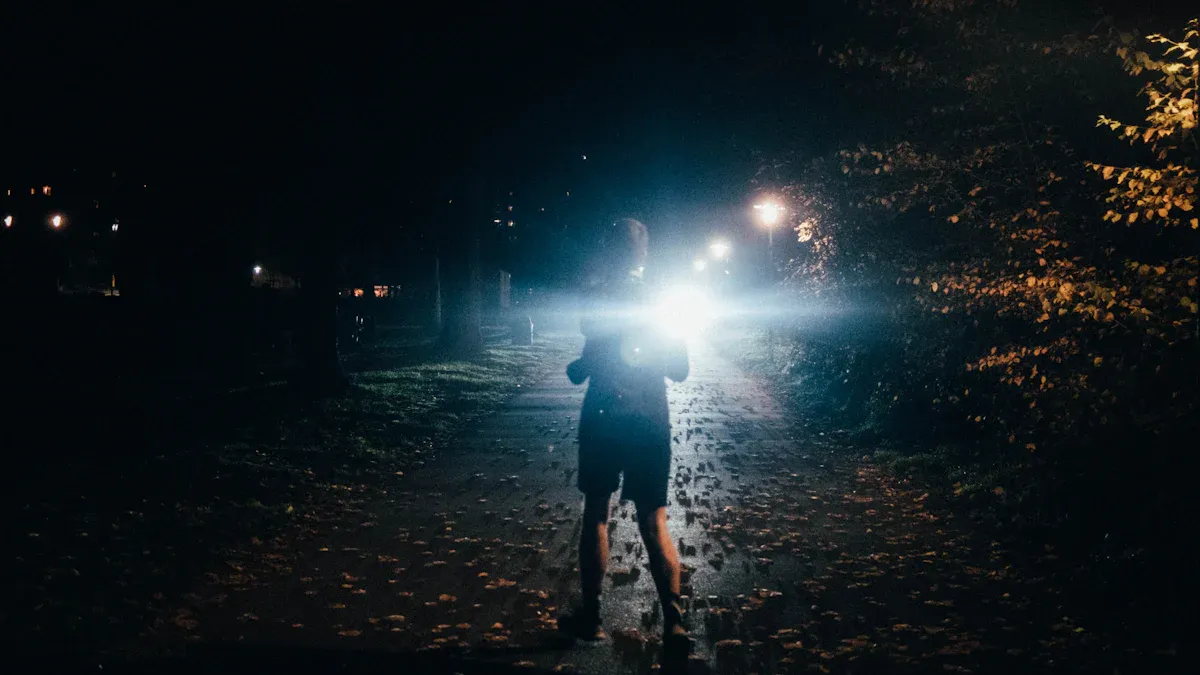
Understanding Lumens for Different Environments
Lumens measure the total amount of visible light a headlamp produces. A higher lumen count generally means a brighter light. However, the ideal lumen output depends heavily on the running environment. For urban environments, where streetlights provide some ambient light, runners need less intense illumination.
| Category | Lumen Range |
|---|---|
| Front Light | 200 – 600 lumens |
| Rear Light | 50 – 150 lumens |
For more challenging conditions, such as technical trail running, runners require significantly more light. A headlamp with at least 300 lumens offers a good starting point for those new to dark conditions. As the terrain becomes more difficult or confidence in low light decreases, a more powerful headlamp becomes necessary. Good outdoor headlamps for challenging courses can produce up to 600 lumens or even 1,000 lumens, projecting light up to 200 meters. Specifically, a headlamp designed for trail running often produces up to 600 lumens, with a boost mode reaching 1,200 lumens for short bursts of intense light. Trail runners or individuals in very dark environments find strong visibility with a light offering 300–500 lumens. This range provides a powerful beam suitable for technical terrain or off-road training. Different trail types also dictate lumen needs:
- For easier trails, forest paths, and gravel roads: 500 lumens
- For mixed terrain that includes partly technical sections: around 900 lumens
- For narrow and tricky singletracks: 900–1200 lumens
Choosing the Right Beam Type: Spot, Flood, or Hybrid
Headlamps offer different beam patterns, each suited for specific visibility needs. Understanding these types helps runners select the most effective light for their activity.
Flood beams provide wide-angle coverage, distributing light evenly over a large area. At close range, wide beams mimic normal daylight, allowing runners to use their peripheral vision effectively. They are designed for close-range tasks, spreading light widely. Floodlights often offer longer run times because they use lower intensity over short distances.
- Flood beams spread light widely, covering more ground side-to-side for close to mid-range visibility.
- They are ideal for slow technical trails, helping identify obstacles like rocks and ruts.
- Flood beams are useful for lighting up entire worksites or campsites.
- They reduce glare in foggy or dusty conditions due to a shorter, wider light throw.
Spot beams, conversely, prioritize distance and focus. They project a narrow, concentrated beam of light straight ahead. This design is ideal for high-speed off-road driving, allowing earlier obstacle detection. Spot beams are perfect for long, open trails or desert runs where maximum reach is needed. They effectively supplement headlights, significantly extending visibility beyond standard factory lights. Spotlights are engineered to emit a narrow, powerful beam specifically for illuminating distant areas. Their focused and concentrated beam ensures long-range visibility, utilizing higher lumen counts to project light over greater distances effectively. Spot beams are characterized by their tight and focused nature, projecting a long, narrow stream of light directly forward. This characteristic makes them exceptionally effective for driving long distances or concentrating light on a specific, narrow path, offering unparalleled far reach.
Hybrid beams combine both spot and flood characteristics. They offer the versatility to switch between a wide beam for close-up awareness and a focused beam for distant viewing, or to use both simultaneously. This adaptability makes hybrid beams a popular choice for runners who encounter varied terrain and conditions during their runs.
Assessing Beam Distance and Spread for Clear Sight
Beam distance refers to how far the light projects, while beam spread describes the width of the illuminated area. These two factors work together with lumens and beam type to provide clear sight. A headlamp with a long beam distance allows runners to see far ahead, crucial for high-speed running or identifying distant landmarks. A wide beam spread illuminates the immediate surroundings, helping runners detect obstacles on the sides of the path and maintain situational awareness. For instance, a powerful spot beam provides excellent distance, while a flood beam offers superior spread. Runners must consider their typical running environment to determine the optimal balance between distance and spread. A trail runner navigating winding paths needs a good spread to see roots and rocks, while a road runner on a straight path might prioritize distance to spot upcoming turns or hazards. The right combination ensures runners have enough time to react to their environment, enhancing safety and performance.
Utilizing Red Light Mode for Night Vision and Etiquette
Red light mode on a headlamp offers significant advantages for night runners, extending beyond basic illumination. This specialized setting primarily serves to preserve night vision, both for the wearer and for others nearby. Unlike bright white light, red light is a low-intensity beam specifically designed for night visibility without overwhelming the eyes. This characteristic allows it to preserve night vision when used in complete darkness.
Runners often find red light mode helps avoid the “deer-in-the-headlights sensation,” making it easier to add light without harshness. This gentle illumination allows eyes to adapt more readily to varying light conditions. For instance, Emily B. noted that red light helped maintain her night vision during a night hike, facilitating an easier transition to no light for stargazing. This demonstrates its utility in environments where runners might switch between using a light source and observing natural darkness.
Beyond personal vision preservation, red light mode plays a crucial role in group settings and general etiquette. Using red light headlamps maintains visibility without disturbing night vision, which is crucial for safety, coordination, and communication during nighttime activities. It allows individuals to see each other and interact without the risk of temporarily blinding one another, thereby preserving everyone’s night vision. Chad B. found the red light helpful for getting up in the middle of the night without disturbing his wife with bright white light, highlighting its consideration for others. When running with partners or in a group, switching to red light prevents dazzling fellow runners, fostering a more comfortable and respectful shared experience. It also reduces glare when in proximity to others, making interactions smoother and safer.
- Key Benefits of Red Light Mode:
- Preserves natural night vision for the user.
- Prevents temporary blindness for others.
- Reduces glare in group settings.
- Facilitates easier adaptation to darkness.
- Promotes considerate behavior towards others.
Runners should consider using red light mode when pausing for a break, checking a map, or interacting with others. This thoughtful use of headlamp features enhances the overall night running experience for everyone involved.
Prioritizing Comfort in Running Outdoor Headlamps
Comfort is paramount for runners, especially during long night runs. An uncomfortable headlamp can distract a runner, reduce performance, and even cause chafing or headaches. Prioritizing comfort ensures a runner can focus on the path ahead and enjoy the experience.
Minimizing Bounce with Optimal Weight and Balance
Headlamp bounce is a common complaint among runners. Excessive movement of the headlamp during a run can be highly irritating and disruptive. Manufacturers address this issue by focusing on optimal weight distribution and overall lightweight design. A headlamp that feels heavy or unbalanced will inevitably bounce more, pulling on the head and causing discomfort. Designers strategically place components, such as the battery pack, to distribute weight evenly across the head. This balance minimizes the leverage that causes the headlamp to tilt or jiggle with each stride. Furthermore, a lighter overall weight reduces the inertia that contributes to bouncing. Runners often prefer models weighing only a few ounces, as these lighter options stay more securely in place, allowing for a smoother and more focused running experience.
Securing a Comfortable Fit with Advanced Strap Designs
The headlamp strap plays a critical role in both comfort and stability. A well-designed strap ensures the headlamp remains secure without feeling too tight or causing pressure points. Advanced strap designs often feature high-quality elastic nylon material. This material offers flexibility and durability, conforming to the head’s shape while providing firm support. To further enhance stability and prevent slippage, many straps incorporate silicone grippers. These grippers create friction against the skin or hair, holding the headlamp firmly in position even during vigorous movement. Some heavy-duty options, like industrial rubberized non-slip hard hat straps, offer extreme durability and grip. These durable rubberized straps provide a robust solution for runners who demand maximum security in challenging conditions. The ability to easily adjust the strap also contributes significantly to a comfortable and secure fit, allowing runners to customize the tension to their preference.
Ergonomic Design for Head Contour and Stability
Ergonomic design focuses on creating products that fit the human body naturally and comfortably. For running, this means designing headlamps that conform to the head’s contours, providing stability during high-impact activities. Many modern Outdoor Headlamps feature designs that reduce pressure points and ensure a firm, stable fit. For example, the Petzl Actik CORE uses a soft, stretchy strap and a balanced lamp housing. This design minimizes pressure and keeps the light steady during prolonged wear. The BioLite Dash 450 employs a no-bounce design, balancing a lightweight front lamp with a rear battery pack. This configuration effectively prevents slipping during fast-paced activities. Even minimalist designs, like the Nitecore NU25 UL with its shock-cord-style strap, maintain stability and comfort over extended periods.
Other models also prioritize stability through thoughtful design. The Petzl SWIFT RL features a secure, adjustable headband that ensures stability during fast-paced movement. The Petzl NAO RL incorporates an ergonomic, adjustable headband with a rear battery pack. This design provides balanced weight distribution, offering a secure, bounce-free fit during high-intensity activities. The Petzl IKO CORE is another example, designed with an airy and evenly balanced weight distribution between the front and back. This prevents front-heavy bouncing. Its ultralight AIRFIT headband offers a secure fit without squeezing, minimizing bounce and maximizing stability for running. These ergonomic considerations are crucial for runners seeking comfort and unwavering light during their nocturnal adventures.
Battery Pack Placement for Balanced Weight Distribution
The placement of a headlamp’s battery pack significantly influences its overall balance and comfort, especially for models requiring substantial power. Batteries contribute considerable weight to a headlamp. This weight becomes a critical factor for lamps needing extended burn times or higher lumen outputs. While front-mounted batteries suit dimmer lamps or shorter durations, a separate pod on the back of the head often becomes necessary for brighter lamps with longer burn times. This design prevents the lamp from becoming too heavy and uncomfortably pressing against the forehead.
Positioning the battery pack at the rear of the head provides crucial balance. This configuration addresses a common issue with front-mounted lights, particularly those using heavier batteries like 4 AAs. Such front-heavy designs can cause the headlamp to tilt forward, leading to neck strain during extended use. Rear-mounted battery packs offer both front-to-back and side-to-side balance. This enhances user comfort and stability throughout a run.
Beyond balance, rear-mounted battery packs offer practical advantages. This placement protects the battery pack itself. It also mitigates the risk of acid dripping onto a user’s face if a battery leaks. This design choice contributes to both user comfort and the headlamp’s overall durability.
Many manufacturers recognize these benefits. For example, the Princeton Tec Remix Plus headlamp features a rear-mounted battery pack. This design improves balance. It also contributes to a lightweight and well-balanced feel. This configuration allows for greater light output and longer burn times, making the headlamp highly suitable for dynamic activities like running. Runners experience less distraction and more consistent illumination with such balanced designs.
Essential Specifications for Durable Outdoor Headlamps
Battery Life and Type: Rechargeable vs. Disposable Options
Runners prioritize battery life and type for consistent illumination during night runs. Rechargeable batteries present an energy-saving and cost-effective solution. They often feature built-in, long-lasting power sources, making them convenient for frequent use. Many modern Outdoor Headlamps incorporate rechargeable lithium-ion batteries, such as 18650 cells, which deliver reliable and sustained power output. Conversely, disposable batteries offer significant convenience for extended trips or remote locations without charging access. Runners can easily carry spare disposable batteries for quick replacements, ensuring continuous light without interruption. The optimal choice ultimately depends on individual running habits, trip duration, and access to charging facilities.
Water and Dust Resistance (IP Rating) for All Conditions
Durability against environmental elements is paramount for any running gear. An Ingress Protection (IP) rating clearly indicates a headlamp’s resistance to water and dust. This rating guides runners in selecting a device suitable for diverse weather conditions. For example, an IPX6 rating provides robust heavy rain resistance, effectively protecting the headlamp during significant downpours. An IPX8 rating signifies superior waterproof capabilities, making the headlamp suitable for submersion up to two meters. This high level of protection also comprehensively covers heavy rain conditions, ensuring the headlamp functions reliably even in extreme wetness. Runners must check the IP rating to guarantee their headlamp withstands the specific demands of their typical running environment.
Ease of Use: Intuitive Button Placement and Mode Switching
An effective headlamp design significantly prioritizes the user experience. Intuitive button placement allows runners to operate the device effortlessly, even while actively moving. Buttons should be easily accessible and distinguishable by touch, preventing fumbling in the dark. Smooth and quick mode switching between various light settings, such as high beam, low beam, or red light, greatly enhances both safety and convenience. Runners avoid distractions from complex controls, maintaining their focus entirely on the path ahead. This user-friendly design ensures rapid adjustments to changing light needs, contributing to a seamless and more enjoyable night running experience.
Durability and Overall Build Quality
A headlamp’s durability directly impacts its long-term performance and reliability. Runners need a device that withstands harsh outdoor conditions. Manufacturers use robust materials and advanced construction techniques to ensure this resilience. The casing materials provide the first line of defense.
- Polypropylene (PP) and Polycarbonate (PC) are common choices for headlamp components. These materials offer effective protection from moisture and impact.
- Headlight lenses often use Polycarbonate (PC) and PMMA. These materials require high surface hardness.
To enhance resistance, lenses receive special treatments. Scratch-proof, UV-cured paint, often an acrylic polymer, is applied to lenses. This paint significantly improves durability, offering up to 40 times more resistance than uncoated lenses. Plasma coatings also serve as an alternative to hard coating. They increase durability and surface hardness, sometimes up to 100 times for certain materials, through low-pressure plasma treatment.
Sealing technologies are crucial for protecting internal components from environmental factors. Adhesives play a vital role in creating a watertight and dustproof seal.
- Sikaflex® PU warm-melts (third-generation) offer high strength and elastic properties for bonding PC and PP.
- SikaMelt® hotmelt technologies, based on PU and butyl rubber, provide excellent adhesion to PC lenses, coatings, and PP/PBT housings.
- SikaForce® (2C PU adhesives) are known for strong adhesion and durability.
- Sikasil® Silicones (1C and 2C) are renowned for excellent heat resistance, especially critical for fog lamps.
These adhesives ensure reliable adhesion and heat resistance, crucial for long-term sealing. Openair-Plasma® is a pretreatment process. It cleans and surface-activates non-polar materials like PP and PC. This process ensures reliable bonding and long-term sealing. These material choices and manufacturing processes contribute to a headlamp’s overall build quality. They guarantee the device performs reliably through countless runs.
Selecting the Right Outdoor Headlamp for Your Running Style
Headlamps for Urban Running Needs
Urban runners require headlamps that balance visibility for themselves and consideration for others. A proper headlamp significantly increases overall safety when running at night. It helps runners see the road or path ahead and ensures others see them. Runners should direct the beam at the ground a few feet in front to illuminate the path without blinding oncoming individuals. Additionally, wearing reflective gear further enhances visibility for vehicles and pedestrians, reducing accident risks.
For illuminated city runs, a headlamp with 100-150 lumens typically suffices. Runners on poorly lit paths may need 100-200 lumens. Headlamps with different light levels prove beneficial for varied routes. Wearing comfort is crucial; the headlamp must fit well and not slip or feel too tight. Consider the battery’s weight, especially for high-output headlamps. Options include rear-mounted batteries, separate battery packs in pockets, or chest straps. A rear light is essential for visibility from behind in areas with other joggers or road users, preventing accidents. Reflective elements also increase visibility. A minimum of IPX4 splash protection is recommended for running in various weather conditions like rain, snow, or fog. Battery life should match running habits, as higher light intensity shortens battery life. A pure spotlight is unsuitable; a wider cone of light is needed to see the path ahead and obstacles directly in front and next to the runner. Fusion Beam technology offers homogeneous close-range and focused long-range light.
High-Performance Headlamps for Trail Running
Trail runners face more demanding conditions, requiring headlamps with superior performance. These headlamps typically feature higher lumen outputs, often exceeding 500 lumens, to illuminate technical terrain effectively. A robust construction ensures durability against impacts and harsh weather. Stability is paramount for dynamic movements on uneven trails, so these models often incorporate advanced strap designs and balanced weight distribution. Trail runners also benefit from reactive lighting technology, which automatically adjusts brightness based on ambient light, conserving battery and optimizing visibility.
Outdoor Headlamps for Long-Distance and Ultra Running
Long-distance and ultra runners prioritize extended battery life and unwavering comfort. These athletes spend many hours in the dark, necessitating headlamps with reliable, long-lasting power sources, often rechargeable. Balanced weight distribution becomes even more critical to prevent fatigue and discomfort over prolonged periods. Many ultra-running headlamps feature external battery packs, allowing for larger capacities and easier battery swaps. Durability and water resistance are also essential, as these runners often encounter diverse and challenging environmental conditions.
Balancing Budget with Desired Features
Runners often face a decision regarding budget when selecting an outdoor headlamp. Higher-priced models typically offer advanced features. These include greater lumen output, longer battery life, and sophisticated reactive lighting technology. However, runners can find reliable headlamps with essential functionalities across various price points. Prioritizing specific needs helps runners make an informed choice.
For instance, urban runners may not require the extreme brightness or extended battery life necessary for ultra-marathons. They can opt for more budget-friendly options. Trail runners, conversely, often benefit from investing in headlamps with robust features. These features ensure optimal visibility and durability on challenging terrain.
A range of reliable running headlamps exists, offering a balance of features and cost. The following table illustrates typical price ranges for models known for their performance and essential features:
| Model | Price Range | Lumens | Weight (oz) |
|---|---|---|---|
| Black Diamond Spot 400-R | $50-65 | 400 | 2.6-2.7 |
| Silva Explore 4 | $40-50 | 400 | 3.5 |
| BioLite Dash 450 | $60 | 450 | 2.75 |
| Petzl Iko Core | $80-100 | 500 | 2.8 |
| Black Diamond Sprinter 500 | $54-60 | 500 | 3.7 |
| Nitecore NU25 UL | $37 | 400 | 1.6 |
This table demonstrates that runners can acquire a headlamp with sufficient lumens (400-500) and a reasonable weight, even at lower price points. For example, the Nitecore NU25 UL offers 400 lumens at a competitive price. It also features an exceptionally light design. Runners should assess their primary running environment and typical run duration. This assessment guides them toward a headlamp that meets their needs without overspending. Ultimately, a well-chosen headlamp enhances safety and enjoyment, regardless of its cost.
Maximizing Performance and Longevity of Your Outdoor Headlamps
Achieving the Perfect Adjustment and Fit
Proper headlamp adjustment significantly enhances comfort and performance during runs. Runners must secure the headlamp firmly to prevent movement. Wearing the headlamp too loosely causes it to shift and bounce with each stride, creating distraction. Always adjust the light beam’s angle; neglecting this leads to poor visibility directly ahead. Runners should also consider the headlamp’s weight. Ignoring a heavy headlamp’s weight can cause discomfort and neck strain over time. Before any run, test the headlamp. Failing to test it before use can result in unexpected issues during the activity. A well-adjusted headlamp remains stable, allowing runners to focus entirely on their path.
Best Practices for Battery Management and Charging
Effective battery management extends a headlamp’s lifespan and ensures consistent performance. Always charge lithium-ion batteries regularly and completely, but avoid overcharging them. Unplug devices once they reach full charge. Store batteries between 40% and 80% charged, especially for extended periods. Avoid running the battery down to empty; partial depletions with regular, minor recharges are more beneficial. Use the correct charging techniques and the manufacturer’s recommended charger. Generic or makeshift charging methods often lack safeguards against overcharging or overheating. Adhere to the manufacturer’s guidelines for charging times and voltage levels. Never charge batteries in extreme temperatures, as this impacts both longevity and safety.
Routine Cleaning and Maintenance Tips
Regular cleaning and maintenance preserve a headlamp’s clarity and functionality. For general cleaning, use a wet microfiber cloth. Soapy water or a car wash solution effectively cleans the casing. Simple Green or waterless carwash products also work well. For stubborn debris, pre-wash foam can loosen it, followed by rinsing and a soapy mitt. Plexus Plastic Cleaner and Polish or Sumner Laboratories 210 Plastic Cleaner and Polish are excellent for lenses. Mothers protectant can wipe down surfaces with a clean, damp cloth. For restored lenses, cleaner wax provides a good finish. Avoid using Windex, as its harsh chemicals can damage lenses. Never dry-wipe lenses; any debris can act as an abrasive and cause scratches. Always rinse lenses first to prevent abrasive damage.
Combining Headlamps with Reflective Gear for Enhanced Safety
Runners significantly enhance their safety by combining headlamps with reflective gear. A headlamp provides crucial active illumination, lighting the path ahead and making the runner visible to oncoming traffic. However, a headlamp primarily projects light forward. It does not always ensure visibility from all angles, especially from the sides or rear. This is where reflective gear becomes indispensable.
Reflective materials work by bouncing light directly back to its source. When vehicle headlights or streetlights hit reflective clothing, the material illuminates brightly. This makes the runner highly conspicuous to drivers and other road users. This passive visibility complements the active illumination of a headlamp, creating a comprehensive safety system.
The combination of both technologies establishes a 360-degree visibility zone around the runner. A headlamp ensures the runner sees obstacles and others see them from the front. Reflective gear ensures visibility from the rear and sides, particularly in areas with external light sources. This dual approach drastically reduces the risk of accidents during night runs.
Runners can incorporate various types of reflective gear into their attire:
- Reflective vests or jackets
- Armbands or ankle bands
- Shoes with reflective elements
- Specialized running apparel with integrated reflective strips
This layered approach to visibility ensures runners remain seen under diverse lighting conditions and from multiple perspectives. It provides an essential safety net, allowing runners to focus on their performance with greater peace of mind.
Tip: Always ensure reflective gear is clean. Dirt and grime can significantly reduce its effectiveness.
Selecting the ideal outdoor headlamp proves vital for safe and enjoyable night running. Runners must prioritize a balance of superior visibility, lasting comfort, and robust durability. Optimal performance demands careful consideration of key features. These include appropriate lumens, the correct beam type, minimal weight, and a secure strap design. Ultimately, a well-chosen headlamp significantly enhances the running experience in low-light conditions.
FAQ
How many lumens do runners need for their headlamps?
Urban runners often find 100-200 lumens sufficient. Trail runners navigating technical terrain typically require 300-600 lumens for clear visibility. Higher lumens, up to 1200, benefit challenging singletracks. The ideal lumen count depends on the specific running environment.
What is the purpose of red light mode on a headlamp?
Red light mode preserves night vision for the runner. It also prevents temporarily blinding others in a group. This feature reduces glare and allows eyes to adapt more easily to darkness. Runners use it for breaks or when interacting with others.
How can runners prevent headlamp bounce during their runs?
Runners minimize bounce by choosing lightweight headlamps with balanced weight distribution. Advanced strap designs, often featuring silicone grippers, secure the headlamp firmly. An ergonomic design that conforms to the head’s contours also enhances stability. Proper adjustment of the strap is crucial.
What does a headlamp’s IP rating indicate?
An IP (Ingress Protection) rating shows a headlamp’s resistance to water and dust. For example, IPX6 means heavy rain resistance. IPX8 indicates superior waterproofing, suitable for submersion. Runners check this rating to ensure durability in various weather conditions.
Post time: Mar-03-2026


