 fannie@nbtorch.com
 +0086-0574-28909873



TL;DR
- Start with a qualified stock headlamp and add a housing logo or branded pack when the existing beam, controls and charging system already fit your channel.
- Use a branded strap to make the product visible while worn. Approve logo placement and legibility on the assembled strap at different adjustments.
- Treat changes to the sensor window, housing, optics, battery or firmware as engineering changes. Verify the final configuration before printing performance claims.
- Ask for itemized sample and production terms by model, colour, strap and pack, then approve a representative finished sample.
A private label headlamp manufacturer can put your brand on the lamp, elastic strap and retail packaging. Start with the fewest changes needed for the range you want to sell. For a first wholesale order, a stock housing and electronics with approved artwork often give buyers the clearest route to a retail-ready sample. Specify a custom colour, strap construction or functional change only when it supports a defined channel or use requirement.
My work on headlamp development and thermal management informs one question I ask early. Does the change affect only how the buyer identifies the lamp, or does it affect how the product works? A strap logo is usually an appearance decision. A change to the housing material, sensor cover or LED output requires a review of the assembled headlamp and the claims made for it.
Which branding options should a wholesale buyer quote?
Quote the housing mark, headband and packaging separately so you can see which changes affect minimum order quantity and sample timing. Mengting’s headlamp customization pages describe options including logo, colour, headband and packaging. Ask the factory to identify which combinations it can produce on your chosen headlamp. A channel may need a branded box and trackable SKU even when the product body stays in an existing colour. Mengting headlamp customization · Mengting customization and headband options.
| Option | When to choose it | Sample and quotation checks |
|---|---|---|
| Housing logo | Use a stock shell and add visible brand identification to the lamp itself. | Approve the marking process, artwork dimensions, allowed placement and rub resistance on the actual finish. |
| Branded elastic strap | Make the brand visible during wear and add a recognizable pattern or colour. | Check repeat spacing, seam and buckle positions, fit range and legibility under tension. |
| Custom housing colour | Use colour to distinguish a range or coordinate with other products. | Approve physical colour and texture samples. Confirm whether the change also alters resin, coating or component fit. |
| Retail box and instructions | Control shelf appearance, language, SKU identification and the included accessories. | Approve the printed dieline, barcode, packed unit, insert and exact claims. |
| Custom hardware or controls | Use when the buyer needs a different beam, battery, charging interface or sensor behavior. | Request a revised product specification, functioning prototype and evidence for the final configuration. |
Use the LED flashlight category for importers to compare related handheld products if the order is part of an outdoor lighting range. The category helps shortlist companion products. Keep the headlamp’s artwork, strap specification and applicable performance records tied to its own model and revision.
How should the logo and headband be specified?
Approve a housing logo at actual size on the production finish, with the location measured from a repeatable product feature. Supply vector artwork, intended orientation, colour references and the maximum mark width. A curved or textured surface can make fine lines uneven or shift the apparent placement. Discuss pad printing for small marks on shaped surfaces or laser marking where the material and finish provide readable contrast. These are processes to evaluate with the factory. Confirm which is compatible with your exact housing and ask for a first-off mark before releasing the artwork.
Keep branding clear of the lens, sensor window, indicators, controls and areas reserved for product identification. On a gesture-controlled headlamp, a coating, label edge or raised badge can interfere with a sensor if it enters the detection area. Review the position on the assembled headlamp as well as on the drawing. Test basic controls, gesture switching and indicator visibility after decoration, and compare them with the unbranded reference.
The custom-logo rechargeable induction headlamp with motion sensor is a product reference for that check. Mengting lists a 700 mAh rechargeable lithium battery, four lighting modes, wave-operated switching in sensor mode and a battery indicator. The listing also gives a 57 × 35 × 25 mm size and a 35 g weight. Use those figures to identify the published reference. Request measurement definitions and configuration-specific values before putting dimensions, weight or power claims on your pack.
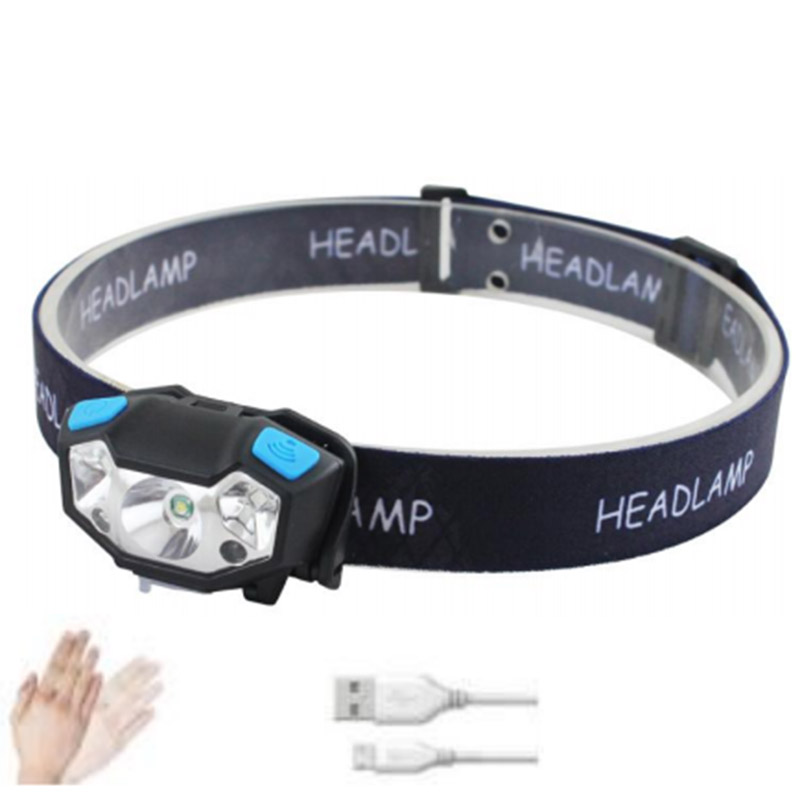
Approve strap artwork on a fitted sample, since strap stretch and buckle position can change which part of the logo is visible. Specify orientation, repeat spacing, contrast, edge finish and the strap material. Compare printed and woven-in designs if offered for the model. An artwork strip can look balanced while flat, then put half a logo behind the adjustment buckle when worn. Inspect the assembled band at the short, middle and long adjustments and confirm that the fit remains stable during normal use.
What should go on the retail box and instructions?
Release packaging artwork against the exact product, accessory list, sales channel and destination language requirements. A dieline is the packaging template that shows panels, cuts and folds. Approve the structural dieline before placing logos, operating instructions and symbols. Verify the packed sample contains the agreed strap, charging cable and printed materials. For a retailer that scans at checkout, verify the barcode on the final printed substrate and leave the required clear area around it. GS1 barcode quality checks.
Print a lumen, runtime, impact or ingress claim only when the test evidence covers the configuration the customer will receive. State the relevant operating mode and test method. Peak or initial light output describes a different part of the discharge curve from runtime. For example, ANSI/PLATO FL 1-2025 defines runtime using the initial output measured at 30 seconds and the point at which output falls to 10% of that value. If your channel also needs sustained output at a useful brightness, request the output curve and agree on a separate acceptance point. PLATO guidance on the 2025 performance standard.
The motion-sensor listing identifies the base product, and its title uses waterproof wording. Confirm the exact ingress claim and the report for the ordered version before adding an IP rating or a water-use illustration to the box. Check which charging-port and seal configuration was tested. A different port cover or enclosure can change the way water enters, even when the product looks similar on a retailer’s shelf. ANSI/IEC 60529 enclosure protection standard.
Use the production manual to show exactly how the headlamp enters and exits motion-sensor mode. Confirm the button sequence, indicator behaviour and any difference between white and red modes before illustrating them. The battery capacity identifies the cell specification, while runtime also depends on drive level and control behaviour. Keep the carton, instruction sheet and online product listing on the same approved claim set.
When does private label work become a product change?
Use an existing platform with cosmetic branding when the current beam, runtime, charging and sensor functions already meet the order requirements. A logo and retail pack generally leave more parts of the baseline product available for comparison. Ask for written confirmation of the retained configuration and the changes being quoted. If a colour option uses a different resin or finish, review its consequences for fit, seals and optical windows rather than assuming it is an artwork-only change.
Requalify the affected functions when a new LED, battery, sensor window, housing material or firmware setting changes the operating conditions. Higher LED drive can increase heat and trigger earlier output reduction. A new battery or charge circuit can alter the thermal and charging profile. For a motion-sensor design, test gesture response in the intended modes after any changes near the sensor. Give the supplier the expected use and acceptance points so the prototype can be assessed against an agreed target.
A distinct shell shape, new strap construction or proprietary control sequence can justify deeper customization when buyers can explain the benefit and confirm the order supports it. Ask about tooling, revision control and whether the factory requires a fresh validation sample before future replenishment. If the supplier changes a component during the program, request advance notice and review which claims or approvals need new evidence.
What should you approve before the first production run?
Use a signed production-reference sample and matching documents to control the move from artwork to bulk delivery. Start with a base sample to check function, then approve a finished sample made with the intended decoration, strap and print specification. Ask the factory to identify differences if a rendering, hand-made sample or proof uses materials or processes that will change in production.
- Record the base model, revision, market, channel, launch date and target quantities by colour and packaging variant.
- Send logo assets and a placement drawing. Specify the allowable appearance or reference colour, pack format, languages, accessories and barcode data.
- Request a quotation that lists the smallest order by finished variant and any separate limits for straps, print batches or cartons. Ask which approvals start the sample and production lead times.
- Approve the lamp, strap and packaging as one configuration. Check appearance and basic function on the assembled sample. Request relevant performance reports with model and revision traceability.
- Retain the signed sample and artwork revision for incoming inspection. Agree on which defects trigger review and which component or artwork changes require renewed approval.
Compare replenishment terms by variant, because a low lamp minimum can still leave an importer with unused custom straps or boxes. Ask whether variants can share a common base quantity and who owns unused printed material. As a planning example, two housing colours and two box languages create four finished variants if every colour is sold in both languages. Where your channel permits it, a common box with an approved language insert or variable SKU label can reduce the count of separately printed boxes. Confirm how the factory prevents pack mix-ups and how the retailer distinguishes each sellable SKU.
At incoming inspection, check the printed model and variant against the lamp and strap inside the carton. A correct master carton label can still conceal a product packed in the wrong language box or with the wrong strap. Compare a packed unit with the approved reference, confirm the barcode resolves to the intended SKU, and record the lot so a mismatched shipment can be traced back to the packing run.
Frequently asked questions
Can I add my brand to an existing headlamp platform?
Yes, when the factory confirms the decoration and packaging options for the chosen model. Approve the logo position, process and assembled sample, and record the baseline configuration to be carried into the order.
Can the housing and strap use different logo treatments?
Yes, when both marking methods are compatible with their substrates. Approve each treatment on its production material, then review the combined appearance and function on the assembled headlamp.
Does a custom colour require new tooling?
Ask whether the existing mold and resin system can produce the requested colour. A revised shape or new mounting feature can require tooling, while a colour change may require colour matching and a material or finish check.
Can I use the base headlamp’s runtime and water-resistance figures?
Use them when the supplier can show that the evidence covers the final version and the claimed operating conditions. If changes affect sealing, output or power, review which claims need to be verified again.
What affects the minimum order for a branded headlamp?
Minimums can depend on the lamp model, housing colours, strap production and packaging print runs. Ask for the minimum by sellable variant and for any conditions on combining quantities.
What should I send when requesting a sample quote?
Provide the model or preferred function, target order quantities, artwork, logo placement, destination, packaging and any performance or test requirements. Ask what the sample will represent and which approvals are still needed.
Request a private label headlamp sample
Once you know which changes belong on the first order, ask Mengting for a sample quote for wholesale buyers. Send the product reference, artwork files and an itemized list of housing, strap and pack requirements. Ask for the sample scope, variant minimums and realistic schedule in the same quote so you can approve the configuration you intend to reorder.
Post time: Nov-23-2026


