 fannie@nbtorch.com
 +0086-0574-28909873



Introduction
China’s outdoor lighting supply chain gives OEM buyers access to mature LED component networks, lower tooling costs, and factories that can move from prototyping to volume production quickly. The challenge is not simply finding a supplier, but identifying one that can meet technical, quality, and compliance requirements without creating hidden risks in durability, battery safety, or delivery performance. This guide explains how to evaluate Chinese camping lantern manufacturers, compare key production regions, verify engineering and testing capabilities, and structure sourcing decisions that support both product reliability and margin. It will help you approach supplier selection with clearer criteria before entering pricing, sampling, and OEM development discussions.
Why Source Camping Lanterns from China
China has firmly established itself as the global epicenter for OEM outdoor lighting, offering an unparalleled manufacturing ecosystem that integrates raw material processing, precision tooling, printed circuit board assembly (PCBA), and final product testing. For procurement professionals and brand managers, navigating this landscape requires a sophisticated understanding of regional specializations. Hubs such as Shenzhen and Zhongshan in Guangdong province dominate the high-tech and LED component sectors, while Ningbo in Zhejiang province excels in plastic injection molding and high-volume assembly.
Engaging with this highly concentrated supply chain allows brands to bypass fragmented multi-region procurement. However, maximizing the value of these industrial clusters demands rigorous technical oversight. Buyers must move beyond surface-level aesthetics and scrutinize the underlying engineering, as the variance in component quality across different tiers of suppliers can drastically alter a product’s lifecycle and brand reputation.
Commercial advantages for OEM buyers
The primary commercial advantage of partnering with Chinese manufacturers lies in the aggressive amortization of tooling and development costs. In Western markets, custom plastic injection molds for a proprietary lantern housing can easily exceed $15,000 to $25,000. In contrast, leveraging the integrated tool shops prevalent in Guangdong can reduce these capital expenditures to a band of $3,000 to $6,000, significantly lowering the barrier to entry for custom IP.
Furthermore, economies of scale dictate highly flexible Minimum Order Quantities (MOQs). While domestic suppliers might require massive commitments, buyers pursuing Wholesale Camping Gear from China can frequently negotiate pilot runs of 1,000 to 2,000 units. This flexibility allows brands to test market viability with specialized SKUs—such as lanterns featuring integrated power banks or solar charging capabilities—without tying up excessive working capital in unproven inventory.
Key factors that affect lantern reliability
The operational longevity of a camping lantern is dictated by the thermal management of its LED array and the chemical stability of its energy storage. A common failure point in sub-tier manufacturing is inadequate heat dissipation. SMD (Surface-Mount Device) or COB (Chip-on-Board) LEDs generating luminous fluxes above 1,000 lumens require dedicated aluminum heat sinks. Without proper thermal management, junction temperatures can exceed 85°C, accelerating lumen depreciation and causing the diode to fail prematurely.
Battery chemistry is equally critical. Reliable suppliers utilize A-grade lithium-ion cells (typically 18650 or 21700 formats) with integrated Battery Management Systems (BMS) to prevent overcharging, deep discharging, and thermal runaway. A high-quality lantern should guarantee a capacity retention of at least 80% after 500 complete charge cycles. Procurement teams must specify these tolerances in their technical dossiers to prevent unauthorized substitutions during mass production.
How to Evaluate Camping Lantern Quality
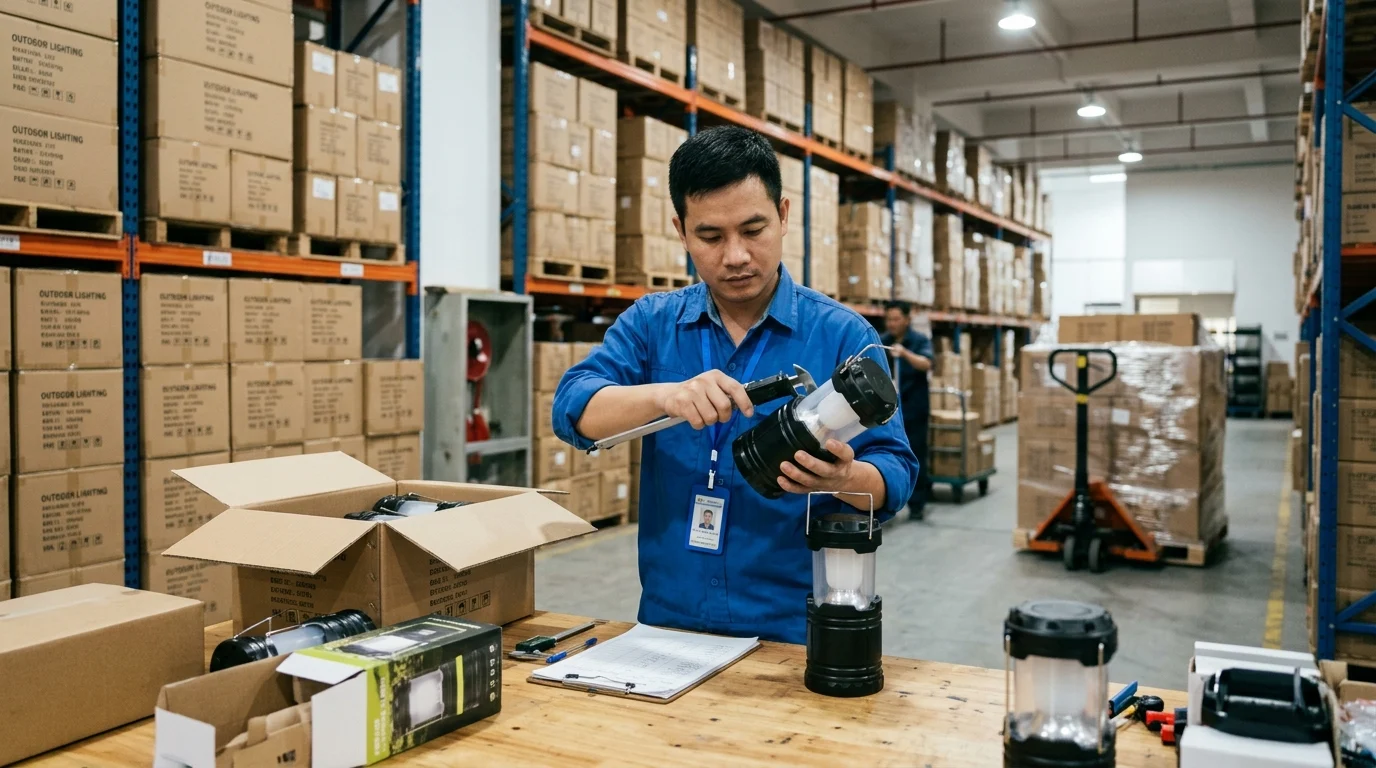
Evaluating the quality of a camping lantern requires systematically decomposing the product into its core electro-mechanical components. Rather than relying on a supplier’s marketing claims, procurement teams must demand comprehensive specification sheets detailing photometric data, electrical efficiency, and mechanical durability. Establishing baseline metrics ensures that prospective manufacturers are quoting against identical performance standards.
Core technical specifications to compare
Luminous efficacy and photometric distribution are the foundational metrics of any outdoor lighting product. Buyers must specify not just the maximum lumen output—which typically ranges from 300 to 1,500 lumens for modern camping applications—but also the Color Rendering Index (CRI) and Correlated Color Temperature (CCT). A premium lantern should offer a CRI greater than 80 to ensure accurate color representation in outdoor environments, along with selectable CCT profiles (e.g., 2700K warm white for ambient lighting and 6000K cool white for task lighting).
Runtime and power consumption metrics must be validated through discharge curves rather than theoretical calculations. An OEM specification should require a minimum continuous runtime of 8 to 12 hours at a 50% brightness threshold, utilizing a standard 3.7V 5200mAh battery configuration. Parasitic drain—the power consumed by the PCBA when the lantern is turned off—must also be capped below 50 microamps to ensure the device remains functional after months in storage.
How batteries, LEDs, housings, and IP ratings affect performance
The interaction between batteries, LEDs, and external housings dictates the product’s resilience in harsh environments. The housing material must balance weight, light diffusion, and impact resistance. High-grade polycarbonate (PC) blended with Acrylonitrile Butadiene Styrene (ABS) is the industry standard, capable of surviving a 1.5-meter drop test onto concrete. The transparency and UV-resistance of the PC globe are vital to prevent yellowing over time, which can degrade light transmission by up to 20%.
Ingress Protection (IP) ratings are non-negotiable for outdoor gear. While IPX4 (splash resistance) is sufficient for entry-level products, professional-grade lanterns require an IP65 or IP67 certification. Achieving an IP67 rating necessitates precision-engineered silicone O-rings, ultrasonic welding on critical seams, and potted electronics. Buyers must verify that the supplier’s tooling tolerances are tight enough (often within 0.05mm) to maintain these seals consistently across production batches.
What to include in a sourcing comparison table
To standardize the bidding process, procurement teams should utilize a rigorous comparison matrix. This matrix forces suppliers to commit to specific components and tolerances, stripping away ambiguity. When engaging an LED Lantern Supplier, the following parameters should form the baseline of the Request for Quotation (RFQ).
| Specification Parameter | Entry-Level Tier | Professional OEM Tier | Target Tolerance / Standard |
|---|---|---|---|
| Luminous Flux | 300 – 500 lm | 1000 – 1500+ lm | ±5% verified via Integrating Sphere |
| Battery Chemistry | Generic Li-ion (Unbranded) | Tier 1 Li-ion (e.g., LG, Samsung) | >80% retention at 500 cycles |
| IP Rating | IPX4 | IP65 / IP67 | Verified via IEC 60529 testing |
| Housing Material | Recycled ABS | Virgin PC/ABS Blend | Passes 1.5m drop test |
| PCBA Defect Rate | > 2.0% | < 0.5% | Measured at Outgoing Quality Control |
How to Vet Chinese Camping Lantern Suppliers
Transitioning from product specification to supplier selection requires rigorous due diligence to separate authentic manufacturers from trading companies. A robust vetting process minimizes supply chain disruptions and ensures that the chosen factory possesses the actual infrastructure required to meet stringent quality and capacity demands.
Factory capabilities, certifications, and audit checks
A credible manufacturer must demonstrate a mature Quality Management System (QMS). Buyers should mandate ISO 9001:2015 certification as a baseline, but physical or third-party audits are necessary to verify compliance. Auditors should specifically examine the facility’s Incoming Quality Control (IQC) for raw materials, In-Process Quality Control (IPQC) on the assembly line, and Outgoing Quality Control (OQC) protocols.
Social compliance is equally critical for modern brands. Certifications such as BSCI (Business Social Compliance Initiative) or Sedex SMETA audits protect buyers from reputational damage associated with poor labor practices. When evaluating a China Lighting Manufacturer, request their latest audit reports and verify the expiration dates directly with the issuing bodies to ensure continuous compliance.
Tooling, customization, and production capacity
A factory’s true capability is often reflected in its tooling and engineering departments. Suppliers with in-house CNC machining and EDM (Electrical Discharge Machining) equipment can expedite custom mold modifications and maintain tighter control over intellectual property. Standard production lead times for established SKUs generally range from 25 to 35 days, but custom tooling can add 30 to 45 days to the initial project timeline.
Production capacity must be assessed against the buyer’s peak seasonal demands. A reliable OEM partner should have a demonstrable throughput of at least 50,000 to 100,000 units per month across multiple automated or semi-automated assembly lines. Buyers should request capacity utilization rates; a factory operating consistently at 95% capacity may struggle to absorb unexpected order surges without subcontracting, which introduces severe quality risks.
Red flags in quality, compliance, and delivery
Identifying red flags early in the negotiation phase can save immense capital. One of the most prevalent deceptive practices involves battery capacity falsification, where suppliers insert sand-filled dummy cells or mislabel 1200mAh batteries as 3000mAh. A legitimate factory will possess in-house battery aging racks and capacity testers to prove their cell specifications.
Another critical warning sign is the refusal to accept standard Acceptable Quality Limit (AQL) inspections. Industry standards dictate an AQL of 1.5 for major defects and 4.0 for minor defects. If a supplier pushes back against these thresholds or restricts third-party inspection agencies (like SGS or TÜV) from accessing their facility, it strongly indicates a lack of process control or an intent to ship non-conforming goods.
Compliance, Testing, and Logistics Risks
The final hurdles in offshore procurement involve regulatory compliance, robust reliability testing, and the logistical complexities of transporting dangerous goods. Camping lanterns, particularly those housing high-density lithium-ion batteries, are subject to stringent international safety directives that govern both their importation and their physical transportation.
Applicable standards, electrical rules, and battery shipping requirements
Electrical and chemical compliance is non-negotiable. For the European market, products must adhere to CE directives, specifically the Electromagnetic Compatibility (EMC) Directive and the Restriction of Hazardous Substances (RoHS) Directive. In the United States, FCC Part 15 compliance is required to ensure the device’s PCBA does not emit harmful radio frequency interference. Failure to provide valid test reports from an ILAC-accredited laboratory can result in immediate customs seizure.
Battery shipping regulations represent a significant logistical bottleneck. Lithium-ion batteries must pass UN38.3 testing, which simulates altitude, thermal extremes, vibration, and shock to ensure they do not pose a fire risk during air or sea freight. Furthermore, the cells must comply with IEC 62133 safety standards. Procurement teams looking for a Reliable Camping Light must ensure the supplier provides a current Material Safety Data Sheet (MSDS) and UN38.3 certificate before booking freight.
Sampling, inspection, and reliability testing methods
To guarantee performance in the field, reliability testing must extend beyond basic functionality. Golden samples should be subjected to accelerated life testing (ALT) to simulate years of environmental stress. This testing framework should be explicitly defined in the purchasing contract and executed prior to mass production approval.
| Test Category | Methodology / Parameters | Pass/Fail Criteria | Relevance to Outdoor Use |
|---|---|---|---|
| Thermal Cycling | -20°C to +60°C transitions, 48 hours | No cracking; 100% functionality | Simulates extreme winter/summer shifts |
| Salt Spray Test | 5% NaCl solution at 35°C, 48 hours | No visible oxidation on contacts | Corrosion resistance in coastal areas |
| Vibration Test | 10-55Hz variable frequency, 2 hours/axis | No loose solder joints or parts | Durability during transit and hiking |
| Switch Endurance | Automated mechanical depression | 10,000+ cycles without failure | Guarantees UI longevity |
Packaging, Incoterms, and landed cost considerations
The choice of Incoterms drastically impacts landed costs and liability. Sourcing under Free On Board (FOB) terms from major ports like Shenzhen or Ningbo is generally preferred, as it forces the supplier to handle local export customs and domestic transit. Ex Works (EXW) pricing may appear lower on the proforma invoice, but it shifts the burden of Chinese domestic logistics and export clearance entirely onto the buyer.
Packaging design also plays a crucial role in landed cost optimization and defect reduction. Retail cartons must be designed to maximize container utilization—often targeting 4,000 to 5,000 units per 40HQ container for standard-sized lanterns. Furthermore, the master cartons must comply with ISTA 1A drop test standards to ensure the products survive the multimodal journey from the factory floor to the final distribution center without crushing or cosmetic damage.
Building a Long-Term Sourcing Decision Framework
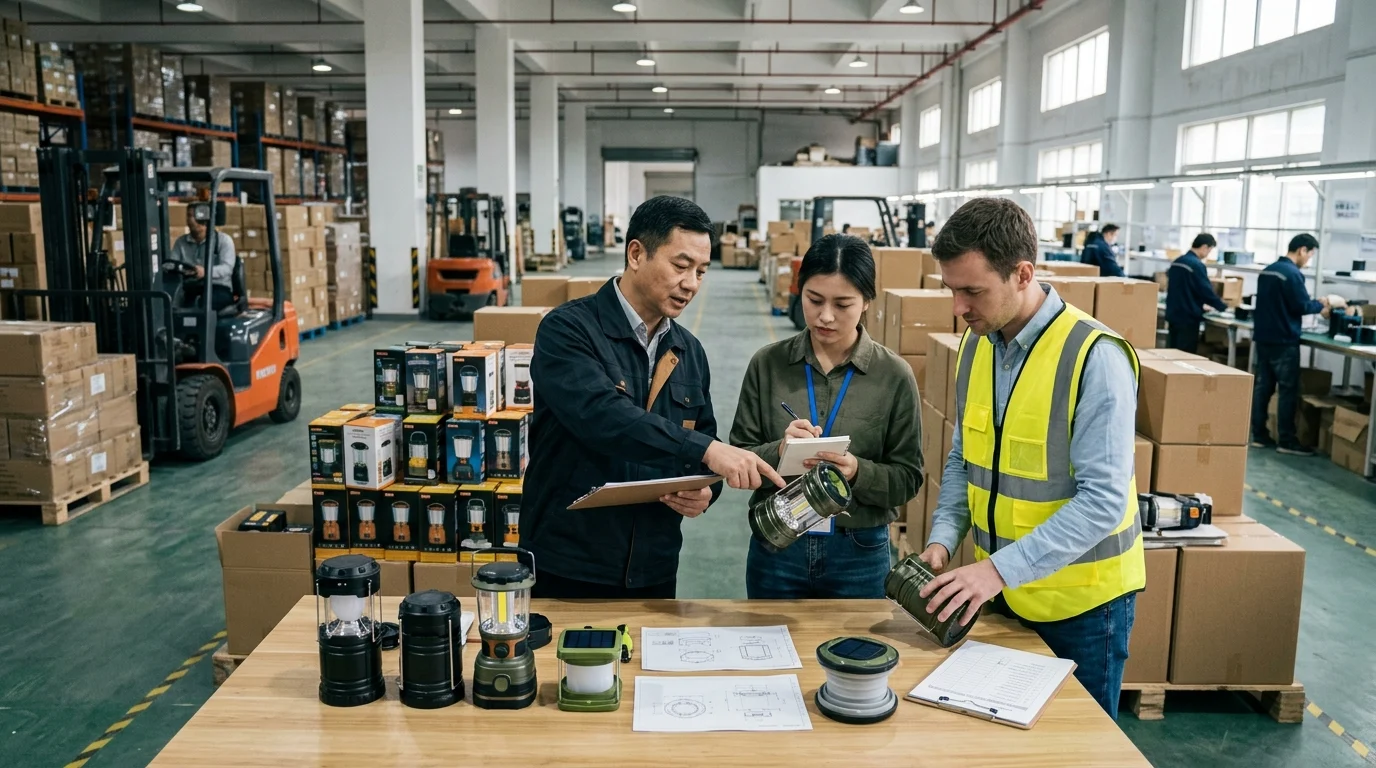
Establishing a resilient supply chain requires moving beyond transactional purchasing to build a structured, data-driven sourcing framework. This framework must systematically balance the inherent trade-offs between unit cost, customization flexibility, and the acceptable threshold for defect risk, ensuring that the chosen manufacturing partner aligns with the brand’s long-term strategic goals.
Balancing price, defect risk, and customization
Cost optimization should never compromise core safety or performance metrics. A typical OEM camping lantern’s Bill of Materials (BOM) is distributed roughly as follows: 30% for the battery pack, 25% for the LEDs and PCBA, 20% for the plastic housing and tooling amortization, and 25% for labor, packaging, and factory margin. Attempting to force a supplier below market-rate BOM costs inevitably leads to hidden component downgrades.
Buyers must evaluate customization against lead time and capital risk. While bespoke tooling offers strong brand differentiation, it requires upfront investments and extends time-to-market. A balanced approach often involves utilizing a supplier’s existing, high-quality public mold while heavily customizing the PCBA features, firmware, CCT profiles, and external CMF (Color, Materials, Finish) to achieve a proprietary feel with lower risk.
Process steps for repeat orders and supplier management
Managing repeat orders requires strict version control and continuous monitoring. Before initiating mass production, buyers must sign off on a ‘Golden Sample’ that serves as the definitive standard for all future inspections. Any deviation from this sample—whether a change in a resistor brand or a different silicone durometer for an O-ring—must trigger an Engineering Change Notice (ECN) requiring explicit buyer approval.
Supplier performance should be tracked using a standardized scorecard system. Key Performance Indicators (KPIs) must include On-Time Delivery rates (targeting >95%), Outgoing Defect Rates (targeting <1.0%), and responsiveness to Corrective and Preventive Action (CAPA) requests. Suppliers that consistently meet these metrics over three to four production cycles can be integrated into closer, strategic forecasting loops.
Final criteria for selecting a dependable OEM partner
The ultimate goal of Sourcing Camping Lanterns from China is to secure a partner capable of scaling alongside your brand. The ideal OEM manufacturer is not necessarily the one offering the lowest initial quote, but rather the one demonstrating transparent communication, robust internal quality controls, and a willingness to invest in compliance and testing.
By implementing stringent technical specifications, demanding verifiable certifications, and enforcing rigorous AQL inspections, procurement teams can mitigate the inherent risks of offshore manufacturing. This disciplined approach transforms the complex Chinese supply chain from a potential liability into a formidable competitive advantage, ensuring the delivery of highly reliable, profitable outdoor lighting products to the end consumer.
Key Takeaways
- The most important conclusions and rationale for OEM Outdoor Lighting
- Specs, compliance, and risk checks worth validating before you commit
- Practical next steps and caveats readers can apply immediately
Frequently Asked Questions
Why source camping lanterns from China for OEM projects?
China offers integrated LED, PCBA, tooling, and assembly supply chains, helping brands lower mold costs and launch custom lanterns faster with flexible pilot-run MOQs.
What specs should I request from a camping lantern supplier?
Ask for lumen range, CRI, CCT, runtime test data, battery type, BMS details, parasitic drain, IP rating, and thermal management information in a formal spec sheet.
How can I verify a lantern’s battery reliability?
Confirm it uses A-grade 18650 or 21700 cells with BMS protection and request cycle-life data showing at least 80% capacity retention after 500 charge cycles.
What makes a camping lantern durable outdoors?
Look for proper aluminum heat sinks, stable LED performance, strong housing materials, and a suitable IP rating to handle rain, dust, and repeated outdoor use.
Can mtoutdoorlight.com support custom camping lantern development?
Yes, mtoutdoorlight.com focuses on OEM outdoor lighting and can help align lantern specs, features, and production needs for branded camping light projects.
Post time: May-09-2026


