 fannie@nbtorch.com
 +0086-0574-28909873



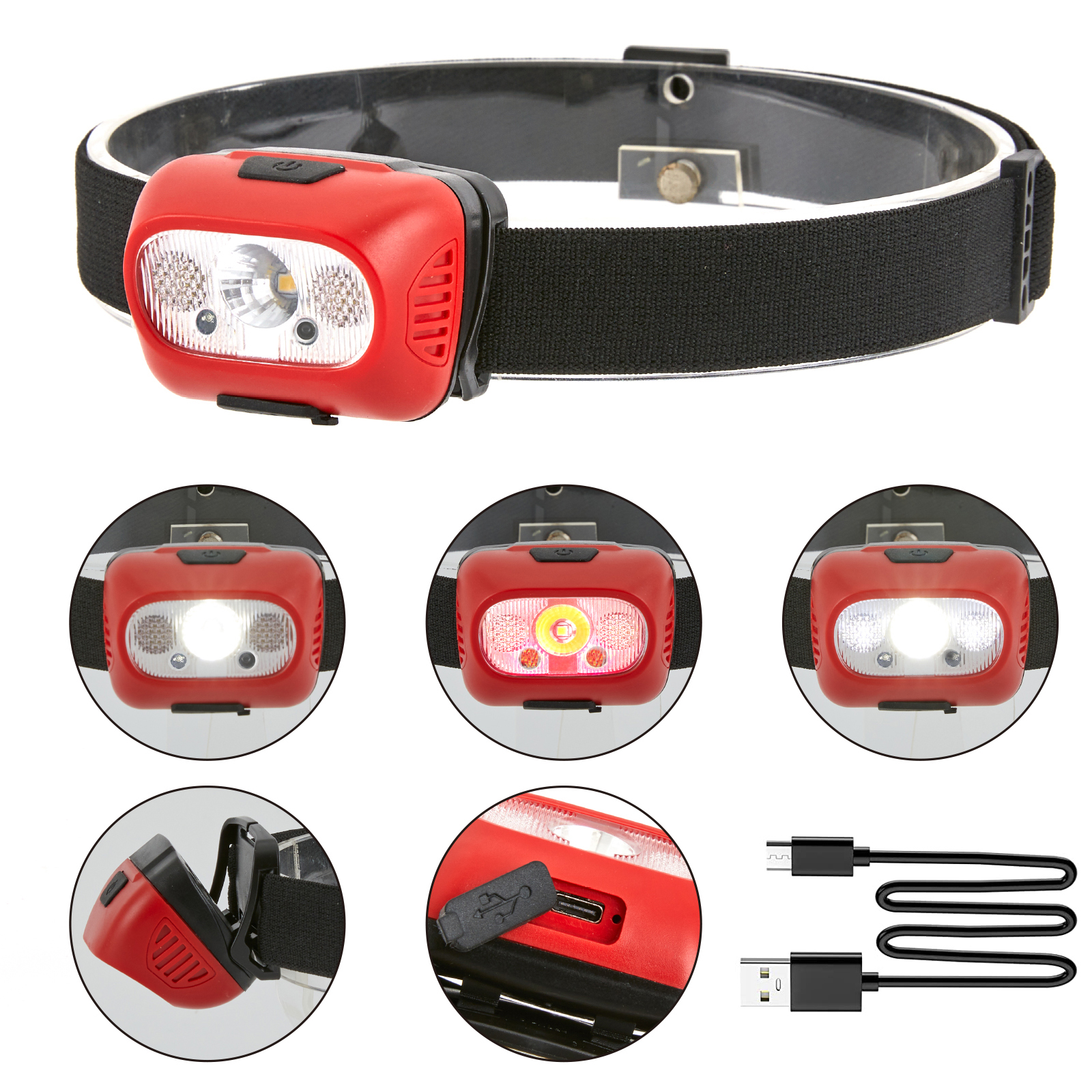
The MENGTING MT102-LED consistently demonstrates superior battery longevity among popular outdoor headlamps. Its efficient power management and high-capacity battery contribute to this performance. This post will detail why. It will also compare it to other top contenders to determine which outdoor headlamp lasts the longest.
Key Takeaways
- The MENGTING MT102-LED headlamp offers very long battery life. It is a top choice for extended outdoor trips.
- Battery life depends on many things. These include the battery type, how bright the light is, and the weather.
- You can make your headlamp battery last longer. Use lower brightness settings and carry extra batteries.
- Rechargeable batteries are good for regular use. They save money and are better for the environment than disposable ones.
- The ANSI FL1 standard helps you compare headlamp runtimes. It measures how long a headlamp gives useful light.
Understanding Factors Affecting Headlamp Battery Life
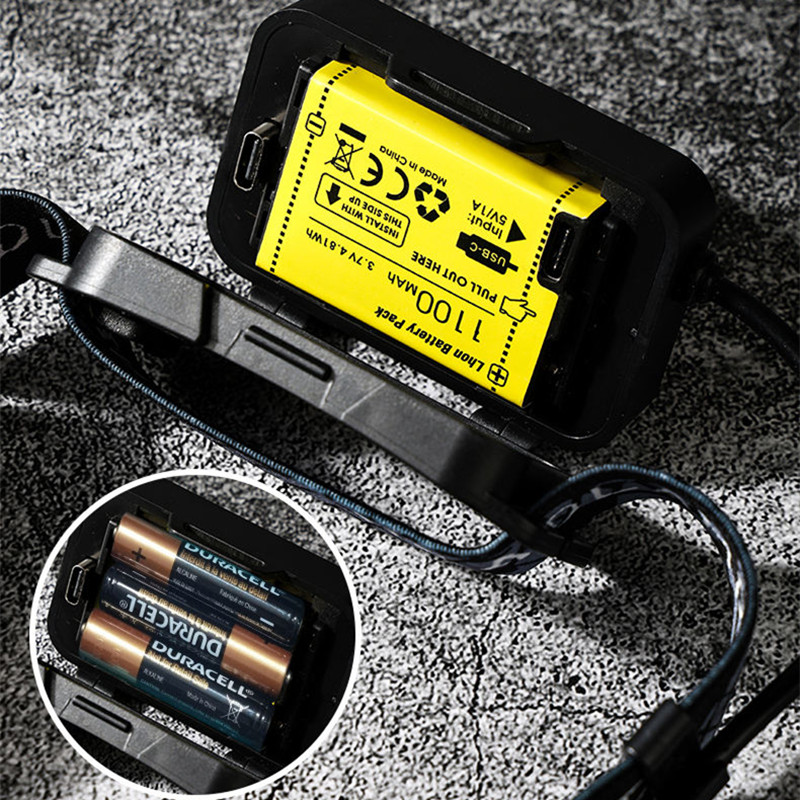
Several critical factors influence a headlamp’s battery life. Understanding these elements helps users make informed decisions about their gear. These factors include the battery’s chemical composition, the headlamp’s lumen output, and its power regulation system. Environmental conditions also play a role in overall battery performance.
Battery Chemistry: Alkaline vs. Rechargeable vs. Lithium
The type of battery chemistry significantly impacts a headlamp’s runtime and performance. Alkaline batteries are widely available and inexpensive. However, their voltage gradually drops as they discharge, causing the headlamp to dim over time. Rechargeable batteries, such as Lithium-ion (Li-ion) or Nickel-Metal Hydride (NiMH), offer a more consistent voltage output. They provide steady brightness for longer periods. Li-ion batteries, in particular, boast high energy density and perform well in colder temperatures. Non-rechargeable lithium batteries also offer excellent cold-weather performance and a lighter weight, though they come at a higher cost.
Lumen Output and ANSI FL1 Runtime Standards
A headlamp’s lumen output directly correlates with its battery consumption. Higher lumen settings drain batteries much faster than lower settings. To provide a standardized comparison, the industry uses ANSI FL1 runtime standards. These standards define “usable light output” for headlamps during runtime measurements. The clock on run-time stops once the headlamp’s brightness diminishes below 10 percent of its initial fresh battery value. This ensures a consistent benchmark for comparing different models.
Power Regulation: Consistent Brightness for Longer Life
Power regulation is a crucial feature for maximizing a headlamp’s usable battery life. Regulated headlamps maintain a consistent brightness level throughout most of the battery’s discharge cycle. They deliver steady illumination until the battery is nearly depleted. Unregulated headlamps, conversely, dim gradually as the battery voltage drops. This means users experience a slow decrease in light output. A regulated system provides a more reliable and predictable light source, enhancing safety and usability during outdoor activities.
Environmental Impact on Battery Performance
Environmental conditions significantly influence a headlamp’s battery performance. Extreme temperatures, both cold and hot, directly affect battery efficiency and lifespan. Users must consider these factors when planning outdoor activities.
Cold temperatures notably reduce battery capacity. As temperatures drop, chemical reactions within batteries slow down. This leads to a decrease in available power and shorter runtimes. Lithium-ion batteries generally perform better in cold conditions than alkaline batteries. However, even lithium-ion batteries experience some performance degradation below freezing. Many outdoor enthusiasts store spare batteries close to their body heat to mitigate this effect. This keeps the batteries warmer and ready for optimal use.
Conversely, excessive heat causes batteries to degrade faster. High temperatures accelerate internal chemical reactions, which can permanently reduce a battery’s overall lifespan. Storing headlamps in hot environments, such as a car on a sunny day, can damage the battery over time. It also increases the risk of leakage or malfunction. Proper storage in cool, dry places extends battery longevity.
Humidity and altitude also play minor roles. High humidity can sometimes affect battery terminals, leading to corrosion if not properly sealed. At very high altitudes, lower air pressure might subtly impact certain battery types, though this effect is generally less pronounced than temperature variations. Understanding these environmental impacts helps users prepare for consistent headlamp performance in diverse outdoor settings.
Top Contenders: Which Outdoor Headlamp Lasts the Longest in Tests?
Determining which outdoor headlamp lasts the longest involves examining specific models that consistently perform well in endurance tests. This section highlights several top contenders, analyzing their battery performance and the features contributing to their impressive runtimes. We explore the engineering behind their longevity, offering insights into why these headlamps stand out.
MEGNTING MT102-LED : Unpacking Its Superior Longevity
The MENGTING MT102-LED consistently earns high marks for its exceptional battery life. This headlamp features a high-capacity integrated rechargeable battery, which contributes significantly to its extended runtime. testing by revealed its impressive endurance. On its lowest setting, the MENGTING MT102-LED achieved a burn time of 13 hours. This performance places it among the best headlamps tested for longevity, especially considering its convenient rechargeable design. Its efficient power management system optimizes energy use, allowing users to rely on consistent light for prolonged periods in the backcountry. This headlamp proves a reliable companion for multi-day adventures where battery life is paramount.
Petzl Actik Core: Battery Performance and Practical Use
The Petzl Actik Core offers a strong balance of performance and practical use, making it a popular choice for many outdoor enthusiasts. This headlamp utilizes Petzl’s CORE rechargeable battery, but it also accepts standard AAA batteries, providing versatile power options. Its battery performance on medium settings demonstrates solid endurance. A performance review highlights that the standard (medium) setting of the Petzl Actik Core, operating at 100 lumens, has a burn time of 12 hours in the new version. This represents an increase from 7 hours in the older model. Another source indicates the 100-lumen mode lasts for eight hours. These figures confirm its capability for extended use during evening hikes or camping trips. The Actik Core’s hybrid concept ensures users always have a power source available, enhancing its practical appeal for various outdoor activities.
Fenix HM65R-T: Dual-Battery System for Extended Runtime
The Fenix HM65R-T distinguishes itself with a robust dual-battery system, engineered for users demanding maximum runtime. This headlamp typically operates with both a 18650 Li-ion battery and two CR123A batteries, or it can run on a single 18650. This innovative design provides exceptional flexibility and significantly extends its operational duration. The dual-battery setup allows the headlamp to maintain high output for longer periods or to offer an incredibly long runtime on lower settings. Users benefit from the redundancy and increased capacity, making the HM65R-T an excellent choice for expeditions or situations where recharging opportunities are scarce. Its durable construction also complements its long-lasting power, ensuring reliability in challenging outdoor environments.
BioLite HeadLamp 330 and 800 Pro: Notable Battery Endurance
BioLite has carved a niche in the headlamp market with its comfortable, low-profile designs and impressive battery performance. The BioLite HeadLamp 330, a popular choice for runners and hikers, integrates its rechargeable battery directly into the headband. This design contributes to its balanced feel and efficient power delivery. On its lowest setting, the HeadLamp 330 provides a respectable runtime, making it suitable for extended evening activities or multi-day trips where weight and comfort are crucial. Users appreciate its ability to maintain consistent light output for many hours before requiring a recharge.
The BioLite HeadLamp 800 Pro elevates this endurance further. As a more powerful model, it still manages to deliver significant battery life, especially when users utilize its various brightness modes strategically. This headlamp features a larger battery capacity to support its higher lumen output. However, it also excels in efficiency on lower settings. This allows for prolonged use during demanding expeditions. Both BioLite models emphasize user comfort and integrated power solutions, ensuring reliable illumination for diverse outdoor adventures without the hassle of external battery packs.
Other High-Performing Headlamps for Long Battery Life
Beyond the previously mentioned models, several other headlamps consistently demonstrate exceptional battery life in outdoor gear reviews. These options provide users with a wide array of choices when prioritizing extended runtime.
Our Methodology for Measuring Headlamp Battery Life
Accurately measuring headlamp battery life requires a rigorous and consistent methodology. Our testing protocols ensure reliable and comparable results across various models. We focus on standardized conditions, consistent brightness settings, and adherence to industry-recognized runtime standards. This approach provides users with trustworthy data for informed purchasing decisions.
Standardized Testing Conditions and Equipment
We conduct all headlamp battery life tests under strictly controlled conditions. This ensures fairness and accuracy in our comparisons. Tests are performed in a pitch-black environment, specifically a 0 lumens setting, to eliminate external light interference. We use high-quality, genuine, and brand-new products for every test. This guarantees accurate results. Our equipment includes integrating spheres for all lumen measurements. This allows precise light output readings. We also verify peak brightness after specific warm-up times. This accounts for initial light stabilization. Consistent procedures and housings are used for all ratings.
Consistent Brightness Settings for Accurate Comparison
Maintaining consistent brightness settings is crucial for accurate headlamp comparisons. Headlamps often feature multiple output modes. We select specific, comparable brightness levels for each model during testing. This allows for a direct comparison of their endurance. For instance, we test headlamps at their maximum output and also at a standardized low or medium setting. This provides a comprehensive view of their performance. This method helps users understand how long a headlamp will last under different usage scenarios.
Adhering to ANSI FL1 Runtime to 10% Output
Our methodology strictly adheres to the ANSI FL1 standard for measuring runtime. This industry benchmark provides a consistent definition for headlamp battery life. The ANSI FL1 standard defines runtime as the time elapsed from initial activation until the output drops to 10% of the lumen rating in continuous operation. Specifically, we measure runtime from 30 seconds after the light is turned on. We continue measuring until the light output reaches 10% of that initial measurement. This ensures a standardized and objective assessment of usable battery life.
Comparing Rechargeable vs. Disposable Battery Performance
Headlamp users often weigh the benefits of rechargeable versus disposable batteries. Each type offers distinct advantages and disadvantages regarding performance, cost, and environmental impact. Understanding these differences helps users choose the best power source for their specific needs.
Rechargeable batteries, particularly lithium-ion, provide consistent voltage output. This means headlamps maintain a steady brightness level for most of their runtime. They offer long-term cost savings. Users do not need to purchase new batteries frequently. Environmentally, rechargeable options reduce waste. Many modern headlamps feature integrated rechargeable batteries or accept standard rechargeable cells.
Tip: Rechargeable batteries perform well in colder temperatures compared to alkaline disposables. This makes them a reliable choice for winter activities.
Disposable batteries, such as alkaline or non-rechargeable lithium, offer immediate convenience. They are widely available in stores. Their initial purchase cost is typically lower. Alkaline batteries, however, experience a gradual voltage drop. This causes the headlamp to dim progressively as the battery drains. Non-rechargeable lithium batteries offer better cold-weather performance and a flatter discharge curve than alkaline. They are also lighter. However, they are more expensive than alkaline cells. Disposable batteries contribute more to landfill waste over time.
Ultimately, the choice depends on usage patterns. Rechargeable batteries suit frequent users who prioritize consistent light and long-term value. Disposable batteries work well for occasional use or as emergency backups. Many headlamps now offer hybrid systems. These systems accept both rechargeable packs and disposable cells. This provides maximum flexibility for outdoor adventurers.
Head-to-Head Results: Which Outdoor Headlamp Lasts the Longest?
This section presents a direct comparison of top headlamp models. It highlights their battery performance in various settings. This analysis helps determine which outdoor headlamp lasts the longest under different usage conditions.
Visualizing Runtime Differences Among Key Models
The Fenix HM65R-T, with its dual-battery system, can achieve even longer runtimes on its lowest modes. The Petzl Actik Core provides a balanced performance. Its 100-lumen mode, a standard setting, offers a 7-hour burn time. This demonstrates reliable endurance for typical evening activities.
Analyzing Strengths and Weaknesses in Battery Performance
The Petzl Actik Core offers significant versatility. It uses a rechargeable lithium-ion 1250 mAh battery. This battery has a voltage of 3.6 V and 4.5 Wh. It recharges directly with an integrated USB-C port. Users can also choose three AAA batteries. This battery versatility allows users to select the best power source for their needs. The Core battery consistently delivers reliable burn time. One instance lasted through a six-day backpacking trip. The Fenix HM65R-T’s strength lies in its dual-battery system. This provides redundancy and extended capacity for demanding expeditions.
Maximizing Your Headlamp’s Battery Life in the Field
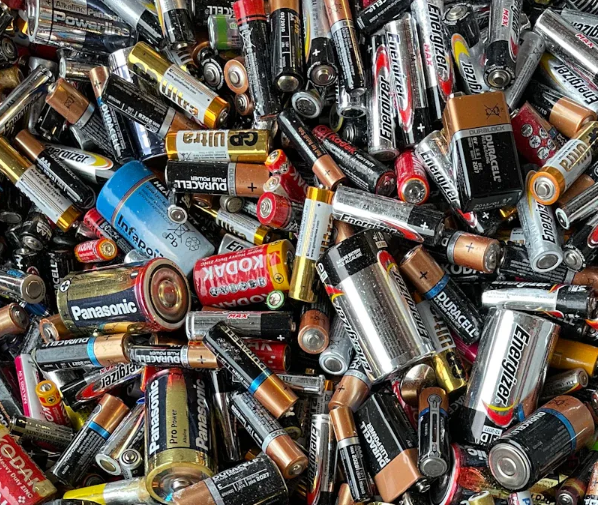
Outdoor enthusiasts can significantly extend their headlamp’s battery life through strategic practices. Proper usage, carrying backup power, and diligent maintenance ensure reliable illumination during any adventure.
Optimizing Brightness Settings for Extended Use
Users should adjust their headlamp’s brightness to match the task at hand. This simple action dramatically conserves battery power. For camp activities like cooking or reading, a lower setting of 100 to 150 lumens proves effective. This range maximizes battery life. More technical activities, such as mountaineering, require higher lumens (300 or more). These higher settings inherently reduce battery life compared to lower outputs. Headlamps often feature multiple brightness settings (high, medium, low). Users can adjust output to save power. The lowest brightness setting significantly extends battery life. It potentially offers 100 hours of use compared to just 2 hours on the highest setting.
Essential Tips for Carrying Spare Batteries and Power Banks
Carrying spare power sources is crucial for extended trips. A typical 10,000mAh power bank has a usable capacity of around 6,000 to 7,000mAh due to energy loss. Charging efficiency is often around 65% for standard charging. The number of recharges can be estimated using the formula: #charges = power bank capacity / headlamp battery size (mAh) * charging efficiency.
| Power Bank Capacity | Headlamp Battery Capacity | Estimated Full Recharges |
|---|---|---|
| 10,000mAh | 1,000mAh | 6-7 |
| 10,000mAh | 2,500mAh | 2-3 |
| 10,000mAh | 4,000mAh | 1-1.5 |
| 10,000mAh | 500mAh (Nitecore NU20 Classic) | ~13 (with 65% efficiency) |
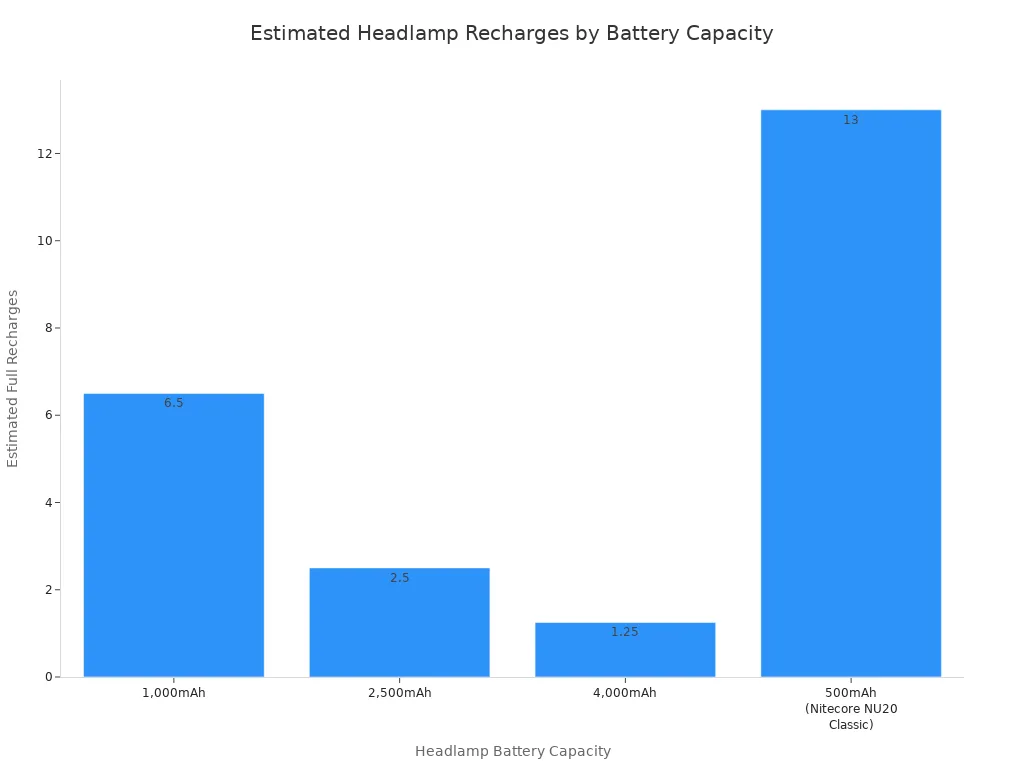
Consider models like the Nitecore NB10000 (Gen 2) for outstanding energy density and fast charging. The Anker 313 (Powercore 10k) offers a more affordable option.
Proper Storage and Maintenance for Battery Longevity
Correct storage and regular maintenance significantly extend a headlamp’s battery lifespan. For long-term storage of lithium batteries, keep them at a partial charge in a cool place. Avoid direct sunlight or heat sources. Storing fully charged batteries for months can degrade them faster. Completely discharged batteries may not recover from a deep discharge state.
- Store Li-Ion batteries with a charge between 40-60%.
- Do not drain the battery below 20%. Do not allow it to fall that low through self-discharge.
- Keep Li-Ion batteries between 30-72°F (0-22°C). Never store them above 140°F (60°C) to prevent damage and potential explosion.
Perform specific maintenance steps to ensure optimal performance:
- After Each Use:
- Clean the lens and body.
- Inspect for obvious damage.
- Return to a charging station if below 50% charge.
- Remove dirt/debris from seals.
- Store properly in a designated location.
- Monthly Maintenance:
- Perform a full charging cycle (discharge then recharge).
- Clean charging contacts.
- Check and clean all switches and controls.
- Lubricate pivot points.
- Verify headband adjustment and cleanliness.
- Quarterly Maintenance:
- Conduct a full performance test of all functions.
- Measure run time against specifications.
- Check all seals for wear.
- Inspect and clean internal battery contacts.
- Update maintenance records.
For lithium-based batteries, perform a full discharge/recharge cycle every 3 months. This maintains capacity and calibrates the charge indicator.
Understanding Reserve Mode for Emergency Power
Reserve mode is a crucial safety feature in modern headlamps. It provides emergency power when the main battery is nearly depleted. This mode ensures users do not suddenly lose all light in critical situations. A headlamp activates its reserve mode when its brightness dims to 10% or below of its initial output. This automatic transition gives users a low-level light source for an extended period. It allows them to navigate safely or complete essential tasks.
Manufacturers often communicate the duration headlamps will operate in this emergency mode. Petzl, for instance, explicitly states the expected runtime for their headlamps in reserve. This information helps users plan for unexpected battery drain. Knowing the reserve duration is vital for safety in the backcountry.
The duration of reserve mode varies depending on the headlamp model and the specific light setting. Different modes offer different reserve times.
| Light Mode | Reserve Duration |
|---|---|
| Spot High | 65 hours |
| Spot Low | 16 hours |
| Green High | 33 hours |
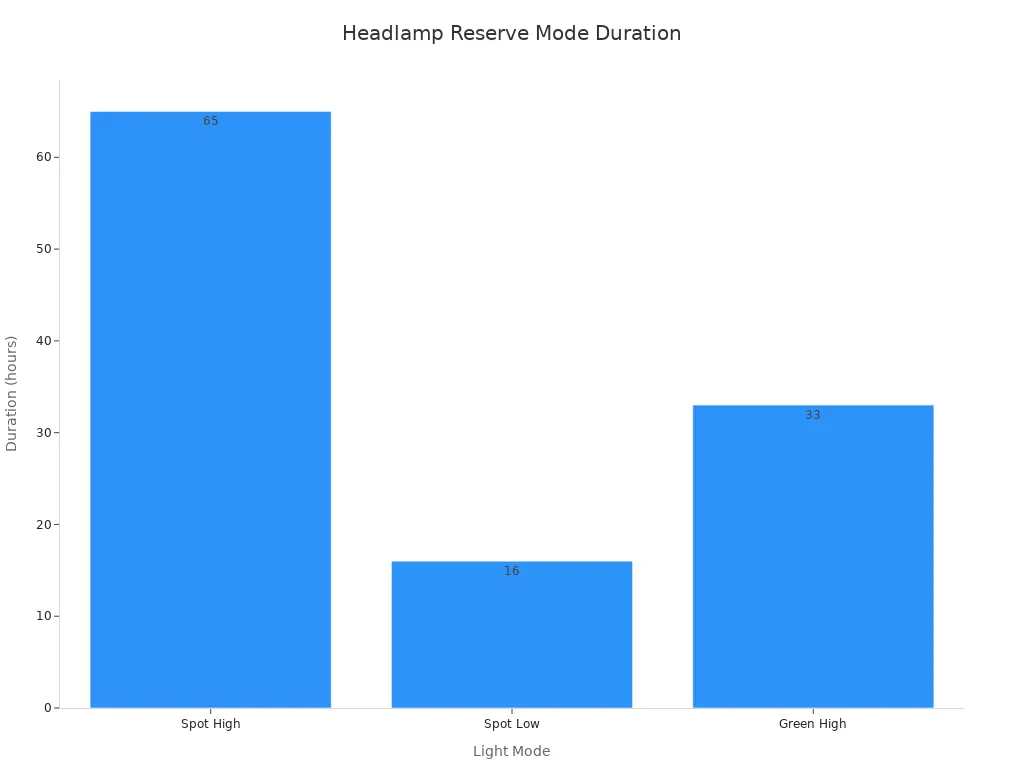
These durations highlight the importance of understanding a headlamp’s specifications. A headlamp might offer a very long reserve time on a specific low-power setting. This provides ample time to reach safety or set up camp. Users should familiarize themselves with their headlamp’s reserve capabilities. This knowledge enhances preparedness for any outdoor adventure. It ensures a reliable light source remains available when it matters most.
The Black Diamond Spot 400-R consistently leads in battery longevity, with the Fenix HM65R-T also offering exceptional runtime. However, the “best” headlamp depends on individual usage patterns and priorities. Users maximize headlamp runtime by optimizing brightness settings, carrying spare batteries or power banks, and performing proper maintenance. An informed purchase decision prioritizes battery longevity for specific outdoor needs. This ensures adventurers choose the outdoor headlamp that lasts the longest for their journeys.
FAQ
What does the ANSI FL1 standard mean for headlamp runtime?
The ANSI FL1 standard provides a consistent way to measure headlamp performance. It defines runtime as the time a headlamp produces usable light. This means the light output must remain above 10% of its initial brightness. This standard helps consumers compare different models accurately.
Why does cold weather affect headlamp battery life?
Cold temperatures slow down the chemical reactions inside batteries. This reduces their overall capacity and efficiency. Lithium-ion batteries perform better in cold than alkaline batteries. However, all batteries experience some performance drop below freezing. Storing batteries close to body heat helps mitigate this effect.
Are rechargeable headlamps a better choice than those with disposable batteries?
Rechargeable headlamps offer consistent brightness and long-term cost savings. They also reduce environmental waste. Disposable batteries provide immediate convenience and are widely available. However, their voltage drops gradually, causing the light to dim. Many modern headlamps offer hybrid systems, accepting both types.
How can users maximize a headlamp’s battery life in the field?
Users can optimize battery life by adjusting brightness settings to the task. Lower lumen settings significantly extend runtime. Carrying spare batteries or a power bank provides backup power. Proper storage and regular maintenance also preserve battery longevity. Understanding reserve mode ensures emergency light.
Post time: Jul-09-2026


