 fannie@nbtorch.com
 +0086-0574-28909873



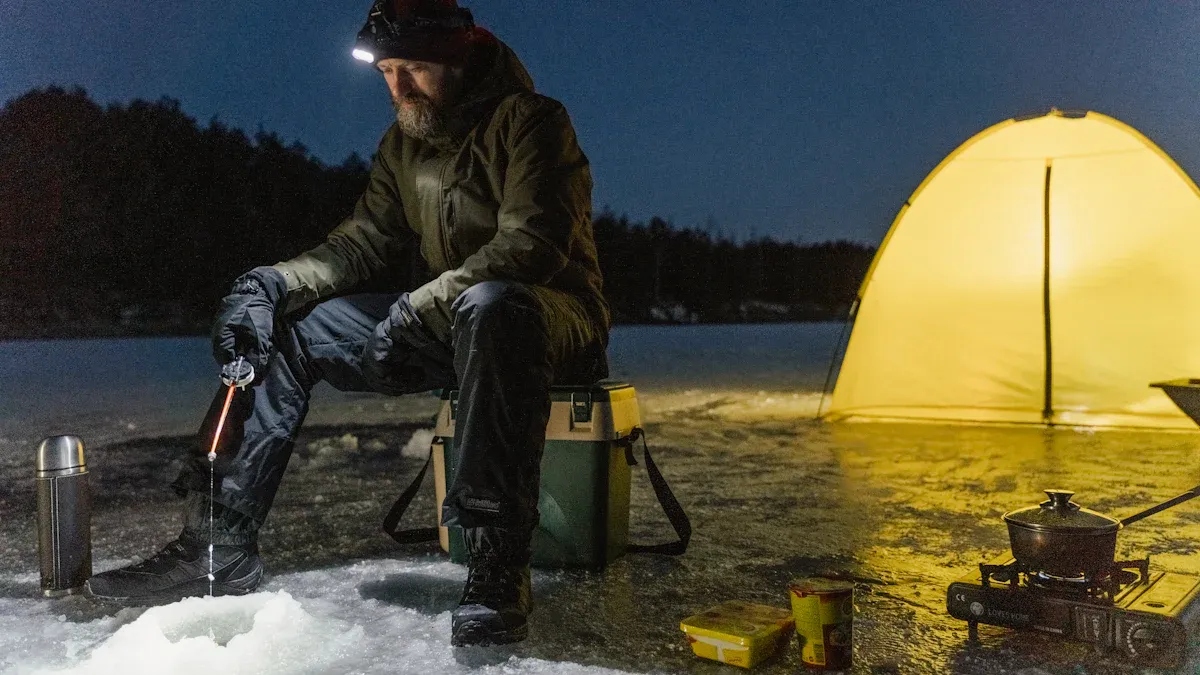
Freezing temperatures significantly impact headlamp battery life, brightness, durability, and overall reliability. Lithium batteries, for instance, can experience a 5-10% capacity loss in colder weather, while repeated cold cycles may reduce overall battery life by 20-30%. Furthermore, extreme cold can make halogen filaments brittle and stress HID systems during startup, affecting light output and structural integrity. Understanding these challenges is crucial for selecting and using headlamps effectively in cold environments. This guide will help identify optimal headlamps and practices for dependable performance in Cold Weather conditions.
Key Takeaways
- Cold weather makes headlamp batteries lose power quickly. Lithium batteries work best in the cold.
- Choose a headlamp made with strong materials. It should have large buttons you can use with gloves.
- Keep your headlamp batteries warm. Store them in a pocket close to your body.
- Do not charge cold batteries. Warm them up first to protect them.
Understanding Cold Weather Impact on Headlamps
Battery Performance in Cold Weather
Cold temperatures significantly compromise battery performance in headlamps. Inside lithium-ion batteries, electrochemical processes slow down considerably. This reduction in speed leads to decreased capacity and overall efficiency. The internal chemistry’s deceleration also results in the battery producing less power. Furthermore, slowed chemical reactions hinder effective energy transfer during charging cycles, which prolongs charging duration. A significant risk in cold conditions involves lithium ions depositing on the anode during charging, a phenomenon known as lithium plating. This process can permanently damage the battery and shorten its lifespan.
Traditional lead-acid batteries also suffer in the cold. The chemical reaction converting stored energy into electrical energy is highly temperature-sensitive. Cold temperatures can significantly slow or even halt this reaction. When temperatures drop, the electrolyte mixture becomes more viscous, impeding the chemical reaction. Ions within the electrolyte move slower due to this increased viscosity, even though the potential energy remains the same. This leads to a slower discharge rate.
Different battery chemistries react uniquely to the cold. Lithium-ion batteries generally experience reduced performance in cold temperatures. However, specialized batteries like Lithium Titanate batteries retain approximately 80% of their capacity even at -30°C (-22°F). Nickel-metal hydride (Ni-MH) cells perform optimally between 0°C and 45°C. Their performance degrades more rapidly at lower temperatures. Charging Ni-MH batteries at sub-freezing temperatures can cause irreversible damage.
Light Output and Electronics in Cold Weather
The impact of cold on a headlamp’s light output and internal electronics varies depending on the technology. Modern LED lights demonstrate increased efficiency as ambient temperatures decrease. They experience no issues in very cold conditions, maintaining consistent efficiency even below freezing points. This characteristic contrasts sharply with traditional incandescent or halogen bulbs, which can degrade quickly in cold weather due to excessive heat emission. The electronic components within headlamps, such as drivers and microcontrollers, are generally robust. However, extreme temperature fluctuations can stress solder joints and circuit boards over time, potentially leading to intermittent failures. Manufacturers design quality headlamps with components rated for wide operating temperature ranges to mitigate these risks.
Material Durability in Cold Weather
The physical materials comprising a headlamp also face challenges in cold environments. Many plastics and rubber compounds commonly used in headlamp construction can become brittle at low temperatures. For instance, polypropylene (PP), a semi-crystalline thermoplastic, possesses good impact strength under normal conditions. However, it becomes brittle in cold temperatures, making components made from it susceptible to cracking or breaking upon impact. This brittleness can affect battery compartments, housing, and mounting brackets. Rubber seals and buttons can also stiffen, reducing their effectiveness in sealing out moisture and making them harder to operate. While polycarbonate is often used for lenses, prolonged exposure to UV and environmental factors, rather than just cold, causes yellowing and crazing. Manufacturers select specialized polymers and composites for cold-weather headlamps to ensure they maintain their structural integrity and flexibility in freezing conditions.
Essential Features for Cold Weather Headlamps
Optimal Battery Types and Management
Selecting the right battery type significantly impacts headlamp performance in freezing conditions. Lithium-ion batteries generally offer superior performance in cold temperatures compared to alkaline or Ni-MH batteries. They maintain a higher percentage of their capacity and deliver more consistent power output. For extended excursions, headlamps that accommodate external battery packs provide a distinct advantage. Users can keep these external packs warm inside a jacket or pocket, preserving battery life and ensuring consistent power delivery to the headlamp. Some headlamps also feature integrated battery management systems. These systems optimize power usage and protect batteries from over-discharge in extreme cold, extending their lifespan and reliability.
Robust Construction and Water Resistance
A headlamp designed for cold environments requires robust construction to withstand harsh conditions. Materials must remain flexible and durable, avoiding brittleness that can lead to cracks or breaks. Polycarbonate and specialized polymers offer excellent impact resistance and maintain their integrity in sub-zero temperatures. Furthermore, effective water resistance is crucial. Headlamps often encounter snow, sleet, and condensation in cold environments. An IP (Ingress Protection) rating indicates a headlamp’s resistance to water and dust. An IPX4 rating is generally sufficient for splashes and humidity, effectively withstanding rain and snow. For more extreme conditions or greater protection, higher IP ratings like IPX7, IPX8, or IP68 offer superior water and dust resistance. These ratings make headlamps highly suitable for challenging conditions, including cold, snowy environments where robust water resistance is crucial. For example, the Fenix HM61R V2.0 boasts an IP68 rating, and the Zebralight H600c Mk IV 18650 features an IPX8 rating. Both models are known for their exceptional durability in demanding situations, such as caving, which implies their suitability for snowy environments. The Black Diamond Storm 500-R also provides significant water protection with its IPX7 rating.
User-Friendly Design for Cold Weather
Operating a headlamp with thick winter gloves presents a significant challenge. Therefore, a user-friendly design is paramount for cold weather headlamps. Manufacturers design these headlamps with larger buttons or toggle switches. These larger controls allow for easy manipulation even when users wear bulky gloves. Simple, intuitive interfaces also reduce frustration and fumbling in the dark. For instance, the Fenix HM50R V2 headlamp features a single-button control, specifically designed for easy operation even when wearing gloves. Its simple, glove-friendly controls make it highly suitable for use in cold conditions. Additionally, the headlamp’s strap and adjustment mechanisms should be easy to operate with gloved hands. A comfortable and secure fit over hats or helmets ensures the headlamp stays in place during strenuous activities.
Comfort and Fit for Cold Weather Gear
A headlamp’s comfort and fit become paramount when operating in freezing conditions. An ill-fitting headlamp causes discomfort and reduces its effectiveness. A secure fit prevents the headlamp from bouncing or shifting during dynamic activities like skiing or climbing. This stability ensures consistent illumination and minimizes distractions
Adjustability is a key feature for optimal fit. Headlamps often feature elastic straps that adjust to various head sizes. These straps also accommodate different types of headwear, including thick winter hats or helmets. Some models incorporate silicone grips on the inside of the strap. These grips enhance stability, preventing slippage over smooth helmet surfaces or synthetic fabrics.
Material selection for the strap and padding also contributes significantly to comfort. Manufacturers use materials that remain flexible in low temperatures. They also choose fabrics that wick away moisture, preventing sweat buildup which can lead to chilling. Soft, non-chafing materials reduce irritation during prolonged wear.
Weight distribution plays a crucial role in comfort, especially for headlamps with larger battery packs. A well-balanced design distributes the weight evenly across the head. This design reduces pressure points and minimizes neck strain. Some headlamps offer the option of an external battery pack. Users can store this pack in a pocket, reducing the weight on the head and keeping the battery warmer, which improves performance in Cold Weather.
Finally, a headlamp must integrate seamlessly with other essential cold-weather gear. It should fit comfortably over helmets without interfering with goggle straps or other protective equipment. Thoughtful design ensures the headlamp enhances, rather than hinders, the overall user experience in challenging environments.
Maximizing Cold Weather Headlamp Performance

Battery Care and Storage in Cold Weather
Proper battery care significantly extends a headlamp’s life and ensures reliability in freezing conditions. Professionals store rechargeable lights with a 50-70% charge for extended periods. This practice prevents deep discharge and cell stress. Lithium primary batteries maintain performance in extreme cold, unlike alkaline cells, which rapidly lose power. Users store headlamps inside sleeping bags overnight to maintain battery warmth. This simple action preserves battery capacity. For long-term storage, individuals keep batteries in dry, moderate environments, ideally between 10°C and 20°C (50°F and 68°F). This prevents condensation and minimizes capacity loss. Insulated storage options, like battery cases or thermal bags, regulate temperature and buffer against the cold when indoor storage is not possible. Controlling moisture with dehumidifiers or silica gel packets also prevents corrosion.
Effective Usage Techniques in Cold Weather
Strategic usage techniques help maintain headlamp performance during Cold Weather activities. Users warm batteries before use. Storing them cold does not necessarily harm them, but warmth improves performance. Individuals keep batteries in an inner jacket pocket or other warm pocket to maintain their temperature. They carry a spare set of batteries, keeping the spare warm in a pocket. They swap the warm spare with the cold set when needed. This ensures continuous illumination. To prolong headlamp battery life and performance, users keep the headlamp and its batteries close to their body, such as in a chest pocket. This prevents unexpected drops in lighting performance. If a battery unexpectedly loses power, warming it in a pocket for 2-3 minutes often recovers its voltage.
Maintenance for Cold Weather Reliability
Consistent maintenance ensures a headlamp’s reliability in cold environments. Users regularly inspect the headlamp for any signs of damage, such as cracks in the casing or frayed wires. They check all seals and O-rings for integrity. These components prevent moisture ingress, which can cause internal damage. Cleaning battery contacts periodically removes corrosion and ensures efficient power transfer. After each use in cold or wet conditions, individuals dry the headlamp thoroughly before storage. This prevents moisture buildup and potential freezing. Proper maintenance extends the headlamp’s lifespan and guarantees dependable operation when it matters most.
Recommended Cold Weather Headlamp Technologies
Lithium Battery Advantages
Lithium batteries offer significant advantages for cold-weather headlamps. They consistently outperform alkaline or rechargeable batteries in freezing conditions. Roger Caffin, a BPL Member, notes that while Energizer Ultimate Lithium batteries may seem expensive initially, they prove more cost-effective long-term. A lithium battery can outlast ten alkaline batteries, making it cheaper over time. Crucially, lithium batteries function reliably in the cold, unlike alkaline ones. Another user, B.G., emphasizes that one lithium primary battery equals about three or four alkaline batteries in terms of life. Alkaline batteries fade significantly below 0°F, but lithium batteries show very little fade. Bob explains that alkaline electrolytes freeze around 0°C, but lithium cells do not contain water, which accounts for their superior cold-weather performance. Lithium batteries operate reliably in both freezing and high-heat environments. They provide the best power for high-drain devices and offer the most linear power curve over time. Energizer Lithium batteries are recommended for headlamps due to their brightness, reliability in extreme weather, and longest runtime.
External Battery Pack Benefits
External battery packs provide crucial benefits for cold-weather headlamps. They allow users to keep the power source warm, preserving battery life and ensuring consistent light output. Manufacturers employ improved insulation for battery packs as a general strategy. They use passive approaches like natural convection and thermal mass. Active systems incorporate liquid cooling, refrigeration cycles, and phase change materials (PCMs). For cold conditions, heating elements are often integrated into insulated systems. Battery Management Systems (BMS) continuously monitor cell temperatures and adjust operational parameters, including activating heating systems at low temperatures. Users can bring batteries indoors before charging or heavy use to warm them. They can also use built-in pre-heat functions if available. Battery blankets and insulated boxes help maintain safe operating temperatures. Installing heat insulation materials at the bottom of the battery pack can achieve the best heat preservation performance.
Advanced Material Considerations
Modern headlamps incorporate advanced materials to enhance cold-weather durability. Optically clear, transparent heaters are now integrated into LED headlamps. These heaters utilize hybrid materials like Carbon Nanotube (CNT) Hybrids. Manufacturers choose CNT Hybrids for their high conductivity and transparency. These materials offer less than 10 ohms/square resistance with over 90% visible light transparency. They are applied on film substrates, enabling innovative designs without visible circuits. This technology avoids interference with RADAR and LIDAR systems, ensuring optimal performance in challenging environments.
Selecting a headlamp specifically designed for cold weather ensures reliable performance. Prioritizing appropriate battery technology, robust construction, and user-friendly features guarantees dependability. Implementing best practices for battery care and usage maximizes a headlamp’s functionality in freezing conditions. A well-chosen and maintained headlamp remains an indispensable tool for any cold-weather adventure.
FAQ
Why do headlamp batteries lose power in cold weather?
Cold temperatures slow down chemical reactions inside batteries. This reduces their capacity and power output. Lithium-ion batteries experience decreased efficiency. Traditional batteries also suffer as their electrolyte becomes more viscous. This makes energy transfer slower.
What features make a headlamp good for cold conditions?
Look for lithium-ion batteries and robust construction. The headlamp needs an IPX4 or higher water resistance rating. Large, glove-friendly buttons are essential. A comfortable, adjustable strap that fits over hats or helmets also improves usability.
How should I store headlamp batteries in the cold?
Keep batteries warm to preserve their life. Store them in an inner jacket pocket or sleeping bag overnight. Carry spare batteries and keep them warm. This ensures consistent performance and extends runtime. Temperature emoji
Can I charge my headlamp battery in freezing temperatures?
Charging lithium-ion batteries below freezing can cause permanent damage. This process, called lithium plating, shortens battery life. Always warm batteries to room temperature before charging them. This protects the battery’s integrity.
Post time: Jun-09-2026


