 fannie@nbtorch.com
 +0086-0574-28909873



The optimal outdoor lighting choice depends entirely on specific activity and needs. Neither a headlamp nor a flashlight is universally superior for all outdoor scenarios. Understanding the unique strengths and weaknesses of each is key to making an informed decision. The global flashlight market projects a 6.2% Compound Annual Growth Rate (CAGR) from 2025, reaching $3.15 billion by 2032. This significant expansion, alongside an 8% projected growth for the broader Outdoor Lighting Gear market, highlights the increasing reliance on effective illumination for outdoor recreation. Therefore, a thorough comparison of headlamp vs flashlight options becomes essential for outdoor enthusiasts.
Key Takeaways
- Headlamps offer hands-free lighting. They are good for tasks like setting up camp or hiking.
- Flashlights provide strong, focused light. They help you see far away or signal for help.
- Both headlamps and flashlights have different uses. Neither one is always better than the other.
- It is best to carry both a headlamp and a flashlight. This gives you light for all situations and a backup if one fails.
- Choose your light based on your activity. Think about how bright you need it and if you need your hands free.
Understanding Headlamps for Outdoor Adventures
Key Advantages of Headlamps
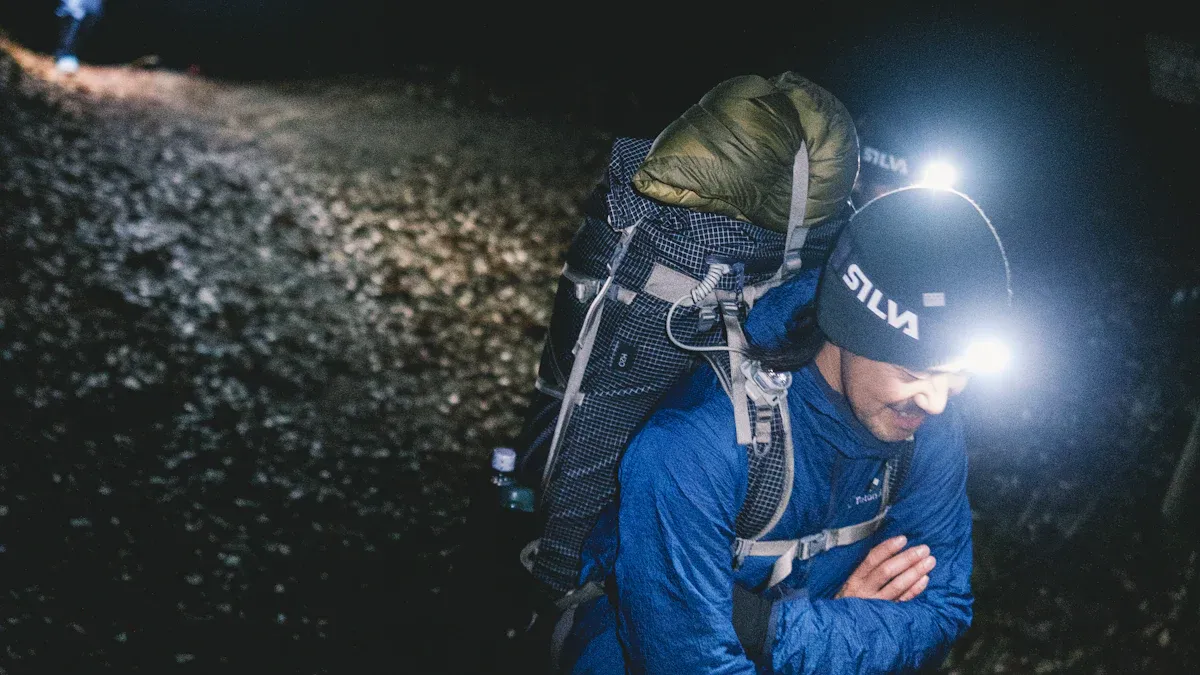
Headlamps offer unparalleled convenience for outdoor enthusiasts. Their primary advantage lies in hands-free operation, which allows individuals to perform tasks without holding a light source. This capability is significantly enhanced by advanced design features. CONSTANT LIGHTING maintains a consistent brightness level for a set duration, eliminating the need for manual adjustments. REACTIVE LIGHTING technology automatically adjusts light output to the appropriate level, optimizing battery life and removing user intervention. The FACE2FACE sensor detects other headlamps within an 8-meter range, automatically dimming the light to prevent blinding. The HYBRID CONCEPT provides flexible power options, allowing certain headlamps to operate with either a CORE rechargeable battery or standard AAA batteries. An adjustable elastic headband ensures a comfortable fit on the head or over a helmet, and helmet compatibility allows attachment to various helmet types.
Limitations of Headlamps
Despite their numerous benefits, headlamps do have certain limitations. Some users report comfort issues, particularly during prolonged use. For instance, reviewers experienced difficulty with the BioLite 800 Pro’s four-point tilt mechanism. A power cord connecting the front light to the back created tension, leading to a ‘snap-back effect’ when attempting to tilt the headlamp forward. The beam direction is also fixed to the user’s head movement, which can be restrictive when one needs to illuminate an area without moving their entire head. This fixed perspective sometimes limits the versatility of illumination compared to a handheld device.
Ideal Outdoor Activities for Headlamps
Headlamps prove invaluable for various outdoor pursuits requiring focused, hands-free illumination. They are excellent for setting up camp after dark, providing light for cooking, organizing gear, or reading. Individuals spending many dark hours recording astro time-lapse photography find headlamps essential for precise adjustments. Headlamps are also highly beneficial for urban adventures, overnighters in the woods, and practical tasks like biking home in the rain. Hiking back to camp in an unexpected downpour becomes safer and more manageable with a reliable headlamp. These devices ensure visibility and safety during activities demanding constant attention and both hands.
Exploring Flashlights for Outdoor Use
Key Advantages of Flashlights
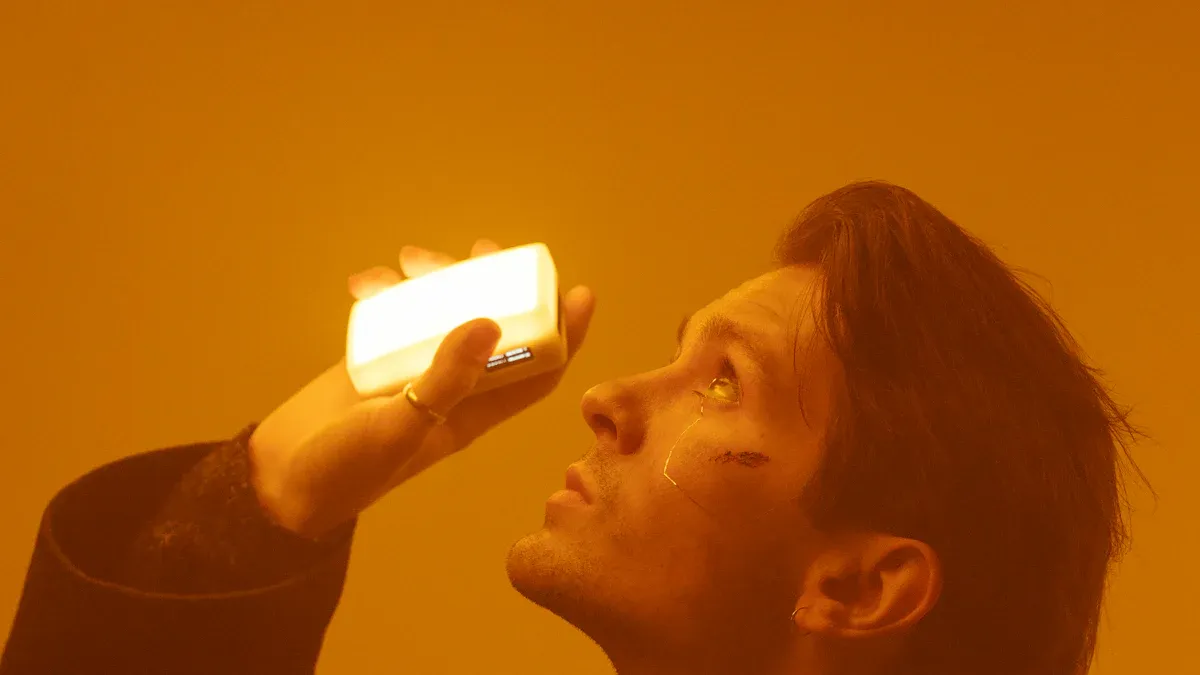
Flashlights offer significant versatility for outdoor enthusiasts. They provide adjustable and zoomable beams, which proves highly beneficial for various lighting conditions and tasks. Users can select different beam modes to suit specific needs: a spotlight offers long-range visibility, a floodlight illuminates a wide area, a low light preserves night vision, and a high light provides maximum brightness. This adjustability allows seamless switching between spotlight and floodlight functions, making flashlights suitable for outdoor adventurers, emergency personnel, and professionals. Zoomable beams enable users to focus on distant objects or enlarge the illuminated area, which assists activities like hunting or examining intricate details. The intensity, or brightness at the source, is also crucial; choosing the correct intensity ensures optimal lighting for the environment. This rechargeable LED flashlight, for example, features five modes: LED high, LED medium, LED low, flash, and SOS. Its dual light source adjusts freely from a small, clear range to a wide factory range. Users simply push the front of the flashlight firmly to adjust the zoom, focusing on faraway objects or lighting up a broad area.
Limitations of Flashlights
Flashlights do present certain limitations, particularly regarding hands-free operation. Traditional flashlights require one hand for operation, which restricts the user’s ability to perform tasks requiring both hands. This can be a significant drawback for detailed work or activities demanding constant manipulation of equipment. Flashlights often cast shadows, lacking the precision necessary for intricate tasks. While some small, lightweight flashlights exist for portability, they often suffer from light beam deviation when attached to surfaces not aligned with the viewing angle. They also lack suitable hand-freedom features for delicate, exacting work.
Ideal Outdoor Activities for Flashlights
Flashlights excel in various outdoor scenarios. They are invaluable for night hiking and camping, providing powerful illumination for safe navigation and setting up campsites in darkness, especially in mountainous or deep forest areas. Explorers and mountaineers use them to penetrate darkness, find paths, and inspect terrain. Flashlights enhance safety during outdoor sports by providing a bright, far-reaching beam for nighttime activities. For open-air camping and wilderness hunting, they assist in setting up facilities, tracking game, and inspecting surroundings. Anglers find flashlights useful for illuminating the water surface during fishing. Specific wavelengths, such as red or green light, allow for night vision and animal observation without disturbance. Flashlights also serve as crucial tools in emergency situations and rescue operations, with intense beams attracting attention when individuals are lost or in distress. This multi-function highlight flashlight, with its smart USB charging and power bank function for emergency charging, is designed for a variety of environments, fearless of wind and rain.
Headlamp vs Flashlight: Direct Comparison for Outdoor Performance
Hands-Free Operation and Convenience
Headlamps fundamentally redefine convenience in outdoor settings through their hands-free operation. This capability proves crucial for tasks demanding dexterity, such as setting up camp, navigating rugged trails, or performing equipment repairs. Headlamps allow users to maintain a neutral head position, preventing discomfort often caused by tilting the head to direct light. Swivel lens technology further enhances this ergonomic benefit, ensuring increased comfort during prolonged use. The design ensures comfortable wear that does not impede movement, allowing users to direct the light beam precisely where needed. Lightweight and adjustable headbands provide a secure and comfortable fit, reducing fatigue during extended use. An anti-slip design is particularly advantageous during strenuous activities like hiking or climbing, ensuring the headlamp stays in place without needing constant adjustments. This hands-free advantage significantly improves safety and and ease of use for outdoor enthusiasts. In contrast, flashlights require manual holding, which limits a user’s ability to perform two-handed tasks. This difference highlights a key distinction in the utility of a headlamp vs flashlight for active outdoor pursuits.
Beam Type, Focus, and Illumination
Both headlamps and flashlights offer diverse beam types, focus capabilities, and illumination levels, but their application differs. Headlamps commonly feature two primary beam patterns: floodlights and spotlights. Floodlights provide broad, even illumination over a wide area, ideal for close-range tasks and general situational awareness. This helps with peripheral vision by simulating natural daylight. Spotlights, conversely, produce a narrow, powerful beam to illuminate distant objects. Some headlamps also feature a dual or hybrid beam, combining the long-distance throw of a spotlight with the wide coverage of a floodlight. Flashlights also offer focused spotlights for long-distance illumination and wide-area floodlights for broad coverage. The key difference lies in the form factor: headlamps offer hands-free operation, ensuring light is always directed where the user looks. This is highly beneficial for tasks requiring both hands. Flashlights, while powerful, require manual aiming.
Illumination levels, measured in lumens, vary significantly depending on the activity. For close-up tasks, reading, or children’s lights, 10–100 lumens are sufficient. Indoor use and light outdoor activities benefit from 100–300 lumens. Camping, hiking, and general nighttime outdoor activities typically require 300–800 lumens. Tactical use, law enforcement, and search and rescue operations demand 800–1500 lumens. Professional rescue and extreme environments often need 1500+ lumens. For specific outdoor activities, hikers and campers find 300–800 lumens effective, with 150–300 lumens providing excellent visibility. Night running or technical work often requires 400+ lumens and a longer beam distance. Mountaineering and spelunking benefit from above 800 lumens for focused long-range illumination. Both headlamps and flashlights can achieve these lumen ranges, with some flashlights offering adjustable focus (zoomable) beams. Users can change the beam from a wide flood to a tight throw by adjusting the distance between the lens and the LED. This allows focusing on faraway objects or lighting up a broad area.
Power Source, Battery Life, and Charging
The power source, battery life, and charging methods are critical considerations for both headlamps and flashlights. Modern outdoor lighting devices primarily use rechargeable Li-ion batteries, such as 18650 or 21700 cells, known for their high energy density. Zinc Carbon batteries suit low-powered devices, while alkaline batteries offer a higher energy density and shelf life. Battery volume and capacity, measured in mAh, directly correlate with lighting duration; larger batteries and higher mAh ratings generally lead to longer battery life. The brightness of the light, or lumen output, significantly impacts battery drain. Higher lumen output drains batteries much faster than lower modes. For instance, low-lumen flashlights (under 40 lumens) generally run for 20-60 hours. Flashlights with 40-400 lumens can last 15 hours at 40 lumens or 2 hours at 400 lumens. A rechargeable LED flashlight with a 2000 mAh battery can provide 80 hours of light at 5 lumens.
Modern outdoor lighting devices offer various convenient charging methods. USB charging allows connection to a USB cable and a power source like a computer, wall adapter, or power bank, offering convenient on-the-go charging. AC charging involves plugging the device into an AC adapter connected to a wall outlet, providing a quick and consistent charge. Solar charging utilizes solar panels to convert sunlight into energy for the battery, presenting an eco-friendly option for outdoor use or sunny areas. When direct sunlight is unavailable, solar lights can charge using alternative light sources like incandescent bulbs, LED lights, or power banks. Artificial light sources such as incandescent or LED bulbs can generate the necessary energy for solar lights. USB chargers or standard battery chargers can maintain power levels in solar lights during prolonged periods of insufficient sunlight. This multi-function highlight flashlight also features smart USB charging and a power bank function for emergency charging of other devices, making it versatile for various environments.
Portability, Weight, and Storage
Portability, weight, and storage considerations significantly influence the choice between a headlamp and a flashlight for outdoor activities. Headlamps generally offer superior portability due to their compact design and lightweight construction. Users wear headlamps directly on their heads or helmets, which frees up pocket space and eliminates the need to carry an item in hand. This hands-free aspect inherently makes them highly portable for active movement. Most headlamps fold or compress into small pouches, making them easy to pack into a backpack or gear bag without adding significant bulk.
Flashlights, conversely, exhibit a wider range of sizes and weights. Small, everyday carry (EDC) flashlights are highly portable and fit easily into pockets or small compartments. Larger, more powerful flashlights, often favored for their extended beam distance or battery life, can be heavier and bulkier. These larger models might require dedicated pouches or specific packing strategies. While a headlamp remains fixed to the user’s head, a flashlight offers flexibility in placement. Users can clip it to a belt, store it in a jacket pocket, or place it in a backpack. However, this flexibility often comes at the cost of requiring a hand for operation, or finding a suitable surface for temporary placement.
Durability, Material, and Weather Resistance
Durability, material composition, and weather resistance are crucial factors for any outdoor lighting equipment. Manufacturers construct both headlamps and flashlights from materials designed to withstand harsh outdoor conditions.
| Material | Key Properties & Durability |
|---|---|
| Brass | Highly durable, corrosion-resistant, withstands harsh weather, develops a natural patina over time. Ideal for coastal areas. |
| Copper | Similar to brass in durability and corrosion resistance, also develops a patina. Excellent for coastal environments. |
| Stainless Steel | Strong, corrosion-resistant (especially 316 marine-grade), modern aesthetic. Requires regular cleaning to prevent surface rust. |
| Aluminum | Lightweight, corrosion-resistant (when powder-coated), versatile in design. Good for general outdoor use, but less durable than brass or copper in extreme conditions. |
| Composite Materials (e.g., PVC, ABS) | Lightweight, rust-proof, cost-effective, good for specific applications like underwater lighting. Less aesthetic appeal and durability compared to metals. |
| Galvanized Steel | Steel coated with zinc for rust protection, durable and strong. Can be a more industrial look. |
| Bronze | Very durable, corrosion-resistant, classic aesthetic. Similar performance to brass and copper. |
| Cast Iron | Extremely strong and durable, heavy, classic look. Requires proper finishing to prevent rust. |
| Glass | Used for lenses and diffusers, durable and weather-resistant. Can be fragile if impacted. |
| Polycarbonate | Durable plastic, impact-resistant, often used for lenses or fixture bodies where glass might be too heavy or fragile. |
| Ceramic | Durable, heat-resistant, often used for lamp holders or decorative elements. |
| Wood | Natural aesthetic, requires treatment and maintenance to withstand weather and prevent rot/pests. |
| Stone | Very durable, natural look, heavy. Used for integrated lighting or decorative elements. |
| Resin | Lightweight, durable, can mimic other materials, good for decorative fixtures. |
| Acrylic | Lighter and more impact-resistant than glass, used for diffusers and lenses. Can yellow over time with UV exposure. |
Aluminum is a common choice for both headlamps and flashlights due to its balance of lightweight properties and corrosion resistance, especially when powder-coated. More robust options like brass, copper, or stainless steel offer superior durability and corrosion resistance, particularly in extreme conditions or coastal environments. Composite materials like PVC and ABS provide lightweight, rust-proof alternatives, often used for specific applications like underwater lighting.
Weather resistance is typically indicated by an Ingress Protection (IP) rating. This rating specifies a device’s resistance to dust and water.
- IPX4: Offers resistance to splashes from all directions, suitable for light rain or sweat.
- IPX6: Provides protection against powerful water jets, ideal for heavy rain conditions.
- IPX7: Guarantees waterproofing up to 1 meter for 30 minutes, useful for situations with potential accidental submersion.
- IPX8: Allows submersion beyond 1 meter, best for activities involving prolonged water exposure.
Many headlamps and flashlights feature a minimum IPX4 rating, indicating splash waterproofness. This makes them suitable for heavy rain but not for submersion. Some flashlights boast an IPX8 rating, allowing submersion in water up to 1 meter. A flashlight with an IPX8 rating can be submerged in water up to 2 meters (6.6 ft) for 30 minutes without experiencing any issues. Products with an IP68 rating are both dust-tight (indicated by the ’6′) and waterproof (indicated by the ’8′), with some models submersible up to 2 meters or even 10 meters. The first digit of an IP rating indicates protection against solid particles like dust, while the second digit describes protection against liquids like water.
Cost-Effectiveness and Value
The cost-effectiveness and overall value of a headlamp or flashlight depend on several factors, including initial purchase price, durability, battery type, and specialized features. Basic headlamps and flashlights are available at affordable price points, making them accessible for casual outdoor enthusiasts. These entry-level models typically offer sufficient brightness and battery life for general use.
As features become more advanced, the price increases. Higher lumen output, longer battery life, advanced beam patterns (like reactive lighting or hybrid concepts), premium construction materials, and sophisticated charging options (such as USB charging and power bank functions) all contribute to a higher cost. For example, a rechargeable LED flashlight with multiple modes and a power bank function offers significant value by serving multiple purposes.
The long-term value extends beyond the initial cost. Durable construction from materials like aluminum or stainless steel ensures a longer lifespan, reducing the need for frequent replacements. Rechargeable batteries, while potentially increasing the upfront cost, offer significant savings over time compared to disposable batteries. The reliability and performance of a well-chosen lighting device also contribute to its value, enhancing safety and enjoyment during outdoor adventures. Ultimately, the best value comes from selecting a device that precisely matches the user’s specific needs and activity requirements, balancing features with budget. The choice between a headlamp vs flashlight often comes down to which device offers the most practical benefits for the intended use.
When to Choose a Headlamp for Your Outdoor Needs
For Active Movement and Dynamic Tasks
Headlamps are the superior choice for outdoor activities involving active movement and dynamic tasks. They offer unparalleled hands-free operation. This capability proves crucial for individuals engaged in nature walks, allowing them to explore woods and spot nocturnal animals without holding a light. For fishing, headlamps enable participants to bait hooks, navigate boats, and see into murky water while keeping their hands free. Geocaching, which combines hiking and treasure hunting, also benefits from headlamps. They provide light while individuals use GPS devices and search for geocaches. Hikers prefer headlamps because they keep hands free for climbing, carrying gear, or navigating challenging terrain with obstacles like twigs, rocks, and tree roots. This enhances safety and comfort. Headlamps significantly improve efficiency during tasks requiring both hands, such as tent setup or cooking. They allow users to perform these activities with both hands freely available, enhancing safety, convenience, and overall efficiency.
For Close-Up Work and Detailed Activities
Headlamps excel in situations requiring close-up work and detailed activities. They are ideal for near-range tasks, offering lower lumen output or flood/area light capabilities. This makes them suitable for camping, hunting, and fishing. Headlamps are also beneficial for more specialized activities. For example, they assist in scaling a cliff face, tracking game, or setting up camp. Blackfire headlamps are suitable for various uses, including work and emergencies. Models like the IKO CORE, with 500 lumens and a lightweight design, are perfect for trail runners, climbers, and backpackers. The DUO S, a rugged headlamp with 1,100 lumens, serves well in caving, canyoning, and industrial maintenance.
For Enhanced Safety and Situational Awareness
Headlamps significantly enhance safety and situational awareness during nighttime outdoor activities. Their forward-facing light increases visibility for the user. This allows individuals to clearly see the path ahead. It also ensures that others, such as vehicles and pedestrians, can see the user, thereby reducing the risk of accidents. More light from a headlamp, up to an optimal point, enables users to move faster, especially on challenging technical terrain. Sufficient illumination helps in identifying and navigating terrain features like rocks. This is crucial for safety and efficient movement during night running.
When to Opt for a Flashlight in Outdoor Settings
For Directed Spotlighting and Long-Distance Viewing
Flashlights excel when users need directed spotlighting and long-distance viewing. Their design allows for a powerful, focused beam that can cut through darkness to illuminate specific targets far away. This capability proves invaluable for identifying distant landmarks, spotting wildlife, or navigating challenging terrain from a distance. Users can precisely aim a flashlight beam, making it ideal for tasks requiring focused illumination rather than broad area lighting. This precision helps in situations where a wide beam might cause glare or reduce visibility of the intended target.
For Signaling, Communication, and Shared Lighting
Flashlights serve as effective tools for signaling, communication, and shared lighting in outdoor environments. In emergency situations, a flashlight can transmit distress signals. The internationally recognized SOS pattern involves:
- Flashing three short bursts (one second each).
- Following with three long flashes (three seconds each).
- Concluding with three more short bursts (one second each). Users should maintain a one-second pause between flashes within a group and wait 7-10 seconds before repeating the full sequence. Practicing this timing beforehand helps ensure accuracy during stressful moments. For optimal visibility, users should choose high ground or open areas and aim the flashlight towards potential rescuers. Flashlights with 200 lumens or more offer good visibility, and white light travels farther. Signaling at night or in low-light conditions maximizes contrast. This multi-function highlight flashlight, with its various modes, can effectively serve these communication needs.
For Versatility Beyond Hands-Free Use
Flashlights offer versatility beyond hands-free operation, making them useful in many scenarios where a headlamp might be less suitable. Users can easily pass a flashlight among a group to share light, or they can place it on a surface to illuminate a specific area without wearing it. This flexibility allows for diverse applications. Flashlights also offer creative opportunities. They can be used for shadow art and light photography, providing artistic expression and helping hobbyists see details or add unique lighting effects. Beyond emergencies, flashlights serve as a tool for non-crisis signaling, such as flagging down a friend in a crowded area or using a strobe mode to attract attention. This adaptability makes a flashlight a valuable addition to any outdoor gear kit.
The Ultimate Solution: Carrying Both a Headlamp and Flashlight
Complementary Lighting for Maximum Effectiveness
Outdoor enthusiasts often find the most effective lighting strategy involves carrying both a headlamp and a flashlight. This combination provides comprehensive illumination for diverse situations. A headlamp offers hands-free convenience, allowing users to perform tasks like setting up camp or cooking without holding a light. It directs light where the user looks, which is ideal for active movement. Conversely, a flashlight provides a powerful, directed beam for inspecting distant objects or signaling. Users can easily share a flashlight or place it to illuminate a specific area. Together, these tools cover all lighting requirements, from close-up work to long-range visibility.
Emergency Preparedness and Redundancy
Carrying both a headlamp and a flashlight significantly enhances emergency preparedness. If one device fails due to battery depletion or malfunction, the other serves as a crucial backup. This redundancy ensures users never find themselves without a light source in critical situations. An unexpected nightfall or a sudden equipment failure can quickly turn a pleasant outing into a dangerous one. Having a secondary light source provides peace of mind and a vital safety net. This approach mitigates risks associated with single-point failures, ensuring continuous illumination when it matters most.
Maximizing Your Overall Outdoor Experience
The decision between a headlamp vs flashlight does not need to be exclusive. Carrying both maximizes your overall outdoor experience. This dual-tool approach allows users to adapt to any lighting challenge. A headlamp excels for tasks requiring dexterity, while a flashlight offers versatility for shared lighting or focused inspection. This combination enhances safety, efficiency, and enjoyment during any adventure. Users can confidently navigate trails, perform detailed tasks, and handle unexpected situations with optimal illumination.
The optimal outdoor lighting strategy often involves carrying both a headlamp and a flashlight. This dual approach provides comprehensive illumination for various scenarios. When selecting your gear, prioritize versatility, reliability, and specific activity requirements. Consider factors like color temperature; warm white light creates a welcoming ambiance, while cool white light enhances visibility for critical tasks. An informed choice, focusing on these elements, significantly enhances safety and enjoyment during all outdoor adventures.
FAQ
What is the primary benefit of using a headlamp for outdoor activities?
Headlamps offer hands-free operation. This allows users to perform tasks like setting up camp or navigating trails while keeping both hands available. They direct light where the user looks, enhancing convenience and safety during active movement.
When should an outdoor enthusiast choose a flashlight instead of a headlamp?
Flashlights excel for directed spotlighting and long-distance viewing. Users can precisely aim the beam to illuminate distant objects or signal for help. They also offer versatility for shared lighting or temporary placement on surfaces.
Is it advisable to carry both a headlamp and a flashlight for outdoor adventures?
Yes, carrying both provides the ultimate solution. This combination offers complementary lighting for various tasks and ensures redundancy. If one device fails, the other serves as a crucial backup, enhancing emergency preparedness and overall safety.
What lumen range is generally recommended for camping and hiking?
For general camping, hiking, and nighttime outdoor activities, 300–800 lumens are typically effective. This range provides sufficient illumination for navigating trails and performing tasks. For close-up work, 10–100 lumens suffice.
How important is weather resistance for outdoor lighting devices?
Weather resistance is crucial for outdoor lighting. An IPX4 rating protects against splashes, suitable for light rain. Higher ratings, like IPX7 or IPX8, offer protection against submersion, ensuring durability in more extreme wet conditions.
Post time: Jun-17-2026


