 fannie@nbtorch.com
 +0086-0574-28909873




Introduction
Choosing an OEM partner for outdoor lighting is not just a sourcing decision; it shapes product quality, delivery reliability, and how well your brand can scale. Before comparing suppliers, brands need a clear view of their target market, performance standards, budget limits, and long-term production needs. With those priorities in place, it becomes easier to evaluate manufacturers on the factors that matter most: technical capability, customization support, consistency, and quality control. This article explains how to narrow the field and identify a partner that can support both current orders and future growth.
Define Your OEM Outdoor Lighting Strategy
Establishing a robust supply chain for exterior illumination requires more than surface-level vendor comparisons. The foundation of a successful partnership with an OEM Outdoor Lighting provider begins with rigorous internal strategic alignment. Brands must clearly define their operational parameters, financial targets, and market positioning before initiating the sourcing process. Proceeding without a quantified strategy often leads to misaligned expectations, particularly regarding production scalability, technological integration, and quality thresholds. By anchoring the search in concrete business objectives, procurement teams can streamline the vetting process and focus exclusively on partners capable of meeting exact specifications.
Set brand goals before comparing suppliers
Goal setting dictates the caliber of the manufacturing partner required. A brand positioned in the premium architectural lighting segment will prioritize advanced photometric performance, precise optical control, and rigorous material tolerances. This positioning necessitates a supplier capable of maintaining strict defect rates below 0.3% and offering extensive warranties. Conversely, a volume-driven commercial brand focused on large-scale infrastructure projects may prioritize aggressive pricing, rapid deployment, and high-volume scale, accepting standard industry defect allowances of 1.0% to 1.5%. By establishing acceptable failure rates, targeted warranty periods (typically ranging from 3 to 10 years), and desired technological capabilities upfront, procurement teams can immediately disqualify incompatible vendors. Furthermore, defining the scope of innovation—whether the brand requires cutting-edge smart lighting integration or relies on proven, legacy architectures—will significantly narrow the field of prospective manufacturing partners.
Clarify target products, markets, and margin goals
Precision in product specifications and financial modeling is critical to executing a successful manufacturing strategy. Procurement mandates should detail required ingress protection ratings (e.g., strictly IP66 or IP67 for extreme weather environments), color rendering indices (CRI >80 for street lighting or >90 for architectural accents), and targeted luminous efficacy (e.g., 130 to 170 lumens per watt). Brands must also define the specific lumen packages they intend to deploy, which can range from 1,000 lumens for landscape bollards to exceeding 50,000 lumens for high-mast area lighting. Furthermore, organizations must dictate the minimum order quantities (MOQs) they can financially and logistically sustain, typically ranging from 500 to 2,000 units per SKU for custom tooling or proprietary extrusions. Gross margin objectives—often targeted between 40% and 55% in the B2B sector—will directly dictate the maximum allowable landed cost. This financial constraint forces a realistic evaluation of tooling amortization, freight expenses, and unit pricing during early supplier negotiations, ensuring the final product remains competitive in the target market.
Compare Supplier Capabilities and Quality Systems
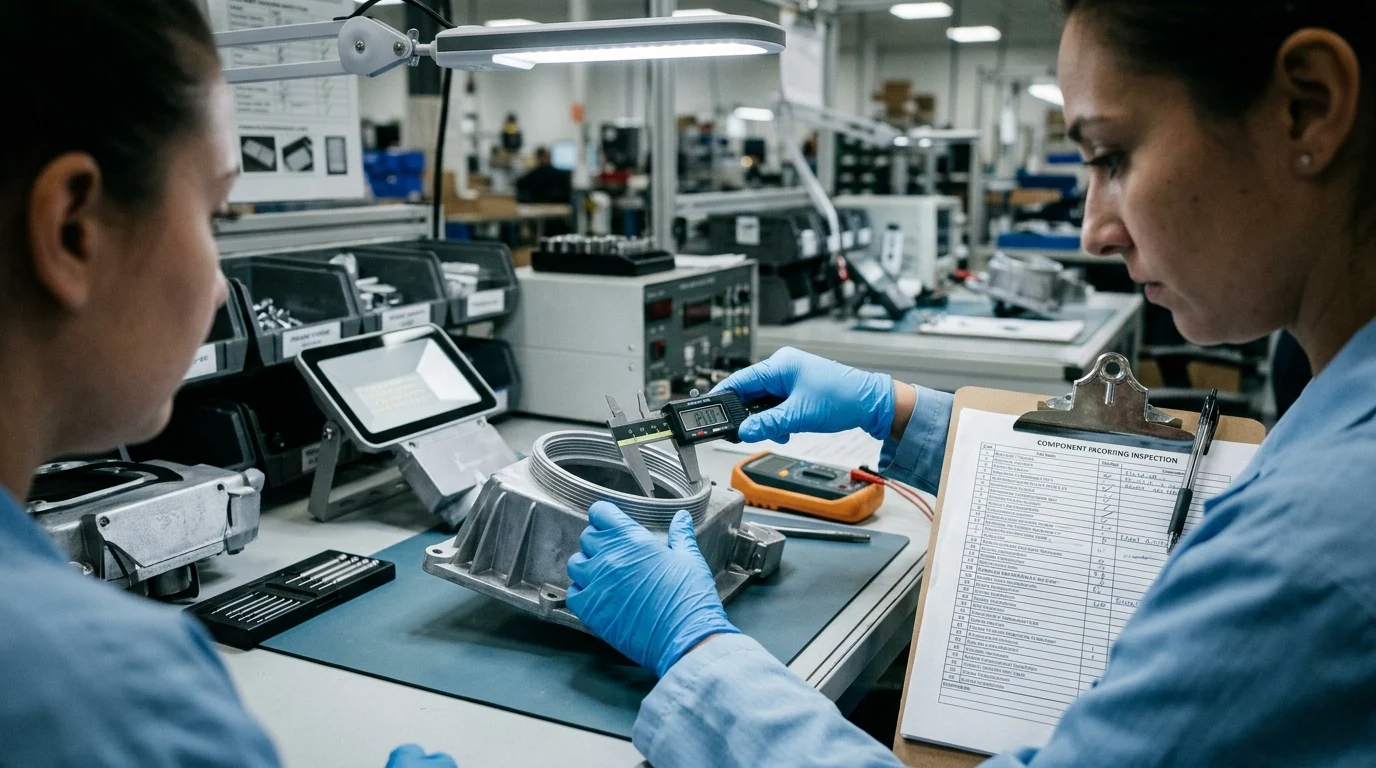
Once internal parameters are established, the focus shifts to vetting the technical and operational infrastructure of a prospective Lighting Manufacturer. The distinction between a specialized factory and a generic assembler lies in their respective engineering capabilities, quality management systems, and production agility. Partnering with a facility that lacks the requisite technical depth often results in delayed product launches, compromised thermal management, and elevated field failure rates.
Evaluate product development and engineering support
A sophisticated engineering department is a prerequisite for developing custom exterior luminaires that perform reliably in harsh environments. Evaluators must verify the supplier’s proficiency with advanced design tools, including thermal management simulations, optical design software, and rapid prototyping capabilities. An elite supplier should be capable of producing initial 3D-printed or CNC-machined prototypes within 14 to 21 days from design approval. Additionally, the manufacturer’s ability to generate accurate integrating sphere reports, conduct goniophotometer testing, and produce IES photometric files in-house significantly reduces development cycles. This internal capability ensures that the final product will meet stringent architectural specifications and precise beam angle requirements without relying on slow, third-party testing facilities.
Assess manufacturing capacity and quality control
Manufacturing capacity must align with projected brand growth and seasonal demand spikes. Assess the facility’s surface-mount technology (SMT) lines for LED board population, automated potting machines for encapsulating LED drivers, and die-casting precision for aluminum housings. A robust quality control (QC) system is equally vital to maintaining brand reputation. Look for ISO 9001:2015 certification for quality management and ISO 14001 for environmental compliance. The factory should demonstrate comprehensive incoming quality control (IQC) protocols and utilize automated aging test lines. On these lines, fixtures should undergo 24 to 48 hours of continuous burn-in testing at elevated ambient temperatures—often 45°C to 50°C—to identify early-life electronic failures and thermal throttling issues before shipment.
Use a comparison table to shortlist suppliers
To systematically evaluate potential partners, procurement teams should deploy standardized comparison matrices. This approach eliminates subjective bias and highlights operational disparities between vendors. Structuring the evaluation around concrete performance indicators ensures that the chosen partner possesses the necessary infrastructure to scale alongside the brand’s market expansion.
| Capability Metric | Tier 1 Supplier Profile | Tier 2 Supplier Profile | Minimum Acceptable Standard |
|---|---|---|---|
| Monthly Capacity | >150,000 units | 50,000 – 100,000 units | 25,000 units |
| R&D Prototyping | 10 – 15 days | 20 – 30 days | < 30 days |
| In-house Testing | Photometric, Thermal, IP, IK | IP, Basic Electrical | IP65+, Hi-Pot Testing |
| Standard MOQ | 1,000 – 2,000 units | 500 – 1,000 units | Negotiable based on tooling |
| Defect Rate Target | < 0.3% | < 1.0% | < 1.5% |
Utilizing such a framework ensures that the selected B2B Lighting Supplier is objectively qualified to handle the required volume, technical complexity, and quality thresholds demanded by the project.
Assess Compliance, Reliability, and Total Cost
Exterior environments subject luminaires to severe thermal cycling, moisture ingress, and ultraviolet degradation. Consequently, evaluating a supplier’s grasp of international compliance standards, component reliability under stress, and the resulting total cost of ownership is a critical phase of the sourcing lifecycle. Ignoring these factors can lead to catastrophic field failures, costly product recalls, and severe brand damage.
Verify regulatory and market-access requirements
Market access is heavily gated by regional regulatory compliance and performance certifications. For the North American market, UL 1598 or ETL certification is mandatory for electrical safety, while DesignLights Consortium (DLC) Premium listing—often requiring efficacy greater than 120 lumens per watt and lumen maintenance (L70) exceeding 50,000 hours—is frequently necessary to qualify for utility rebate programs. European markets require CE marking, strict RoHS compliance for hazardous substances, and ENEC certification for high-end commercial projects. An experienced Outdoor Lighting Factory will possess a deep, verifiable portfolio of pre-certified architectures. They will also maintain active relationships with recognized third-party testing laboratories, such as Intertek, UL, or TÜV SÜD, thereby accelerating the certification process for custom product variants.
Review lifecycle reliability and warranty risk
Long-term reliability directly impacts warranty reserves and overall profitability. Evaluators must rigorously scrutinize the supplier’s component selection, particularly the LED packages, which should be backed by comprehensive LM-80 data and TM-21 projections. Exterior fixtures demand rigorous environmental stress screening. Specifications should mandate minimum IP66 ratings against high-pressure water jets and IK08 to IK10 impact resistance ratings to protect against vandalism and debris. Furthermore, coastal, marine, or heavy industrial applications require accelerated weathering data. Suppliers should provide 1,000-hour to 2,000-hour salt spray testing reports (following ASTM B117 standards) to validate the integrity of powder-coated finishes, the durability of polycarbonate lenses, and the use of corrosion-resistant 304 or 316 stainless steel hardware. Additionally, integrated surge protection—typically 10kV/10kA minimum for street and area lighting—must be verified to protect against transient voltage spikes.
Identify the main cost drivers
Understanding the complete bill of materials (BOM) allows brands to negotiate effectively and anticipate future cost fluctuations tied to commodity markets. In a standard commercial outdoor fixture, the heavy die-cast aluminum housing (often ADC12 alloy) and the thermal management heat sink typically account for 30% to 40% of the total manufacturing cost. Premium, programmable LED drivers represent 15% to 25% of the cost, while the LED chips themselves account for 20% to 30%, depending on the required luminous efficacy and strict color consistency parameters (such as 3-step MacAdam ellipses). By mathematically isolating these primary cost drivers, brands can make informed value-engineering decisions. This transparency allows procurement teams to adjust specific driver protocols or optimize housing weights without compromising the luminaire’s core photometric performance, thermal dissipation, or safety margins.
Run Due Diligence and Reduce Supplier Risk
With a shortlist of technically capable suppliers identified, the focus transitions to active, boots-on-the-ground due diligence. This phase is systematically designed to expose operational vulnerabilities, test supply chain resilience, and secure robust contractual protections before committing substantial capital to custom tooling or mass production runs.
Follow a step-by-step sourcing process
A methodical sourcing funnel mitigates execution risk and prevents costly missteps. The process should initiate with a highly detailed Request for Quotation (RFQ) that includes comprehensive technical data packages, 3D CAD files, and target pricing. Following a rigorous RFQ analysis, brands must procure off-the-shelf samples to visually and technically verify the supplier’s baseline manufacturing quality. If these initial samples meet all laboratory expectations, the next mandatory phase is a pilot production run—typically ranging from 100 to 500 units. This pilot run is crucial for validating the supplier’s standard operating procedures (SOPs), assessing assembly line efficiency, and testing packaging integrity under real-world transit conditions before authorizing full-scale mass production orders.
Audit factories and test communication discipline
Physical or remote factory audits are indispensable for verifying a supplier’s claimed capabilities and ethical labor practices. Auditors should utilize established Acceptable Quality Limit (AQL) standards, such as MIL-STD-105E, to evaluate inventory management (e.g., strict FIFO systems for sensitive electronic components), worker training records, and the calibration status of critical testing equipment. Equally important is testing the supplier’s communication discipline and crisis management capabilities. A reliable partner should demonstrate rapid response times—typically acknowledging inquiries within 24 hours. More importantly, they must provide detailed corrective and preventive action (CAPA) reports, utilizing the 8D problem-solving methodology, within 72 hours of identifying any quality anomaly. Effective, transparent communication is the primary safeguard against cascading supply chain disruptions.
Negotiate contract terms and decision criteria
The culmination of the due diligence phase is the establishment of rigorous, legally binding contractual frameworks. Standard, templated purchase orders are wholly insufficient for complex custom manufacturing relationships. Brands must negotiate comprehensive Manufacturing and Supply Agreements (MSAs) that explicitly detail intellectual property ownership (often secured via strict NNN agreements), precise payment terms, and actionable defect liability parameters.
| Contractual Element | Standard Industry Term | Aggressive/Protected Term |
|---|---|---|
| Payment Structure | 30% Advance / 70% Pre-shipment | 20% Advance / 80% Net 30/60 (with credit insurance) |
| Defect Allowance | 1.0% – 2.0% accepted | 0.5% max; supplier covers replacement freight |
| Spare Parts Provision | 1% free minor components | 2% free complete driver/LED assemblies |
| Lead Time Penalty | None or vague “best effort” | 0.5% invoice deduction per day late (capped at 5%) |
Locking in these specific terms ensures that the supplier shares the financial risk of production delays, component shortages, or quality failures, thereby aligning their operational priorities with the brand’s success.
Make the Final Supplier Decision

The final phase of the sourcing lifecycle requires synthesizing all gathered intelligence, audit reports, and financial projections into an objective, data-driven decision. Selecting the optimal manufacturing partner is a delicate balancing act between verifiable technical capability, long-term commercial viability, and deep strategic alignment with the brand’s future product roadmap.
Build a supplier scorecard and decision matrix
To eliminate emotional bias or purely price-driven decisions, procurement teams should strictly utilize a weighted supplier scorecard. This quantitative decision matrix assigns specific percentage values to critical performance categories based on the brand’s overarching strategic priorities. A typical weighting structure for a commercial exterior lighting brand might allocate 30% to Quality Systems and Audit Scores, 25% to Total Landed Cost (including freight and tariffs), 20% to Engineering and R&D capability, 15% to Production Capacity and Lead Times, and 10% to Communication Discipline and Financial Stability. By mathematically scoring the shortlisted vendors across these standardized metrics, brands can objectively identify the partner that offers the lowest aggregate risk profile and the highest probability of long-term success.
Confirm the best-fit OEM partner
Confirming the best-fit partner extends far beyond signing the initial manufacturing contract; it involves structuring the relationship for continuous, iterative improvement. Once the primary vendor is officially selected, brands should immediately establish a formal cadence for Quarterly Business Reviews (QBRs). These critical reviews track key performance indicators (KPIs) such as on-time delivery rates, first-pass yield (FPY) metrics on the assembly line, and post-installation field failure rates. Whether a brand is sourcing a specialized architectural floodlight, a high-mast stadium luminaire, or a highly specialized Custom Headlamp for rugged outdoor professional applications, maintaining a rigorous, metric-driven partnership is essential. This ongoing accountability ensures that the OEM supplier continues to drive supply chain value, innovate on product design, and consistently meet the evolving, stringent demands of the global outdoor lighting market.
Key Takeaways
- The most important conclusions and rationale for OEM Outdoor Lighting
- Specs, compliance, and risk checks worth validating before you commit
- Practical next steps and caveats readers can apply immediately
Frequently Asked Questions
What should I define before contacting an OEM outdoor lighting supplier?
Set product specs, target markets, MOQ, margin goals, warranty needs, and acceptable defect rate. This helps you eliminate suppliers that cannot meet your pricing, quality, or scale requirements.
Which quality standards matter most when choosing an OEM outdoor lighting partner?
Check defect rate targets, IP ratings like IP66 or IP67, warranty terms, and in-house testing such as integrating sphere, goniophotometer, and IES file generation.
How can I tell if a lighting manufacturer has strong engineering support?
Ask whether they handle thermal simulation, optical design, rapid prototyping, and custom photometric testing in-house. Faster prototype delivery, often within 14 to 21 days, is a good sign.
What MOQ is typical for custom OEM outdoor lighting projects?
For custom tooling or proprietary extrusions, MOQs often range from 500 to 2,000 units per SKU. Confirm this early so it fits your budget and inventory plan.
How do margin goals affect OEM supplier selection?
Your target gross margin sets the maximum landed cost you can accept. Use it to evaluate tooling, freight, unit pricing, and whether the supplier can support your market position profitably.
Post time: May-09-2026


