 fannie@nbtorch.com
 +0086-0574-28909873



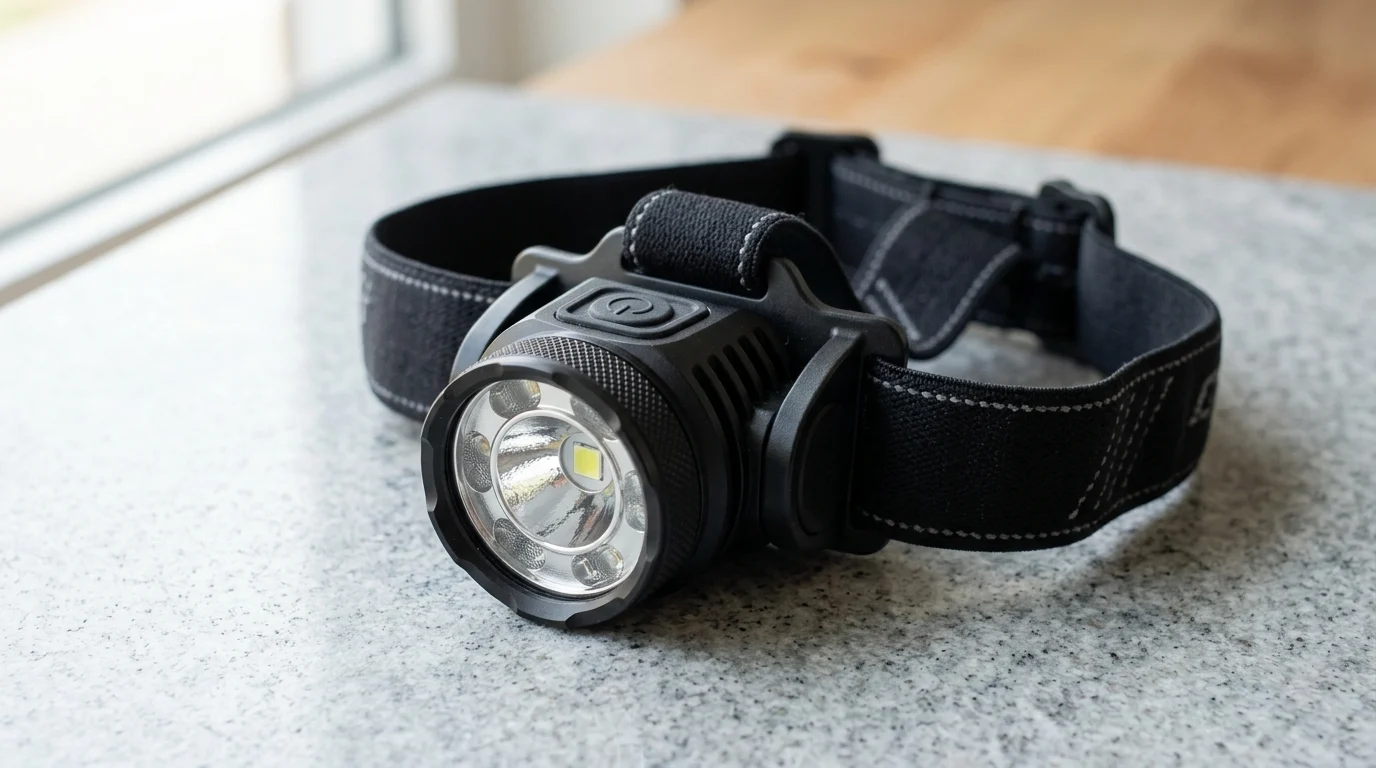
Why a Custom LED Headlamp Strategy Matters for OEM and
In the highly competitive portable lighting sector, relying on off-the-shelf products is rarely sufficient for established brands aiming to capture premium market share. Developing a custom LED headlamp strategy allows B2B buyers, distributors, and procurement teams to differentiate their product lines, protect profit margins, and address the precise technical requirements of their target end-users. With the global industrial and outdoor lighting markets demanding increasingly specialized gear, customization serves as a critical lever for brand equity.
The 18650 battery platform remains the gold standard for high-performance headlamps due to its optimal balance of energy density, weight, and discharge capacity. By leveraging this standardized power source, brands can focus their capital on customizing the optical, ergonomic, and aesthetic components of the headlamp. Depending on the level of exclusivity and capital investment desired, procurement teams must strategically choose between Original Equipment Manufacturer (OEM) and Original Design Manufacturer (ODM) pathways to bring these specialized lighting tools to market.
OEM vs ODM customization models
The decision between OEM and ODM manufacturing models dictates the project’s lead time, capital requirements, and intellectual property ownership. An OEM model involves building a headlamp entirely from scratch based on the buyer’s proprietary blueprints. This approach offers complete exclusivity but typically requires significant upfront investments, with tooling and injection molding costs ranging from $5,000 to $15,000 depending on complexity. Development cycles for OEM projects generally span 90 to 120 days before mass production can commence.
Conversely, the ODM model allows brands to select pre-engineered headlamp chassis from a manufacturer’s catalog and apply localized customizations, such as specialized LED emitters, custom firmware UI, and distinct colorways. ODM significantly accelerates the time-to-market, reducing the development phase to a lean 30 to 45 days. Because the foundational R&D and tooling are already amortized by the factory, ODM projects dramatically lower the barrier to entry, making it the preferred route for distributors looking to expand their SKU count efficiently without absorbing heavy Non-Recurring Engineering (NRE) costs.
Target market segments and branding
A successful custom LED headlamp must be meticulously aligned with its intended market segment, as the technical demands vary drastically between user bases. For the industrial and occupational safety sectors—such as mining, construction, and petrochemicals—headlamps must prioritize extreme durability, extended runtimes, and strict safety certifications. These markets often require intrinsic safety ratings (such as ATEX Zone 0 or 1) and high-visibility branding to comply with corporate safety mandates.
In contrast, the outdoor recreation and tactical markets demand entirely different specifications. Outdoor brands targeting hikers and alpinists prioritize ultra-lightweight materials, high Color Rendering Index (CRI > 90) emitters for accurate terrain assessment, and intuitive user interfaces. Tactical and law enforcement segments necessitate low-signature aesthetics, dedicated red or infrared secondary emitters, and robust aluminum housings capable of withstanding severe impacts. Tailoring the physical product and its packaging to these distinct cohorts allows B2B buyers to command premium retail pricing, often achieving gross margins of 40% to 60% when the branding precisely matches the segment’s expectations.
Key Product Specifications for a Custom LED Headlamp

Specifying the technical parameters of a custom LED headlamp is the most critical phase of the procurement process. The chosen specifications directly impact the Bill of Materials (BOM) cost, the product’s field performance, and its positioning against competing brands. Because the 18650 lithium-ion battery typically offers capacities ranging from 2600mAh to 3500mAh, engineers have a robust energy budget to work with, allowing for high-lumen outputs without compromising practical runtimes.
Procurement teams must work closely with their manufacturing partners to balance optical performance with thermal management. A headlamp designed to push extreme lumens will generate significant heat, necessitating superior housing materials and advanced driver circuitry to prevent thermal throttling and protect the internal components.
LED output, beam pattern, and runtime
The core of any custom LED headlamp is its optical system. Premium emitters from suppliers like Cree, Osram, or Luminus are standard choices for high-performance models, capable of delivering outputs exceeding 1,200 lumens on an 18650 platform. However, raw output must be intelligently managed. Procurement teams must specify the driver type—preferably a constant current driver—to ensure the light output remains stable as the battery voltage drops, rather than dimming proportionally.
Beam pattern is equally vital and is dictated by the choice of optics. Total Internal Reflection (TIR) lenses provide a smooth, artifact-free flood beam ideal for close-up tasks and running, while Orange Peel (OP) or smooth reflectors are utilized to achieve a concentrated spot beam with a throw distance of 150 to 300 meters. Runtime specifications must be clearly defined in the factory brief; for example, mandating a minimum of 2 hours on the ‘Turbo’ setting and up to 50 hours on the ‘Low’ setting (typically 10-30 lumens) ensures the product meets the practical endurance needs of professional users.
Materials, durability, waterproofing, and comfort
Material selection dictates both the physical resilience and the perceived quality of the headlamp. Tactical and heavy-duty industrial models predominantly utilize aviation-grade 6061-T6 aluminum alloy finished with HAIII military-grade hard anodizing. This provides exceptional scratch resistance and efficient heat dissipation. For lightweight recreational models, high-impact polycarbonate or glass-reinforced nylon is often specified, reducing the total unit weight (excluding battery) to under 60 grams.
Environmental sealing and impact resistance must be quantified during the specification phase. A standard requirement for premium custom headlamps is an IP68 rating, ensuring the device is entirely dust-tight and capable of continuous submersion in water up to 2 meters deep. Drop resistance should be certified to withstand impacts from at least 1.5 meters onto concrete. Furthermore, comfort components must not be overlooked; specifying moisture-wicking, silicone-lined headbands prevents the unit from slipping during vigorous activity, significantly enhancing the end-user experience.
Specification comparison for procurement
To streamline the procurement and factory negotiation process, buyers should utilize a standardized specification matrix. This ensures all potential suppliers are quoting against the exact same baseline requirements, preventing cost-cutting through inferior component substitution.
| Specification Category | Industrial / Mining Model | Outdoor / Recreational Model | Tactical / Military Model |
|---|---|---|---|
| Housing Material | Fire-retardant Polycarbonate | Lightweight Polycarbonate / ABS | 6061-T6 Aluminum (HAIII) |
| Target Output (Max) | 600 Lumens | 1,000 Lumens | 1,200+ Lumens |
| Optical Setup | Wide Flood (TIR Lens) | Mixed Spot/Flood | High-intensity Spot (Reflector) |
| Ingress Protection | IP67 (Dust & Water) | IPX6 (Heavy Rain) | IP68 (Submersible to 2m) |
| Drop Resistance | 2.0 Meters | 1.0 Meter | 1.5 Meters |
| Secondary Emitters | None / High-CRI White | Red LED (Night Vision Preservation) | Red / IR (Infrared) |
| Target BOM Cost | $8.00 – $12.00 | $6.50 – $10.00 | $12.00 – $18.00 |
Managing OEM and ODM Development, MOQ, and Packaging
Transitioning a custom LED headlamp from a conceptual specification sheet to a mass-produced reality requires rigorous supply chain management. Procurement teams must navigate the intricacies of product development timelines, minimum order requirements, and packaging design to ensure the final deliverable aligns with both financial targets and brand identity.
Effective management of the OEM or ODM process mitigates the risk of costly production delays. Establishing clear milestones, from the initial 3D computer-aided design (CAD) approvals to the final pre-production sample sign-offs, creates a framework for accountability between the purchasing brand and the overseas manufacturer.
Development process from brief to sample approval
The development process begins with a comprehensive product brief, followed by the manufacturer generating CAD models within 7 to 14 days. Once the digital models are approved, factories typically produce SLA (Stereolithography) 3D-printed or CNC-machined prototypes. These initial mockups, completed in roughly 15 to 20 days, allow the buyer to evaluate the ergonomics, battery fitment, and button actuation before committing to expensive tooling.
Following prototype approval, the tooling phase commences, which is the most time-intensive segment of OEM development, lasting 30 to 45 days. Once molds are finalized, the factory produces a T1 (first tool) pilot run. These pre-production samples are subjected to rigorous field testing. Only after the T1 samples are fully validated and any necessary mold modifications are made should the procurement team issue the final authorization for mass production.
MOQ, components, logo application, and accessories
Minimum Order Quantities (MOQ) are a critical factor in determining the financial viability of a custom headlamp project. For ODM projects utilizing existing molds, factories typically require an MOQ of 500 to 1,000 units. However, fully custom OEM projects require higher volumes to justify the production line setup, with MOQs strictly enforced at 2,000 to 5,000 units. Scaling up the order volume often unlocks tiered pricing, potentially reducing the per-unit cost by 10% to 15%.
Brand application and packaging heavily influence the final landed cost. Laser engraving is the standard for aluminum bodies, offering permanent logo placement for mere cents per unit. Pad printing or silk-screening is utilized for polycarbonate models. Packaging choices range from economical blister packs (approximately $0.20 to $0.35 per unit) suitable for hardware store pegboards, to premium rigid EVA carrying cases or eco-friendly kraft boxes ($0.80 to $1.50 per unit) designed for high-end retail environments. Including branded accessories, such as custom-molded 18650 batteries or braided USB-C charging cables, further elevates the perceived value.
Supplier evaluation and factory audit criteria
Selecting a manufacturing partner extends beyond evaluating their prototype quality; comprehensive supplier auditing is mandatory to ensure long-term reliability. Procurement teams should prioritize factories holding current ISO 9001:2015 certifications, which demonstrate a formalized quality management system. Furthermore, for brands selling into European or North American retail chains, verifying the factory’s compliance with social accountability standards, such as a BSCI (Business Social Compliance Initiative) audit, is crucial to prevent reputational damage.
During the evaluation phase, buyers must assess the factory’s production capacity and defect rate history. A capable supplier should demonstrate a monthly production capacity of at least 50,000 units to accommodate seasonal demand spikes. Additionally, the contract should stipulate an Acceptable Quality Limit (AQL) defect rate threshold of strictly less than 1% for major defects, ensuring that the mass-produced units mirror the quality of the approved golden sample.
Compliance, Quality Control, and Logistics Requirements
Introducing electronic devices powered by lithium-ion batteries into global markets involves navigating a complex web of regulatory compliance, safety testing, and hazardous materials logistics. A custom LED headlamp is not merely a lighting tool; it is an electronic assembly that must adhere to strict international standards to clear customs and legally enter retail distribution channels.
Failure to secure the necessary certifications or properly manage the quality control process can result in shipments being seized at ports of entry, costly product recalls, or severe liability issues. Procurement teams must integrate compliance checks and structured inspection protocols into the core of their purchasing agreements.
Testing standards, battery transport, and labeling
At a minimum, headlamps destined for the European market must bear the CE mark and comply with the RoHS directive, which restricts the use of hazardous substances like lead and cadmium in electronic components. For the North American market, FCC certification is required to ensure the device’s circuitry does not emit unlawful electromagnetic interference. Furthermore, specific labeling requirements, such as the WEEE crossed-out wheelie bin symbol for electronic waste, must be integrated into the product molding or permanent labeling.
Because the 18650 battery is a lithium-ion cell, it is classified as Class 9 hazardous goods for transport. Any headlamp shipping with the battery included must be supported by a valid UN38.3 test report and a Material Safety Data Sheet (MSDS). The UN38.3 certification proves the battery has passed rigorous altitude, thermal, vibration, and impact testing, ensuring it will not pose a fire risk during air or sea freight. Additionally, the battery cells themselves should ideally carry IEC 62133 or UL 1642 certifications to guarantee internal safety mechanisms are functional.
Incoming inspection and reliability testing
Quality Control (QC) cannot be left entirely to the manufacturer. Brands must implement third-party incoming inspections prior to releasing the final balance of payment. Utilizing the AQL (Acceptable Quality Limit) standard—typically set at AQL 1.5 for major defects (e.g., dead LEDs, faulty switches) and AQL 4.0 for minor defects (e.g., slight cosmetic scratches)—provides a statistically sound method for accepting or rejecting a production batch.
Beyond cosmetic and functional checks, reliability testing is paramount. Production samples should be pulled and subjected to integrating sphere testing to verify that the lumen output and color temperature match the documented specifications. For headlamps marketed for maritime or heavy industrial use, salt spray testing (typically 48 to 96 hours) is conducted to ensure the anodizing and internal contacts resist corrosion. Accelerated lifecycle testing on the silicone headbands and the tactile switches (e.g., 10,000 actuation cycles) ensures the product will survive years of field use.
Shipping mode and logistics cost comparison
Logistics strategies significantly impact the final landed cost of custom LED headlamps. Because lithium-ion batteries complicate air transport, many buyers opt to ship the headlamps and batteries separately, or rely entirely on ocean freight to avoid exorbitant air cargo surcharges. Understanding the cost-to-speed ratio is essential for maintaining inventory continuity.
| Shipping Mode | Typical Transit Time | Cost Estimate (per kg/CBM) | Best Used For |
|---|---|---|---|
| Air Express (DHL/FedEx) | 3 – 7 Days | $6.00 – $9.00 / kg | Urgent prototypes, small pilot runs. Strict battery limits apply. |
| Air Freight (Standard) | 7 – 12 Days | $4.50 – $7.00 / kg | Mid-sized orders (100kg+). Requires robust UN38.3 documentation. |
| Sea Freight (LCL) | 25 – 40 Days | $100 – $150 / CBM | Standard ODM orders (500-2000 units). Balances cost and volume. |
| Sea Freight (FCL – 20ft) | 25 – 40 Days | $2,000 – $4,000 / Container | High-volume OEM mass production. Lowest per-unit shipping cost. |
How Procurement Teams Can Choose the Right Custom LED Headlamp
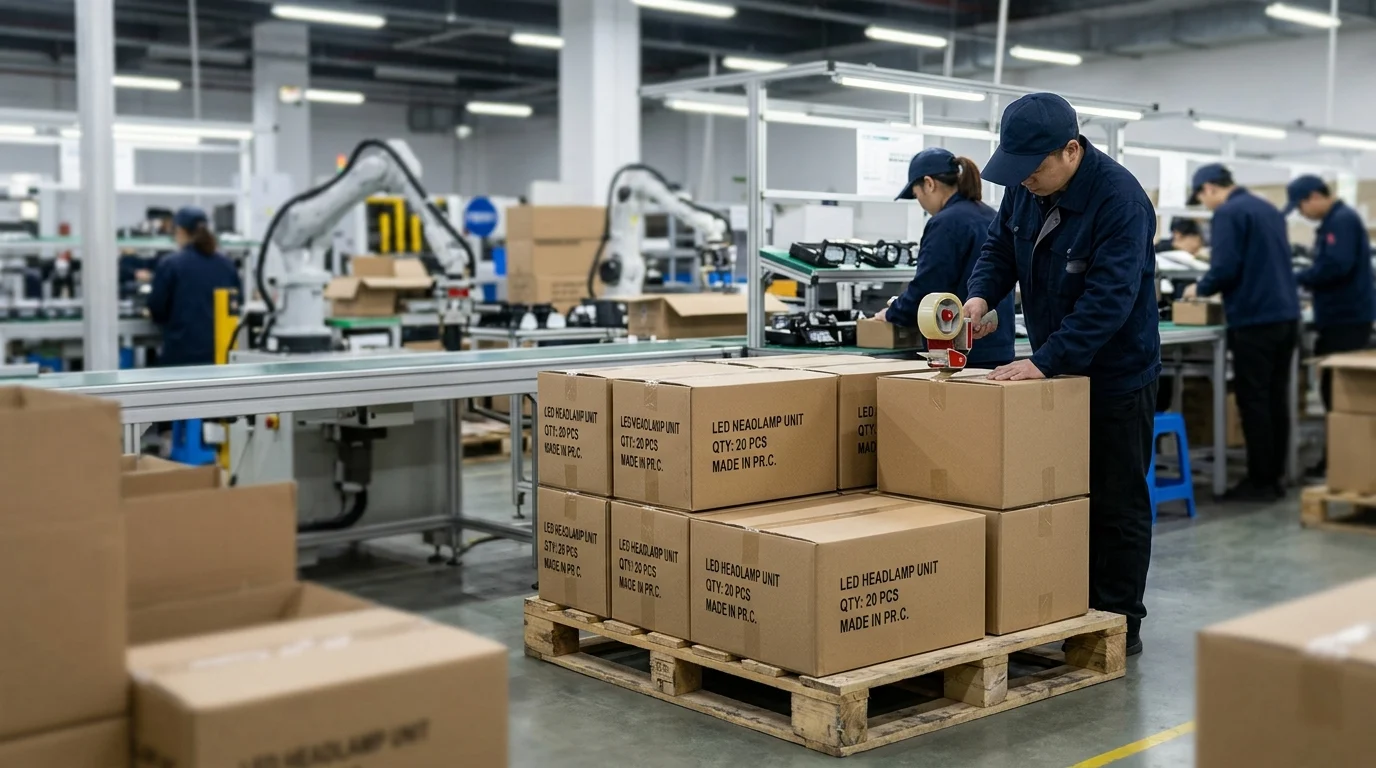
Choosing the right manufacturing partner for a custom LED headlamp goes beyond finding the lowest per-unit quote. Procurement teams must adopt a strategic, long-term perspective that evaluates the supplier’s financial stability, engineering capabilities, and willingness to support the brand’s growth trajectory.
A robust supplier selection framework minimizes supply chain vulnerabilities and ensures that the factory can scale production in tandem with the brand’s market expansion. By analyzing total landed costs and aligning future product roadmaps, buyers can forge partnerships that yield sustainable competitive advantages.
Total cost and supplier selection framework
Evaluating total cost requires deep transparency into the supplier’s pricing structure. Procurement teams should request a detailed Bill of Materials (BOM) breakdown, separating the costs of the LED emitter, driver board, aluminum housing, 18650 battery cell, and packaging. This transparency prevents hidden markups and provides leverage during raw material price fluctuations. Furthermore, buyers must factor in the total Non-Recurring Engineering (NRE) costs, third-party QC inspection fees, and projected freight tariffs to calculate an accurate landed cost.
The selection framework must also assess the financial terms offered by the factory. Standard industry payment terms for custom manufacturing are a 30% deposit upon order confirmation, with the remaining 70% balance payable upon successful QC inspection and presentation of the Bill of Lading (BL). Suppliers willing to offer more flexible terms, such as Net 30 or Net 60 days after establishing a trading history, present a significant advantage for distributors managing tight cash flows.
Product roadmap alignment for distributors
A successful B2B partnership is forward-looking. Distributors and brands should evaluate a supplier’s R&D capabilities to ensure they can support a multi-year product roadmap. As battery technology evolves, a capable factory should be prepared to co-develop next-generation models, such as transitioning from the 18650 platform to the higher-capacity 21700 battery format, or integrating USB-C PD (Power Delivery) fast-charging protocols.
Finally, procurement teams must negotiate geographic exclusivity agreements. If a brand invests heavily in customizing an ODM chassis or funding an OEM mold, the contract must explicitly prohibit the factory from selling that specific configuration to competing distributors within the buyer’s target regions. Aligning the product roadmap with strict intellectual property protections ensures that the investment in a custom LED headlamp yields long-term profitability and solidifies the brand’s position in the marketplace.
Key Takeaways
- Wholesale sourcing and supply-chain implications for Custom LED Headlamp
- Specifications, compliance, and commercial terms buyers should validate
- Actionable recommendations for distributors and procurement teams
Frequently Asked Questions
What is the main difference between OEM and ODM for 18650 headlamps?
OEM builds from your proprietary design for full exclusivity. ODM starts from an existing factory platform, then customizes features like LED, UI, colors, and branding for faster launch and lower cost.
How long does a custom 18650 headlamp project usually take?
ODM projects typically take 30–45 days for development. OEM projects usually need 90–120 days before mass production because of tooling, molds, and full design validation.
Which customization options matter most for a custom LED headlamp?
Focus on beam pattern, lumen output, runtime, LED type, housing material, switch UI, branding colors, and packaging. These directly affect user experience, cost, and market fit.
When should a brand choose an 18650 battery platform?
Choose 18650 when your market needs strong runtime, higher output, and good energy density. It fits industrial, outdoor, and tactical headlamps where performance matters more than ultra-compact size.
Do industrial and outdoor markets need different headlamp specifications?
Yes. Industrial buyers often need durability, long runtime, and safety certifications like ATEX. Outdoor markets usually prefer lighter weight, high-CRI LEDs, and simple controls for fast, practical use.
Lily
Technical Director
With 15+ years in outdoor lighting, specializing in LED headlamp & flashlight R&D, thermal management and product innovation.
Thermal Management
Post time: Apr-22-2026


