 fannie@nbtorch.com
 +0086-0574-28909873




Rechargeable outdoor headlamps offer outdoor enthusiasts a superior lighting solution. They provide dual benefits of convenience and environmental responsibility. These headlamps eliminate the constant need for disposable batteries. This makes them a practical and sustainable choice for any adventure.
Key Takeaways
- Rechargeable headlamps are better for the Earth. They create less trash than headlamps that use regular batteries.
- These headlamps save you money over time. You do not need to buy new batteries often.
- Rechargeable headlamps are easy to use. You can charge them with a USB cable, even in the wild.
- They offer steady, bright light for a long time. This helps you see well during your outdoor activities.
- Choose a headlamp with good brightness and water protection. This ensures it works well for your adventures.
The Drawbacks of Traditional Outdoor Headlamps with Disposable Batteries
Traditional outdoor headlamps, relying on disposable batteries, present several significant disadvantages for outdoor enthusiasts. These drawbacks range from environmental concerns to financial strain and practical inconveniences during use.
Environmental Impact of Disposable Batteries
Disposable batteries contribute substantially to environmental pollution. They contain hazardous materials such as mercury, lead, and cadmium. When discarded, these chemicals leach into soil and water, contaminating ecosystems. Landfills receive billions of disposable batteries annually, creating a non-biodegradable waste problem. This constant accumulation of toxic waste poses a long-term threat to public health and wildlife.
Financial Burden of Recurring Battery Purchases
The ongoing cost of disposable batteries quickly adds up. Users frequently purchase new batteries, which creates a recurring financial burden. Consider the annual expenses:
| Headlamp Type | Annual Battery Cost |
|---|---|
| AAA Headlamps | Over $100 |
| Rechargeable Headlamps | Less than $1 |
This table clearly illustrates the significant difference. Traditional headlamps can incur over $100 in annual battery expenses. This contrasts sharply with the minimal cost associated with rechargeable alternatives. Over time, these small purchases accumulate into a considerable sum.
Inconvenience and Reliability Issues in the Field
Disposable batteries introduce inconvenience and reliability concerns during outdoor activities. Batteries often die unexpectedly, leaving users in the dark at critical moments. This necessitates carrying spare batteries, adding weight and bulk to a pack. Forgetting spares or running out of them in remote locations compromises safety and enjoyment. Such situations disrupt the flow of an adventure and can create hazardous conditions, especially during night navigation or emergency situations.
Why Rechargeable Outdoor Headlamps Are a Superior Choice

Rechargeable outdoor headlamps offer significant advantages over their disposable battery counterparts. They provide a more sustainable, convenient, and reliable lighting solution for all outdoor activities.
Environmental Benefits of Rechargeable Power
Rechargeable power sources dramatically reduce environmental impact. These headlamps contribute to a healthier planet by minimizing waste and conserving resources.
- Waste Reduction: Rechargeable batteries drastically reduce battery waste, often by up to 90%. A single rechargeable battery replaces hundreds of disposable AAA batteries over its lifespan, directly minimizing landfill contributions.
- Extended Lifespan: Lithium-ion rechargeable batteries boast a longer lifespan. They endure hundreds of charge cycles before needing replacement.
- Recyclability: Manufacturers design these batteries for recyclability. This process allows for the recovery of valuable materials like cobalt and lithium. Such recovery reduces the demand for new raw resource mining.
- Lower Carbon Footprint: Rechargeable headlamps also contribute to a lower overall carbon footprint. They decrease the need for frequent manufacturing and transportation of disposable batteries. Charging consumes minimal electricity, especially when users utilize renewable energy sources.
Unmatched Convenience and Practicality
Modern rechargeable outdoor headlamps offer exceptional convenience. Users simply plug them in to recharge. This eliminates the need to constantly purchase and carry spare disposable batteries.
- Efficient Charging: Charging times are generally efficient. For instance, a Petzl CORE headlamp recharges in 2-5+ hours, depending on the power source. Many models with a 2400mAh 18650 lithium battery achieve a full charge within 4-6 hours using a standard 500-600mA current. Normal charging typically takes about 6 hours. This quick turnaround ensures the headlamp is ready for the next adventure without delay.
- Universal Charging: Many rechargeable headlamps feature USB charging. This allows users to power them up from various sources like power banks, car chargers, or solar panels. This versatility makes them ideal for remote locations.
- Hassle-Free Operation: Users avoid the hassle of searching for specific battery sizes or dealing with dead batteries in critical moments. They always have a charged light source available.
Consistent Performance and Reliability
Rechargeable outdoor headlamps deliver consistent performance throughout their use. They maintain a stable brightness level for longer periods compared to traditional models. Disposable batteries often experience a gradual dimming as their power depletes. Rechargeable units, however, typically provide full illumination until the battery nears depletion. This consistent output ensures reliable visibility during crucial activities like night hiking or intricate camp tasks. Advanced battery management systems in these outdoor headlamps also protect against overcharging and over-discharging. This enhances both safety and longevity.
Essential Features for Your Next Rechargeable Outdoor Headlamp
Choosing the right rechargeable outdoor headlamp requires careful consideration of several key features. These features directly impact performance, convenience, and suitability for specific activities. Understanding these aspects helps outdoor enthusiasts select a device that meets their needs.
Battery Type and Capacity Considerations
The battery forms the heart of any rechargeable headlamp. Different battery technologies offer distinct advantages.
| Battery Type | Advantages |
|---|---|
| Alkaline | Common for casual use |
| Lithium-ion | Higher performance, longevity |
| Rechargeable NiMH | Cost-effective over time, eco-friendly |
Lithium-ion batteries, for instance, provide high performance and a long lifespan, making them a popular choice for demanding outdoor activities. Rechargeable NiMH batteries offer a cost-effective and environmentally friendly alternative over time.
Battery capacity, measured in milliampere-hours (mAh), determines how long a headlamp runs on a single charge. Higher mAh ratings generally mean longer run times. Common capacities include:
- Eneloop AA: 2000 mAh
- Petzl AccuCore: 1800 mAh
- 18650 battery: 3400 mAh
Users should note that some older MYO headlamps do not recommend 1600 mAh rechargeable batteries due to potential current delivery issues, not merely capacity. Always check compatibility for optimal performance.
Diverse Charging Method Options
Modern rechargeable headlamps offer various charging methods, enhancing their versatility and convenience. Most models feature USB charging, allowing users to power them from multiple sources. This includes portable power banks, car chargers, and even solar panels. This flexibility ensures users can recharge their headlamp almost anywhere, from a remote campsite to a vehicle on the go. The ability to charge via universal USB ports eliminates the need for proprietary chargers, simplifying travel and reducing clutter. This diverse charging capability makes rechargeable headlamps highly practical for extended trips where access to traditional power outlets is limited.
Understanding Brightness and Beam Patterns
Brightness, measured in lumens, indicates the light output of a headlamp. The required lumen level depends heavily on the intended activity.
| Lumen Level | Suitable Activities |
|---|---|
| Under 100 | Reading maps, camp chores, emergency backup |
| 100-200 | General hiking on well-marked trails, around camp, seeing obstacles |
| 200+ | Off-trail hiking, rugged terrain, fast-paced hiking, spotting obstacles |
For more specific activities, consider these ranges:
| Lumen Level | Suitable Activities/Terrain |
|---|---|
| 200-400 | Roads and exercise tracks |
| 400-600 | Most forest trails |
| 1200-3000 | Fast-paced technical terrain |
| 10,000 | Turning night into day (extreme brightness) |
A headlamp’s beam pattern also significantly impacts its utility. Different patterns suit various tasks:
| Beam Pattern | Description | Applications |
|---|---|---|
| Wide beam (Flood) | Emits uniform, close-range light for stationary or slow-moving activities. | Travel, family activities, children, camping, DIY, home use, repair work, reading. |
| Mixed beam (Flood + Focused) | Combines a wide beam for good ground lighting with a focused beam for added depth, suitable for close-range vision and movement. | Hiking, trekking, mountaineering, caving. |
| Focused beam | Concentrates light for long distances, enabling long-range, precise vision. | Trail running, expeditions, technical mountaineering, back-country skiing, multi-activity races, biking, orienteering. |
A wide beam, or floodlight, provides broad, even illumination for close-up tasks like reading or setting up camp. A focused beam, or spotlight, projects light over long distances, ideal for spotting distant trail markers or navigating technical terrain. Many modern outdoor headlamps offer a mixed beam, combining both flood and focused light for versatile use across various activities.
Crucial Run Time and Battery Indicator Features
The run time of a rechargeable headlamp is a critical factor for any outdoor adventure. It determines how long the light will last on a single charge. Manufacturers often specify run times for different brightness settings. For example, Petzl headlamps typically offer 2-3 hours of burn time at their maximum brightness. Other brands might claim 3-6 hours or more. Users should note that the “max burn time” usually corresponds to the lowest brightness setting. Conversely, “max power” is associated with the shortest burn time. Manufacturers like Petzl clarify the burn times for each brightness level. This helps consumers understand the actual performance.
Headlamp run time, or battery life, measures the duration of “useful” light. This duration can vary significantly between different brightness modes. A headlamp might last 2 hours on a high setting but extend to 100 hours on a low setting. Some models maintain consistent brightness until the battery depletes. They often include an indicator for this. Other models gradually dim as the battery loses power. A reliable battery indicator is essential. It allows users to monitor remaining power and plan accordingly. This prevents unexpected darkness during critical moments.
Durability and Water Resistance Ratings
Outdoor gear must withstand harsh conditions. Therefore, durability is a key consideration for rechargeable headlamps. Manufacturers construct these devices from robust materials. They often use high-grade plastic or aluminum for durable housing and impact resistance. Many headlamps feature a robust plastic body. This body is lightweight yet durable. They also incorporate enclosing rubber knobs. These knobs provide shock absorbency for a robust build. Headlamps are constructed from durable and impact-resistant material. This construction ensures they can endure drops and bumps.
Water resistance is equally important for outdoor use. The International Protection (IPX) rating system indicates a headlamp’s resistance to water ingress. This rating helps users choose a headlamp suitable for their expected weather conditions.
| IPX Rating | Water Resistance Description |
|---|---|
| IPX0 | No protection from water. |
| IPX1 | Protected from vertically falling water drops. |
| IPX2 | Protected from vertically falling water drops when the device is tilted up to 15 degrees. |
| IPX3 | Protected from spraying water at any angle up to 60 degrees from vertical. |
| IPX4 | Protected from splashing water from any direction. |
| IPX5 | Protected from low-pressure water jets from any direction. |
| IPX6 | Protected from high-pressure water jets from any direction. |
| IPX7 | Protected from immersion in water up to 1 meter (3.3 feet) for 30 minutes. |
| IPX8 | Protected from continuous immersion in water beyond 1 meter, with the exact depth and duration specified by the manufacturer. |
| IPX9K | Protected from high-pressure, high-temperature water jets from any direction. |
An IPX4 rating protects against splashing water. This is generally sufficient for light rain. An IPX7 rating means the headlamp can withstand temporary immersion. This makes it suitable for heavy downpours or accidental drops in water. Users should select a rating that matches their typical outdoor activities.
Comfort and Fit for Extended Wear
Comfort and a secure fit are paramount for any Outdoor Headlamps worn for extended periods. An uncomfortable headlamp can distract users and detract from their experience. Ergonomic design features significantly contribute to comfort and stability.
- Adjustable straps provide a secure fit without excessive pressure. Users can customize the fit to their head size.
- Weight distribution between the front and back of the headlamp reduces pressure and bouncing. This design prevents discomfort during movement.
- Soft and wicking strap materials enhance comfort. They manage moisture and prevent chafing.
- A no-bounce design is often achieved by balancing a lightweight front lamp with a rear battery pack. The BioLite Dash 450 exemplifies this feature.
- Balanced lamp housing, like that found in the Petzl Actik CORE, also reduces pressure points.
- Minimalist designs, such as the Nitecore NU25 UL, can still offer stability and comfort despite a barebones strap.
These features ensure the headlamp remains stable and comfortable. Users can then focus on their activity without constant adjustments or discomfort.
Advanced and Smart Features
Modern rechargeable outdoor headlamps integrate sophisticated technologies. These features enhance user experience, safety, and efficiency. They move beyond basic illumination, offering intelligent solutions for diverse outdoor scenarios.
Many high-end headlamps now include reactive lighting or adaptive lighting systems. These systems utilize ambient light sensors. The headlamp automatically adjusts its brightness based on the surrounding environment. For example, when a user looks at a map, the light dims. When the user looks up at a distant trail, the light brightens. This automatic adjustment optimizes battery life. It also provides consistent, comfortable visibility without manual intervention. Users maintain focus on their activity.
Some headlamps offer Bluetooth connectivity and smartphone app control. This feature allows users to customize their headlamp’s settings remotely. Through a dedicated app, users can:
- Adjust brightness levels precisely.
- Configure custom beam patterns.
- Monitor battery status in real-time.
- Access firmware updates for improved performance.
This level of control provides a personalized lighting experience. It adapts the headlamp to specific activity requirements.
Red light mode is another valuable advanced feature. This mode emits a low-intensity red light. It preserves a user’s natural night vision. Unlike white light, red light does not cause pupils to constrict significantly. This makes it ideal for:
- Reading maps in the dark.
- Moving around camp without disturbing others.
- Observing wildlife without startling them.
Many headlamps also incorporate SOS and strobe modes. These are crucial for safety. The SOS mode flashes a universally recognized distress signal. The strobe mode provides a high-visibility flashing light. Users can employ these modes to:
- Signal for help in emergencies.
- Increase their visibility to others in low-light conditions.
A lockout function prevents accidental activation. Users can engage this feature when storing the headlamp in a backpack. It saves battery life. It also prevents the headlamp from turning on unexpectedly and potentially blinding someone.
Some versatile headlamps even offer power bank functionality. They allow users to charge small electronic devices. This feature transforms the headlamp into a multi-purpose tool. It provides emergency power for a smartphone or GPS device in remote locations.
Finally, gesture control represents another innovative feature. Users can turn the headlamp on or off, or change modes, with a simple wave of a hand. This is particularly useful when hands are dirty, wet, or gloved. It offers a convenient, hands-free operation. These advanced features collectively elevate the utility and performance of rechargeable outdoor headlamps. They make them indispensable tools for serious outdoor enthusiasts.
Top Recommended Rechargeable Outdoor Headlamps for Every Adventure
Selecting the ideal rechargeable headlamp enhances any outdoor experience. Different activities demand specific features. This guide highlights top recommendations across various categories.
Budget-Friendly Options for Casual Use
Casual users need reliable, easy-to-use headlamps without a high price tag. The Petzl Tikkina offers an excellent budget-friendly choice. This headlamp features a straightforward design and provides 150 lumens of output. It is compatible with Petzl’s rechargeable Core battery, sold separately. This makes it a practical rechargeable option for everyday outdoor tasks or simple camping trips.
High-Performance Models for Technical Activities
Technical activities like mountaineering or trail running require robust illumination. Experts recommend headlamps with at least 300 lumens, capable of adjusting up to 500 or 800 lumens for challenging conditions. Timothy Gorbold, an ultrarunning product design engineer, emphasizes considering terrain, weather, and personal comfort. More light generally allows faster movement on technical trails.
Top high-performance models include:
- Petzl Iko Core: This model offers 500 lumens, making it suitable for most trail running. It is light, comfortable, and provides both flood and long-throw light.
- Nitecore UT27 MCT Pro: It boasts 800 lumens in turbo mode. This headlamp runs on rechargeable or AAA batteries and includes a warm-light mode.
- Fenix HL18R-T V2.0 Rechargeable Headlamp: This lightweight option provides 500 lumens. It operates on its included rechargeable battery or AAA batteries.
- Petzl Nao RL: This headlamp shines brightly all night, ideal for ultrarunning. Its Reactive Lighting technology automatically adjusts brightness.
These models often feature versatile battery options and multiple lighting modes, including warm light for reduced eye strain.
Lightweight Choices for Backpacking and Camping
Backpackers and campers prioritize minimal weight and packability. Lightweight headlamps typically weigh around 2 ounces or less. They often feature USB-C rechargeable batteries and offer at least 300 lumens, with 400+ lumens preferred. Long-lasting batteries and water/dust protection are also crucial.
The Black Diamond ReVolt is a versatile option. It operates on its rechargeable battery or three standard AAA batteries. This headlamp is waterproof with an IPX8 rating and emits up to 300 lumens. It includes a red LED for night vision. While weighing 100 grams (3.5 oz), its rechargeability and versatility are highly valued.
Other excellent lightweight choices include:
| Headlamp | Price | Weight | Max Lumens | Battery (mAh) | Plug | Avg Battery Life (High) | Avg Battery Life (Low) |
|---|---|---|---|---|---|---|---|
| Flextail Tiny Helio 600Z | $39 | 2.1 oz | 600 | 900 | USB-C | 4.0 hrs | 50 hrs |
| Black Diamond Deploy 325 Run Light | $60 | 1.4 oz | 325 | 750 | USB-C | 2.5 hrs | 30 hrs |
| Coast FL1R Micro Headlamp | $35 | 1.7 oz | 435 | 630 | USB-C | 1.25 hrs | 4.75 hrs |
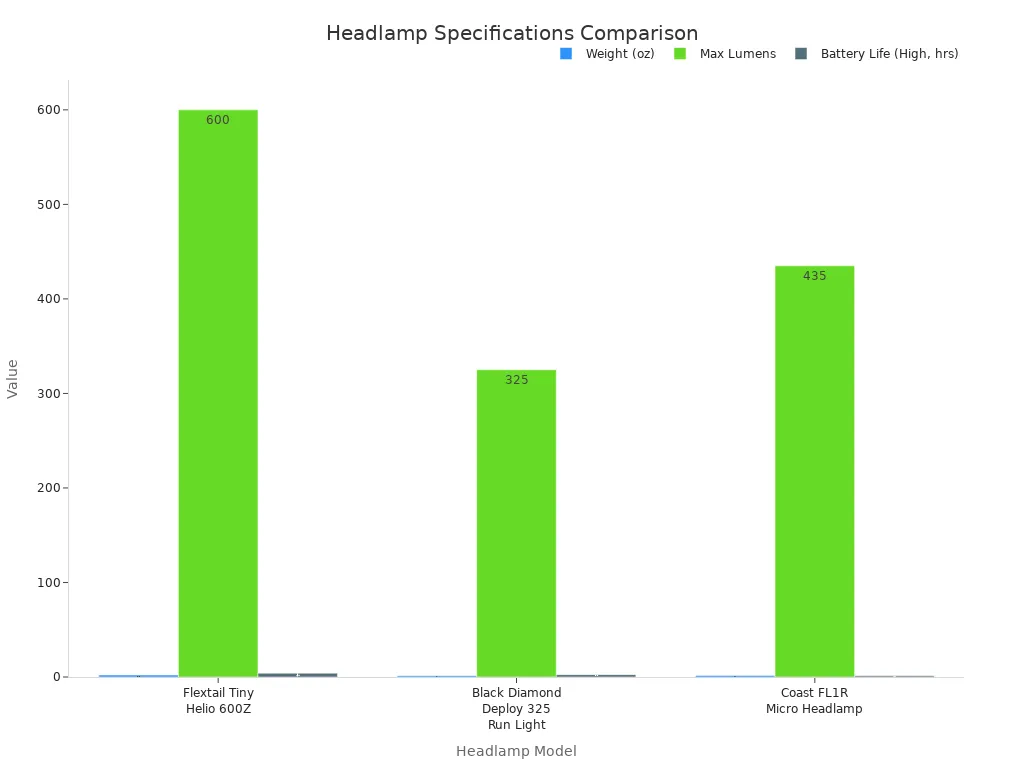
These lightweight options ensure users have reliable illumination without adding significant bulk to their gear.
Versatile All-Rounders for General Outdoor Use
General outdoor activities require headlamps that offer a balanced blend of features. These versatile all-rounders provide reliable illumination for various adventures. They combine comfort, extended battery life, and adaptable beam patterns. Such headlamps ensure users remain well-equipped for diverse conditions.
The Brinyte HL18 stands out as a versatile hiking headlamp. It offers multiple modes and extended battery life. Its ergonomic comfort makes it suitable for rugged mountain trails and multi-day adventures. This model provides consistent performance across different terrains.
Another excellent option is the Brinyte HL28 Artemis. This headlamp serves as an ideal camping headlamp for all-around use. It features zoomable beams, allowing for flexible visibility. Users can adjust the beam from a wide flood to a focused spot. The HL28 Artemis also includes multi-color lighting, offering white, red, and green light options. A rechargeable battery provides long runtime, enhancing its practicality for extended trips.
Outdoor enthusiasts consistently emphasize comfort, runtime, and adjustable beams as crucial features for their headlamps. The Brinyte HL series aims to provide these essential qualities. These headlamps offer a reliable and adaptable lighting solution. They cater to the varied needs of general outdoor use, from casual camping to more demanding hikes. They ensure users have dependable light whenever they need it.
Maximizing the Lifespan and Performance of Your Rechargeable Outdoor Headlamp
Proper care significantly extends the lifespan and maintains the performance of a rechargeable headlamp. Adhering to best practices for charging, storage, and routine maintenance ensures the device remains reliable for many adventures.
Best Practices for Charging Your Headlamp
Correct charging procedures are crucial for battery longevity. Users should always utilize the charger specifically designed for the battery. This prevents reduced battery life from overcharging or incompatible chargers. For lithium-ion batteries, partially charging them up to 70% or near full is often better than always fully charging them. Users should avoid leaving the device plugged in constantly or overnight if the battery cannot be removed. Disconnecting batteries from the charger once they reach full charge prevents overcharging and excess heat generation. It is also important to avoid fast charging for lithium-ion batteries; only NiCad batteries handle fast charging effectively. Users must not charge batteries at extreme temperatures. They should keep lithium-ion batteries above 32°F and below 122°F during charging.
Optimal Storage Tips for Battery Longevity
Proper storage conditions prevent battery degradation. Users should store batteries in a cool, dry place, ideally around 60°F (15°C). For lithium-ion batteries, the ideal temperature for long-term storage is 15°C, with a recommended range of 0°C to 25°C. Rechargeable batteries with nickel or lithium chemistry should be stored at approximately a 40% charge level. This avoids both 0% and 100% charge. Consistently high temperatures drastically reduce lifespan. Users should keep batteries out of direct sunlight and away from moisture. Checking stored batteries every few months and recharging them to 50% if needed helps maintain their health.
Routine Maintenance and Cleaning for Durability
Regular maintenance ensures a headlamp’s durability and consistent performance. Users should periodically inspect the headlamp for signs of wear, fraying, or damage. Addressing issues early prevents complete failures. After use in muddy or wet conditions, users should clean the strap with mild soap and water to prevent dirt buildup. Proper storage in a cool, dry place away from direct sunlight prevents UV damage. When adjusting the strap, users should avoid overstretching it to preserve elasticity. For devices with internal or rechargeable batteries, ensuring a full drain and recharge cycle occasionally optimizes performance.
Rechargeable outdoor headlamps offer a compelling blend of environmental responsibility, long-term cost savings, and unparalleled convenience. These devices eliminate the constant need for disposable batteries. They ensure users remain prepared and well-lit for any outdoor adventure. This makes them a smart and sustainable choice for every outdoor enthusiast.
FAQ
How long do rechargeable headlamp batteries typically last on a single charge?
Battery life varies significantly. It depends on the brightness setting and battery capacity. High settings offer shorter run times, often 2-6 hours. Low settings can last 50-100 hours. Users should always check the manufacturer’s specifications for precise run times.
Are rechargeable headlamps waterproof?
Many rechargeable headlamps offer water resistance, indicated by an IPX rating. An IPX4 rating protects against splashes, suitable for light rain. IPX7 or IPX8 ratings mean they can withstand temporary immersion. Users should match the rating to their activity.
What is the best way to store a rechargeable headlamp for long periods?
Users should store rechargeable headlamps in a cool, dry place, away from direct sunlight. For lithium-ion batteries, maintain a charge level around 40-50%. This practice prevents battery degradation and extends its overall lifespan.
Why should an outdoor enthusiast choose a rechargeable headlamp instead of one with disposable batteries?
Rechargeable headlamps offer environmental benefits by reducing waste. They also provide long-term cost savings, eliminating recurring battery purchases. Their consistent performance and convenient USB charging make them a superior, hassle-free choice for outdoor adventures.
What do “lumens” signify when choosing a headlamp?
Lumens measure the total light output of a headlamp. Higher lumen numbers indicate a brighter light. Users need more lumens for technical activities like trail running (200+ lumens) and fewer for camp chores (under 100 lumens
Post time: Jun-02-2026


