 fannie@nbtorch.com
 +0086-0574-28909873




Why B2B Buyers Prioritize a Reliable Headlamp Supplier
Sourcing industrial or consumer-grade lighting equipment requires a strategic approach, particularly when dealing with high-capacity lithium-ion powered devices. For procurement teams, partnering with a reliable headlamp supplier is not merely a matter of securing the lowest unit price; it is about establishing a resilient supply chain that protects brand equity and profit margins.
In a volatile global market characterized by fluctuating component costs and logistical bottlenecks, buyers must prioritize suppliers capable of delivering consistent product quality, strict regulatory compliance, and scalable production. A fragmented or unreliable supply base can quickly lead to stockouts during peak seasons, ultimately damaging distributor relationships and costing companies significant market share.
How a reliable supplier reduces procurement risk
Procurement risk manifests in several costly ways: delayed shipments, inconsistent batch quality, and catastrophic component failures. A reliable headlamp supplier actively mitigates these risks through stringent internal controls, vertical integration, and transparent communication. By controlling the sourcing of raw materials—such as the aluminum alloys for heat sinks and the polycarbonate for lenses—top-tier manufacturers insulate their buyers from sudden market shocks.
Furthermore, risk reduction is highly measurable on the factory floor. While a standard acceptable quality limit (AQL) might tolerate a 2.5% minor defect rate, premium manufacturers frequently maintain defect rates below 0.5% through automated assembly and rigorous inline testing. This dramatic reduction in failure rates directly protects wholesale distributors from costly product recalls, warranty claims, and RMA (Return Merchandise Authorization) processing, which can rapidly erode the margins of high-volume wholesale orders.
Key rechargeable headlamp buyer requirements
B2B buyers approach the rechargeable headlamp category with specific technical and commercial requirements tailored to their end-user demographics, whether that is the outdoor recreation market, tactical sectors, or industrial safety. Key requirements typically include verifiable lumen output, stable thermal management, and reliable battery chemistry. Buyers demand transparency regarding the power cells used—often specifying premium 18650 or 21700 lithium-ion batteries—to ensure longevity, safety, and a minimum of 500 charge cycles before significant capacity degradation.
Additionally, structural durability and ingress protection are non-negotiable buyer requirements. Procurement teams require clear, certified distinctions between IPX4 splash resistance for general consumer use and IP67 submersion ratings for professional-grade environments. Buyers also increasingly require advanced power delivery features, such as USB-C fast charging protocols capable of handling 5V/2A inputs, moving away from legacy micro-USB standards to meet modern consumer expectations.
Product and Engineering Signals of a Reliable Supplier
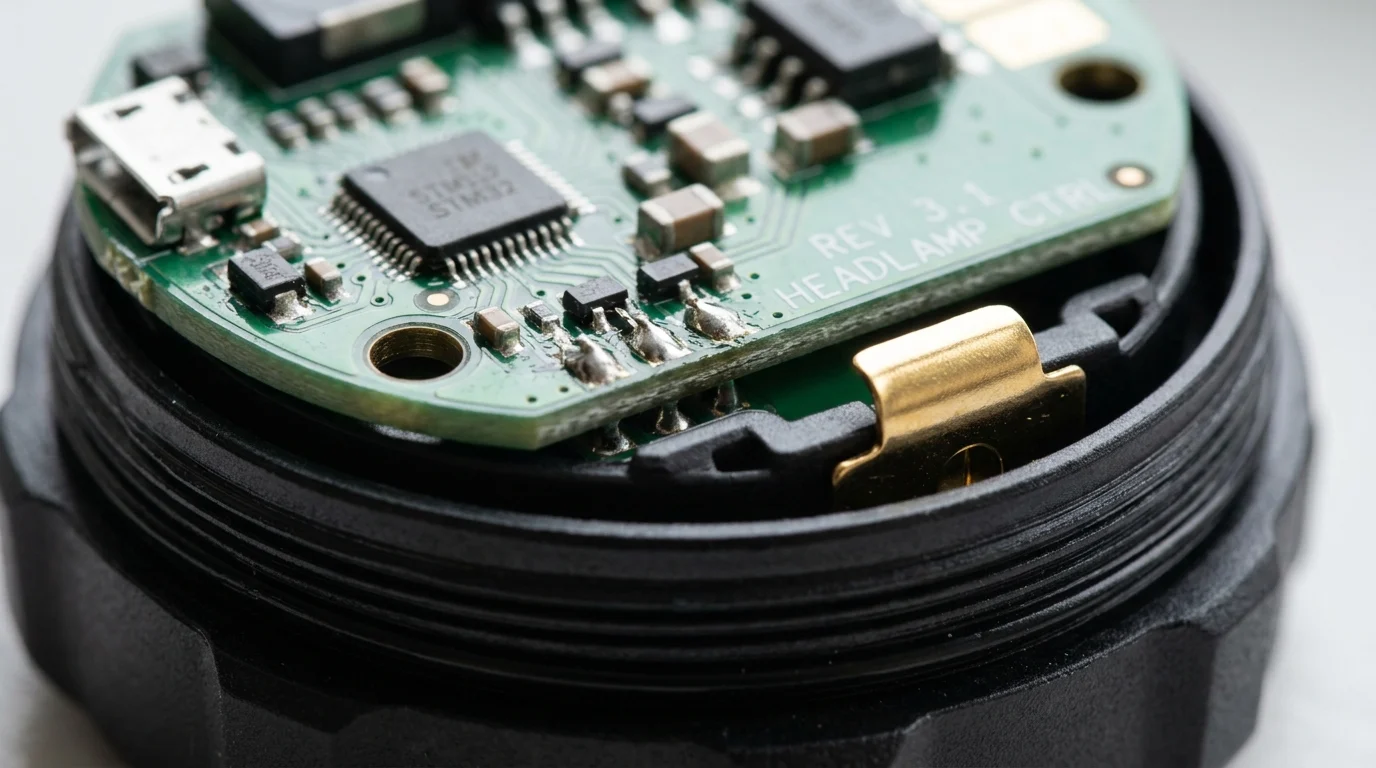
Evaluating a reliable headlamp supplier requires a deep dive into their engineering capabilities and product architecture. A supplier’s technical competence is directly reflected in the components they select, the optical designs they engineer, and the quality assurance processes they implement before mass production begins.
Technical specifications that matter most to B2B buyers
The core technical specifications of a rechargeable headlamp define its market positioning and dictate the wholesale price point. Procurement teams must scrutinize the LED chipset, battery capacity, optical lenses (such as TIR—Total Internal Reflection lenses vs. traditional reflectors), and the printed circuit board (PCB) programming. Premium suppliers utilize recognized LED brands like CREE, Osram, or Nichia, paired with high-capacity lithium-ion cells ranging from 2600mAh to 3400mAh for extended runtimes.
Another critical specification is the Color Rendering Index (CRI). Industrial, medical, and tactical buyers frequently demand a CRI greater than 80, or even 90+, for accurate color representation in low-light environments, such as distinguishing between wire colors in an electrical panel. Furthermore, thermal throttling—step-down programming that automatically reduces lumen output when the internal temperature exceeds 60°C—is a vital feature that protects the LED from premature burnout.
| Specification | Standard Consumer Grade | Professional / Industrial Grade |
|---|---|---|
| Lumen Output | 200 – 400 Lumens | 800 – 1500+ Lumens |
| Battery Capacity | 1200mAh – 1800mAh (Internal Li-Po) | 2600mAh – 3400mAh (Removable 18650/21700) |
| Ingress Protection | IPX4 (Splash resistant) | IP67 or IP68 (Waterproof & Dustproof) |
| Drop Resistance | 1 Meter | 2 to 3 Meters (Reinforced housing) |
| LED Chipset | Generic SMD | CREE, Osram, or Luminus |
How to compare product consistency and quality control
Product consistency is the hallmark of a mature manufacturing operation. To accurately compare quality control among potential partners, buyers should request comprehensive documentation on their testing protocols and equipment. A reliable headlamp supplier utilizes integrating spheres to verify lumen output, beam distance, and color temperature for every production batch, ensuring the 10,000th unit performs identically to the approved golden sample.
Furthermore, buyers should look for evidence of continuous aging tests and environmental stress screening. Top factories subject random batch samples to 24 to 48 hours of uninterrupted operation at maximum output within temperature-controlled chambers. This identifies thermal management flaws and premature LED degradation. Drop tests onto concrete from heights of 1.5 to 2 meters, alongside salt spray testing for corrosion resistance on metal components, are also mandatory indicators of a supplier’s commitment to durability.
Commercial Terms That Define Supplier Reliability
Beyond technical engineering and product specifications, the commercial framework offered by a manufacturer dictates the long-term financial viability of the partnership. Favorable, flexible, and transparent commercial terms are strong indicators of a reliable headlamp supplier that understands B2B wholesale dynamics and cash flow management.
MOQ, pricing, tooling, and sample policy
Minimum Order Quantities (MOQs) and tooling policies are primary filters during the initial supplier selection phase. A reliable supplier typically sets a reasonable MOQ of 500 to 1,000 units for off-the-shelf models that require basic customization, such as laser-engraved logos and custom headbands. However, for fully custom OEM (Original Equipment Manufacturer) projects requiring new plastic injection molds and custom PCB layouts, buyers should anticipate higher MOQs of 3,000 to 5,000 units.
Tooling costs for these custom projects generally range from $3,000 to $8,500 depending on the complexity of the mold and the number of cavities. Pricing tiers should be entirely transparent, offering clearly defined volume discounts as order sizes scale. Additionally, a professional sample policy—often delivering fully customized, functional prototypes within 7 to 14 days—demonstrates the supplier’s R&D agility and their willingness to invest in the pre-sales process.
Packaging, labeling, and private label capabilities
Packaging and labeling capabilities are critical value-adds for distributors, importers, and retail brands. A reliable supplier offers a versatile range of packaging solutions tailored to the buyer’s channel strategy, from cost-effective, eco-friendly kraft paper boxes for direct-to-consumer brands to high-end magnetic closure boxes or PET blister packs designed for physical retail displays.
Private labeling extends far beyond just printing a logo on the casing. True private label capabilities include custom pantone matching for the woven headlamp strap, molded logo inserts on the battery compartment, and localized, multi-language user manuals. For e-commerce sellers, particularly those utilizing Amazon FBA or large-scale 3PLs, the supplier must demonstrate strict adherence to barcode labeling requirements. This includes the precise, scannable placement of UPC, EAN, or FNSKU stickers, ensuring that intake at fulfillment centers is seamless and free from non-compliance fees.
How to Verify Compliance, Manufacturing, and Delivery
The global trade of lithium-ion powered electronics is heavily regulated by international safety and environmental standards. Consequently, verifying a supplier’s compliance infrastructure, manufacturing capacity, and supply chain management is an indispensable phase of the procurement process.
Certifications, battery transport documents, and market-specific compliance
Navigating international regulations requires comprehensive, verifiable documentation. Any reliable headlamp supplier exporting globally must provide CE, RoHS, and FCC certifications as a mandatory baseline. Because modern headlamps contain high-energy density lithium batteries, transport compliance is absolutely paramount. Buyers must demand valid UN38.3 test reports and updated Material Safety Data Sheets (MSDS) originating from the battery cell manufacturer.
Without these specific battery transport documents, air freight and ocean logistics will be severely disrupted, often resulting in cargo being seized or rejected by carriers. Furthermore, market-specific compliance must be integrated into the supplier’s material sourcing strategy. This includes adhering to REACH regulations for the European Union, which restrict certain chemical substances in the plastics and straps, or Prop 65 warnings required for products entering the state of California.
| Document / Certification | Primary Purpose | Target Market / Application |
|---|---|---|
| CE / FCC | Electronic emission and safety compliance | European Union / United States |
| RoHS / REACH | Restriction of hazardous substances and chemicals | European Union / Global |
| UN38.3 / MSDS | Safe transport of lithium-ion batteries | Global Freight (Air/Sea) |
| BSCI Audit Report | Verification of ethical labor and social compliance | Corporate Procurement / Retailers |
Factory audits, production capacity, and lead-time control
Evaluating a factory’s physical capabilities involves conducting rigorous audits, either in-person or via reputable third-party inspection agencies like SGS, TUV, or Intertek. Buyers should prioritize suppliers holding an active ISO 9001:2015 certification for quality management systems. Additionally, for brands selling into major big-box retailers, a BSCI (Business Social Compliance Initiative) or SMETA audit report is often mandatory to prove ethical labor practices.
Production capacity is another critical metric that separates reliable partners from high-risk workshops. A mid-to-large tier headlamp facility should possess the capacity to output 100,000 to 200,000 units monthly across multiple assembly lines. This established scale ensures that the supplier can consistently maintain standard lead times of 30 to 45 days, even when scaling up orders or navigating peak seasonal demand ahead of major Q4 retail holidays.
How Procurement Teams Should Shortlist and Approve Suppliers
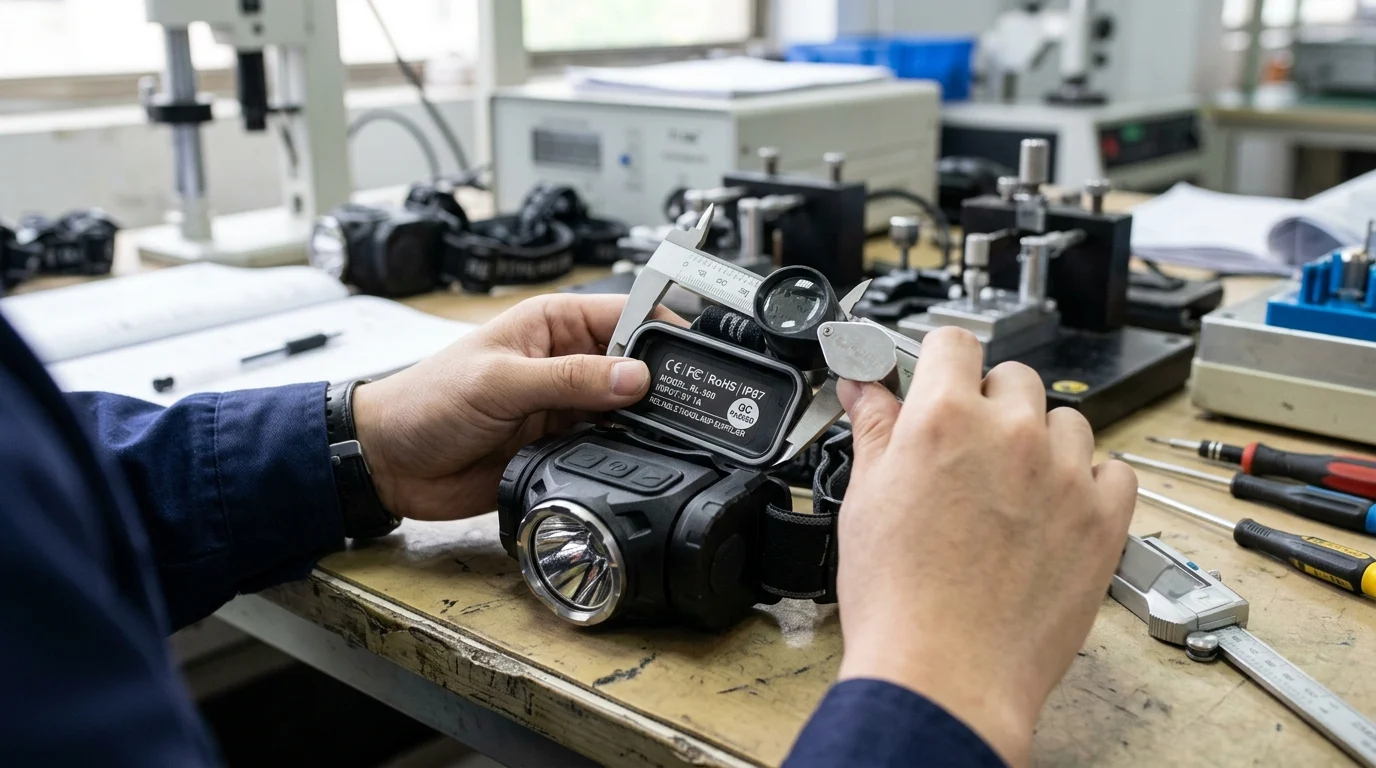
Transitioning from supplier discovery to finalizing a manufacturing contract requires a structured, objective methodology. Procurement teams must deploy a systematic approach to shortlist candidates, validate their claims, and approve the final vendor based on quantifiable data rather than mere intuition.
A step-by-step supplier evaluation process
The evaluation process begins with a detailed Request for Information (RFI) designed to screen out trading companies and verify actual manufacturing capabilities. Once a shortlist of 3 to 5 direct factories is established, buyers issue a Request for Quotation (RFQ) alongside a demand for physical sample units. Physical sample testing is mandatory to evaluate build quality, plastic injection tolerances, strap elasticity, and actual versus claimed lumen output.
Following successful sample validation, procurement teams should execute a trial order before committing to annual volumes. A standard trial order of 500 to 1,000 units serves to stress-test the supplier’s production consistency, their communication protocols during the manufacturing window, and their strict adherence to the agreed-upon 30-day lead time. This phased approach minimizes financial exposure while verifying the supplier’s operational reliability.
Final decision criteria for technical fit and landed cost
The final approval of a supplier hinges on a holistic assessment of technical fit and Total Landed Cost (TLC). TLC calculations must incorporate not only the EXW (Ex Works) or FOB (Free on Board) unit price, but also freight forwarding fees, customs duties, insurance, and the projected cost of quality—such as the monetary impact of the negotiated defect rate. A supplier offering a unit price $0.50 cheaper is not a viable choice if their historical defect rate adds $1.00 per unit in warranty processing.
Furthermore, favorable payment terms heavily influence the final decision and reflect the supplier’s financial health. While the manufacturing industry standard dictates a 30% deposit with the 70% balance due before shipment (T/T), a highly reliable headlamp supplier seeking a strategic, long-term partnership may eventually offer balance payments against the Bill of Lading (B/L) or even Net 30 terms after a proven track record. Ultimately, the chosen supplier must align perfectly with the buyer’s margin requirements, quality standards, and growth trajectory.
Key Takeaways
- Wholesale sourcing and supply-chain implications for Reliable Headlamp Supplier
- Specifications, compliance, and commercial terms buyers should validate
- Actionable recommendations for distributors and procurement teams
Frequently Asked Questions
What technical specs should B2B buyers verify first?
Check lumen output, battery type and capacity, IP rating, LED brand, and charge port. For professional models, prioritize 18650/21700 cells, USB-C, and IP67 or higher.
Why is battery chemistry important when choosing a rechargeable headlamp supplier?
Battery quality affects safety, runtime, and cycle life. Ask for verified lithium-ion cell specs, expected 500+ charge cycles, and protection features against overcharge and overheating.
How can buyers assess a supplier’s quality control?
Request defect-rate data, AQL standards, inline testing records, and sample inspection results. Reliable suppliers often keep defects below 0.5% and provide batch traceability.
Which durability standards matter most for industrial headlamps?
Focus on IP67 or IP68 for water and dust protection, plus 2–3 meter drop resistance. These standards better suit construction, maintenance, and demanding outdoor use.
How does a reliable headlamp supplier reduce procurement risk?
They improve delivery consistency, maintain stable product quality, and communicate clearly on lead times and materials. This helps prevent stockouts, warranty claims, and costly recalls.
Lily
Technical Director
With 15+ years in outdoor lighting, specializing in LED headlamp & flashlight R&D, thermal management and product innovation.
Thermal Management
Post time: Apr-22-2026


