 fannie@nbtorch.com
 +0086-0574-28909873



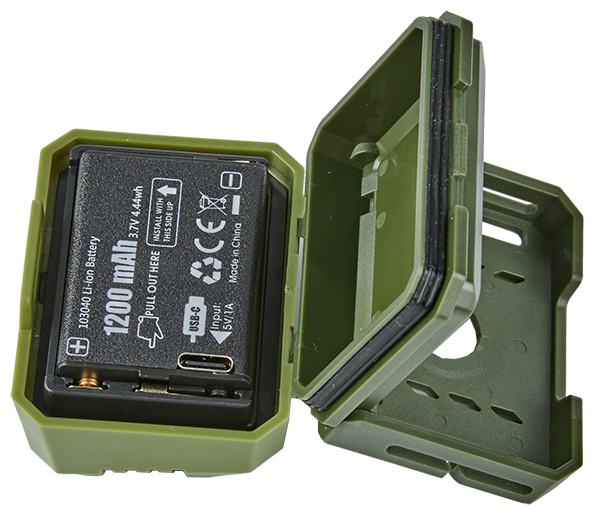
For decades, traditional disposable battery-powered headlamps have been the go-to lighting tool for outdoor enthusiasts, campers, hikers, hunters, and industrial workers. They were simple to use, easy to source, and seemed like a reliable backup for nighttime adventures and low-light work scenarios. However, as outdoor gear technology evolves and user demands shift toward higher efficiency, better durability, and zero anxiety usage, a new generation of hybrid lighting equipment is rapidly dominating the market: the 2-in-1 dry and lithium dual-power headlamp. More outdoor lovers and professional users are ditching single-function traditional battery headlamps, and hybrid dry-lithium headlamps are gradually becoming the mainstream choice for modern outdoor lighting. This article will deeply analyze the core reasons why 2-in-1 dry & lithium headlamps are replacing traditional battery-powered outdoor lights, covering performance advantages, usage flexibility, cost-effectiveness, environmental friendliness, and extreme scenario adaptability.
1. The Core Limitations of Traditional Single Battery-powered Headlamps
To understand why hybrid dual-power headlamps are rising, we first need to clarify the inherent flaws of traditional disposable battery headlamps that have long plagued users. Traditional outdoor headlamps rely entirely on dry batteries such as AAA or AA alkaline batteries for power supply, with a single power solution and many unavoidable drawbacks in actual outdoor use.
First of all, traditional dry batteries have poor performance stability and severe power attenuation problems. Alkaline batteries feature a declining voltage discharge curve. As the power is consumed, the output voltage drops continuously, causing the headlamp’s brightness to dim gradually. In outdoor scenarios, this means your headlamp will not maintain stable illumination throughout the hike or camping trip. It starts bright but grows dimmer hour by hour, forcing users to constantly perceive insufficient light and affecting observation and safety in complex terrain. In contrast, lithium batteries maintain a nearly flat voltage output during the entire discharge cycle, keeping the headlamp’s brightness consistent until the power is nearly exhausted.
Secondly, traditional disposable batteries have extremely poor adaptability to extreme temperatures, which is a fatal defect for outdoor activities. In low-temperature environments such as winter mountain hiking, alpine camping, and late-night wilderness exploration, the liquid electrolyte inside alkaline batteries will slow down sharply, internal resistance surges, and power output drops rapidly. Many traditional headlamps will dim significantly or even shut down directly after only a few minutes of use in sub-zero temperatures, bringing huge safety risks to outdoor users. Moreover, high-temperature environments such as summer desert hiking and high-temperature field operations will also accelerate the aging and power loss of dry batteries, further reducing equipment reliability.
In addition, traditional single battery-powered headlamps cause serious battery anxiety and resource waste. Outdoor activities are often unpredictable. A multi-day hike, sudden night delay, or unexpected route extension can easily exhaust pre-prepared dry batteries. Once the power runs out, there is no alternative power solution, leaving users trapped in dark wilderness with no lighting support. To avoid this risk, users have to carry a large number of spare dry batteries every time they go out, which increases backpack weight and outdoor burden and seriously affects travel portability.
Finally, traditional disposable battery headlamps have high long-term use costs and poor environmental benefits. For frequent outdoor lovers, field workers, and night maintenance personnel, replacing dry batteries frequently every month forms a long-term recurring expenditure. Discarded waste batteries also cause environmental pollution. Most disposable batteries contain toxic substances that are difficult to degrade, and random abandonment will damage soil and water resources, which is incompatible with the current mainstream environmentally friendly outdoor concept.
2. Core Advantages of 2-in-1 Dry & Lithium Hybrid Headlamps
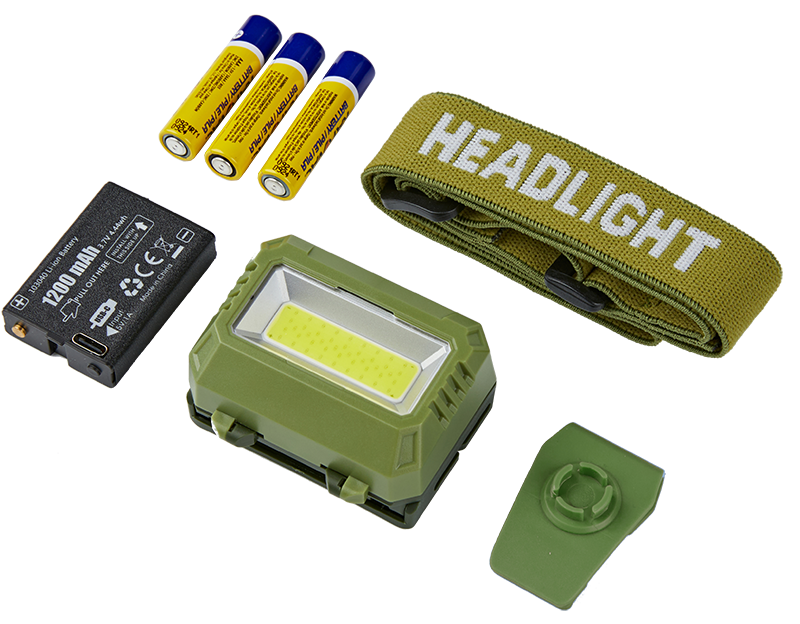
The 2-in-1 dry and lithium dual-power headlamp perfectly solves all the pain points of traditional single battery headlamps through a flexible dual-power design. It supports both rechargeable lithium batteries and ordinary disposable dry batteries, integrating the high performance of lithium power and the emergency backup advantage of dry batteries, becoming a truly all-scenario outdoor lighting solution.
2.1 Dual-power Switching, Zero Battery Anxiety
The biggest highlight of the dry-lithium two-in-one headlamp is its dual-mode power switching function, which completely eliminates outdoor battery anxiety. In daily short-distance hiking, urban night running, family camping, and daily maintenance scenarios, users can use built-in rechargeable lithium batteries. Lithium batteries have high energy density, large capacity, and long single-use battery life, which can meet the lighting needs of most daily outdoor activities. After use, they can be charged repeatedly via USB-C interface, which is convenient and fast without frequent battery replacement.
In long-distance cross-country hiking, multi-day wilderness exploration, field rescue, and remote construction scenarios where power sources are scarce, the dry battery backup mode takes effect. When the lithium battery power is exhausted and there is no charging condition, users can instantly install ordinary AAA/AA dry batteries to continue using the headlamp. This seamless switching design ensures that the headlamp will never shut down unexpectedly in any scenario, providing continuous lighting guarantee for outdoor safety. This fail-safe power backup mechanism is the core reason why professional outdoor teams and senior enthusiasts are abandoning traditional single-power headlamps.
2.2 Stable Performance and Strong Extreme Environment Adaptability
Lithium battery power gives the hybrid headlamp excellent performance stability and extreme weather resistance, which is far superior to traditional dry battery headlamps. Different from the unstable voltage of alkaline batteries, lithium batteries maintain a constant voltage output during the discharge process, ensuring that the headlamp’s brightness, light spot focus, and lighting range remain stable from full power to low power. Whether it is high-brightness strong light mode for long-distance exploration or low-brightness starlight mode for night walking, the light output is uniform and stable, avoiding visual fatigue and safety hazards caused by dimming lights.
In terms of temperature resistance, lithium batteries have natural technical advantages. They adopt a stable internal chemical structure, which can work normally in low-temperature environments of minus 20 degrees Celsius and high-temperature environments of 60 degrees Celsius. There will be no sudden power failure or sharp dimming in winter snow mountain activities and summer high-temperature field operations. For outdoor users who often carry out cross-season and cross-regional activities, this extreme environmental adaptability is an irreplaceable advantage of traditional dry battery headlamps.
2.3 Lightweight and Portable, Optimized Outdoor Burden
Modern outdoor sports pursue lightweight equipment, and the dry-lithium two-in-one headlamp perfectly fits this trend. Traditional headlamp users need to carry a large number of spare dry batteries for long-distance outdoor activities, which greatly increases the weight of backpacks. The hybrid headlamp mainly relies on rechargeable lithium batteries for daily use, with no need to carry a large number of spare batteries. Only a small number of dry batteries can be reserved as emergency backups, which greatly reduces outdoor load.
Moreover, the integrated design of dual-power compatibility makes the headlamp body more compact and lightweight. Most mainstream dry-lithium hybrid headlamps on the market abandon the bulky structure of traditional headlamps, with streamlined body design and comfortable adjustable headbands. They will not cause head compression and stuffiness even after long-term wearing, solving the problem of poor wearing comfort of traditional headlamps.
3. Long-term Cost and Environmental Benefits Are More in Line with Modern Needs
From the perspective of long-term use cost and environmental protection, 2-in-1 dry & lithium headlamps have completely crushed traditional disposable battery headlamps, becoming the preferred choice for more rational outdoor users.
In terms of cost saving, traditional dry battery headlamps have almost no one-time investment but continuous high recurring costs. Frequent replacement of alkaline batteries will accumulate a large amount of expenditure in one year. In contrast, although the initial purchase cost of hybrid headlamps is slightly higher, the built-in lithium battery can be recycled hundreds of times. The USB fast charging mode eliminates the need for frequent battery purchases, and the long-term use cost is only 1/5 or even lower than that of traditional headlamps. For outdoor enthusiasts, construction workers, and family daily use, its cost performance is extremely prominent.
In terms of environmental protection, hybrid dual-power headlamps greatly reduce waste battery emissions. A single rechargeable lithium battery can replace hundreds of disposable dry batteries, reducing solid waste pollution and toxic substance emissions. At the same time, modern lithium batteries adopt environmentally friendly formulas, with low heavy metal content and higher recycling rate, which conforms to the green outdoor and sustainable development concept advocated globally. More and more outdoor bloggers, professional teams and outdoor organizations are actively promoting hybrid headlamps to replace traditional disposable battery models, leading the new trend of environmentally friendly outdoor equipment.
4. All-scenario Adaptability, Covering Daily and Professional Use
Another key reason why dry-lithium two-in-one headlamps replace traditional headlamps is their ultra-wide scenario adaptability, which can meet the diversified lighting needs of beginners and professional users.
In daily civilian scenarios such as family camping, night running, fishing, and daily household maintenance, hybrid headlamps rely on rechargeable lithium batteries to achieve low-cost and convenient use, with stable light and adjustable brightness, meeting daily leisure needs. In professional scenarios such as wild hiking, alpine exploration, cave exploration, field rescue, road construction, and night engineering maintenance, the dual-power backup function plays a key role. When the lithium battery is exhausted in the wild without charging conditions, dry battery emergency power supply ensures continuous operation, avoiding work interruption and safety accidents caused by power failure.
Traditional single battery headlamps can only rely on disposable batteries, which cannot meet the long-term and high-intensity professional use needs. Pure lithium rechargeable headlamps on the market also have obvious defects—once there is no charging equipment in the wild, they will completely fail. The dry-lithium two-in-one design just makes up for the shortcomings of single-power headlamps, realizing the perfect integration of daily economy and professional reliability.
5. Market Trend: Hybrid Headlamps Become the New Industry Standard
With the upgrading of outdoor equipment consumption, users’ demand for headlamps has changed from “basic lighting” to “stable, durable, low-cost and zero-risk”. Traditional single dry battery headlamps with single function, unstable performance and high comprehensive cost are gradually eliminated by the market. More and more mainstream outdoor lighting brands have stopped updating traditional single battery headlamp products and fully laid out dry-lithium dual-power hybrid headlamp series.
Whether it is entry-level civilian headlamps or high-end professional outdoor headlamps, dual-power dry and lithium compatibility has become the basic standard of new products. User feedback and market data also prove that the repurchase rate and praise rate of hybrid headlamps are far higher than those of traditional models. Outdoor enthusiasts have clearly realized that a qualified modern outdoor headlamp does not only need bright light, but also needs stable performance, flexible power supply, zero anxiety use and long-term cost savings.
Conclusion
The replacement of traditional single battery-powered outdoor headlamps by 2-in-1 dry & lithium hybrid headlamps is an inevitable trend of outdoor gear iteration and technological upgrading. Traditional dry battery headlamps have inherent defects such as unstable performance, poor extreme weather adaptability, high long-term cost, serious waste and easy battery anxiety. In contrast, dry-lithium two-in-one headlamps integrate the advantages of lithium battery high performance and dry battery emergency backup, with flexible dual-power switching, stable and constant brightness, strong extreme environment resistance, low long-term use cost, light and portable body, and all-scenario adaptability.
For every outdoor enthusiast, field worker and user who pursues high-quality lighting experience, choosing a 2-in-1 dry & lithium headlamp is not only an upgrade of lighting equipment, but also a rational choice to improve outdoor safety, reduce usage costs and practice green outdoor concepts. In the future, with the further development of battery technology and lighting equipment optimization, dry-lithium hybrid dual-power headlamps will completely become the mainstream of the outdoor lighting market, and traditional single battery headlamps will gradually withdraw from the stage of mainstream outdoor equipment.
Post time: Sep-17-2026


