 fannie@nbtorch.com
 +0086-0574-28909873



TL;DR: European outdoor gear retailers are expanding their rechargeable headlamp SKUs ahead of the summer 2026 camping and trekking season. The shift from battery-powered to rechargeable formats is accelerating under EU battery regulation changes, and buyer attention is focused on three specifications: lumen output consistency, beam distance at max output, and runtime at medium brightness — not just the peak lumen number printed on the box. This article covers the technical specifications that matter for retail assortment planning, the regulatory drivers behind the rechargeable transition, what a CE/ROHS-certified Chinese factory offers private label programs, and a practical buying checklist for retail buyers. Founded in 2014, Ningbo Mengting Outdoor Products Co., Ltd. (MT Outdoor) develops and manufactures rechargeable headlamps, camping lights, and outdoor lighting equipment for retail and branded programs worldwide.
Summer 2026 Assortment Planning: Why European Retailers Are Increasing Headlamp SKU Count
As Technical Director at MT Outdoor, I review retail assortment plans from European outdoor retailers every spring. The pattern for summer 2026 is clear: headlamp categories are expanding. Where a typical outdoor retailer may have carried 6-8 headlamp SKUs in prior seasons, the 2026 plans I am reviewing show 10-14 SKUs, with rechargeable models occupying 70-80% of the shelf space.
Several converging trends are driving this expansion:
- Camping participation growth: Post-pandemic outdoor recreation participation in Europe remains elevated — the European Outdoor Group reports consistent year-over-year growth in camping and trekking activity since 2021. More campers means more headlamp buyers, and retailers are responding by broadening their price-spectrum coverage from entry-level (€10-€20) to premium (€60-€100).
- Segment specialization: European retailers are separating their headlamp assortment into distinct use-case categories: trail running (ultra-light, <80g), trekking/hiking (balanced output, 100-200g), camping (long battery life, flood beam), and professional/emergency (high lumen, rugged construction). Each category requires different technical specifications, and retailers find that a single “universal” headlamp fails to satisfy buyers in any category at the point of purchase.
- Accessory bundling: Retailers are creating more headlamp + accessory bundles (headlamp + spare battery + diffuser + helmet clip) at premium price points. These bundles increase average order value by 25-40% compared to standalone headlamp sales, and rechargeable headlamps are the preferred base product for bundling because the rechargeable battery adds perceived value.
For retail buyers planning their summer 2026 assortment, the key portfolio decision is not whether to stock rechargeable headlamps — it is which performance tier to allocate shelf space to. A recommended tier structure based on what we supply to European retailers at MT Outdoor: entry-level (200-400 lumens, USB charging, IPX4, €15-€25 retail), mid-range (500-800 lumens, USB-C charging, IPX5, €30-€50 retail), and performance (1,000+ lumens, USB-C charging, IPX6, €55-€80 retail). Retailers who cover all three tiers capture both the value-oriented buyer and the enthusiast willing to pay for performance.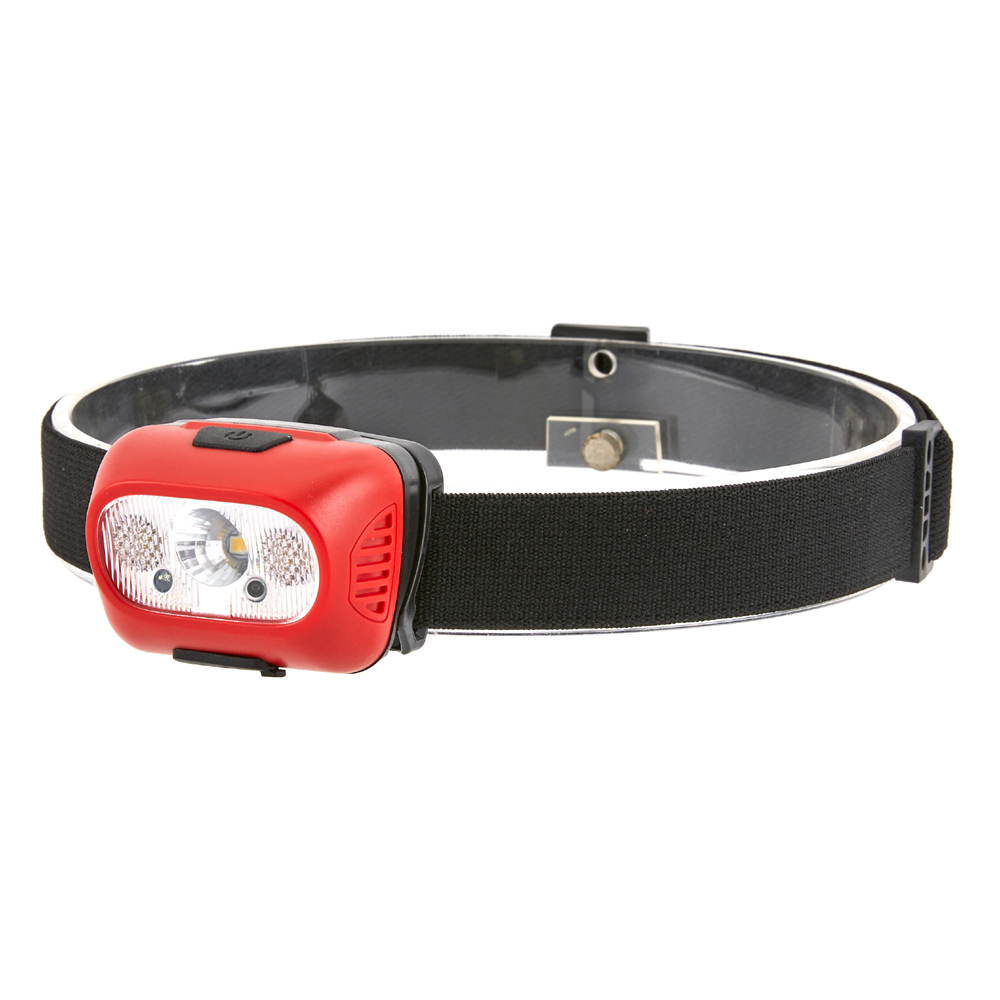
Lumen, Beam Distance, and Runtime: The Three Specs That Drive Outdoor Retail Buying Decisions
The most common mistake I see in retail buying specifications is the over-reliance on peak lumen output as the primary performance metric. A headlamp producing 1,000 peak lumens but holding that output for only 60 seconds before thermal throttling down to 400 lumens is functionally inferior to a headlamp producing 600 stable lumens for the battery’s duration. European outdoor retailers I work with have refined their buying specifications to prioritize three metrics over peak lumen claims:
1. Sustained lumen output (after 30 minutes of continuous operation at max setting): This is the real measure of headlamp performance. Our rechargeable headlamp models at MT Outdoor are designed to maintain at least 80% of peak lumen output after 30 minutes of steady operation, achieved through our thermal management system — an aluminum heat sink bonded to the LED driver that conducts heat away from the LED junction. Without thermal management, the LED junction temperature rises above 85°C within 2-3 minutes and the driver automatically reduces current to protect the LED. Retail buyers should request a lumen depreciation curve from the manufacturer, not just the peak lumen spec. We provide this data sheet for every headlamp model we supply to retailers, showing lumen output at 1-minute, 5-minute, 30-minute, and 60-minute intervals.
2. Beam distance measured at 0.25 lux (ANSI/NEMA FL-1 standard): European trekking and trail running buyers specifically care about beam distance at a useful illumination level — the distance at which the beam still provides 0.25 lux, equivalent to a full moon on a clear night. For trekking headlamps, a beam distance of 80-100 meters at 0.25 lux is the practical minimum for trail navigation at a walking pace. Trail running headlamps require 120-150 meters to allow reaction time at running speeds. The beam distance is determined by the LED’s effective candela rating and the reflector geometry — a deeper reflector produces a tighter, longer beam at the cost of beam width.
3. Runtime at medium brightness setting (not max): The runtime spec that most affects real-world user satisfaction is runtime at 150-250 lumens — the brightness level that covers 80% of camping and trekking use cases (camp setup, cooking, reading, tent navigation). Our mid-range rechargeable headlamp models achieve 8-12 hours at 200 lumens on a full charge, with a USB-C recharge cycle of 2.5-3 hours. This runtime profile means a user can go three to four evening camp sessions on a single charge, which is the expectation threshold European outdoor consumers have for rechargeable products. A headlamp that requires daily charging will generate negative reviews, regardless of its peak lumen specification.
I advise retail buyers to include all three specifications in their RFQ document and to request third-party test verification per the ANSI/NEMA FL-1 standard. Our MT Outdoor rechargeable headlamp product line includes FL-1 test reports as standard documentation for retail buyers.
Rechargeable vs. Battery-Powered: The European Retail Shift Driven by Battery Regulations
The transition from battery-powered to rechargeable headlamps in the European market is not driven primarily by consumer preference — it is driven by regulation. The EU Battery Regulation (2023/1542), which entered into force in August 2023 and is being phased in through 2027, introduces requirements that directly affect how disposable batteries are sold and disposed of in the EU market.
For outdoor gear retailers, the key regulatory implications are:
- Battery collection targets: The regulation mandates increasing collection rates for portable batteries — 63% by 2027 and 73% by 2030. Retailers selling battery-powered headlamps face expanding compliance obligations for end-of-life battery take-back and reporting. Rechargeable headlamps with integrated lithium-ion batteries are subject to different collection and recycling requirements under the regulation, but the practical compliance burden is lower because the battery is embedded in the product and managed through WEEE (Waste Electrical and Electronic Equipment) channels that most retailers already have established.
- Mandatory recycled content: From 2031, portable batteries must contain minimum recycled content levels: 16% cobalt, 85% lead, 6% lithium, 6% nickel. This requirement applies to replaceable battery cells, not to embedded rechargeable battery packs. While 2031 seems distant, the labeling and tracing infrastructure required to demonstrate compliance must be built now, and rechargeable headlamp programs avoid a significant portion of this compliance complexity.
- Replaceability requirements: By 2027, portable batteries must be readily removable and replaceable by the user. While rechargeable headlamp batteries are typically embedded (soldered or connected via JST connector), the regulation provides exemptions for devices where battery replacement would compromise product safety or performance — a classification that outdoor lighting equipment with water resistance ratings above IPX4 can reasonably claim.
These regulatory drivers create a competitive advantage for rechargeable headlamps at the retail buying desk. The compliance cost for battery-powered headlamp SKUs is rising, while rechargeable SKUs — especially those with USB-C connectivity (which will be required for all portable electronic devices sold in the EU by 2026 under the Radio Equipment Directive) — face a clearer regulatory path. Several major European outdoor retailers I work with have set internal targets to reduce battery-powered headlamp SKUs to below 20% of their assortment by the 2027 season.
For suppliers, the regulatory shift requires attention to battery cell quality and documentation. At MT Outdoor, we use A-grade lithium-ion cells (18650 or 14500 form factors depending on the model) from ISO-certified battery manufacturers, and we maintain IATA-compliant UN38.3 battery test reports for customs clearance. The battery documentation package — UN38.3 test summary, MSDS, and CE declaration of conformity — should be part of the standard export documentation that a qualified headlamp manufacturer provides automatically, not on special request.
How a CE/ROHS-Certified Chinese Factory Supports Retail Private Label Headlamp Programs
European outdoor retailers increasingly launch private label or exclusive-brand headlamp programs to build margin and brand differentiation. The support required from the OEM manufacturer goes beyond simply printing the retailer’s logo on an existing product.
Design customization: At MT Outdoor, we structure private label programs around three customization tiers. Tier 1 (cosmetic): custom color, logo printing on headband and housing, custom packaging — lead time 15-20 days. Tier 2 (functional): custom LED selection (different CCT — correlated color temperature — from 4,000K warm to 6,500K cool), modified beam pattern via reflector changes, custom mode sequence programming — lead time 30-40 days. Tier 3 (full custom): new housing design, custom PCB layout, unique mounting system — lead time 60-90 days with tooling investment of €3,000-€8,000. Most European retail private label programs operate at Tier 1 or Tier 2, allowing differentiated products at incremental costs.
Certification bundling: Our CE and ROHS certifications cover the base product design. For private label programs, we extend the certification coverage to the customized product variation. The CE declaration covers all product variants produced on the same production line with the same core components, so a color change or custom logo does not trigger recertification. This simplifies the retailer’s market access compliance significantly compared to sourcing directly from a factory that does not maintain ongoing certification.
Factory quality controls: Our production line integrates several quality checkpoints specific to headlamp manufacturing: LED flux binning (sorting LEDs by actual lumen output at rated current, typically into 3-5 flux bins), water resistance testing (random samples from each production batch immersed at the rated IPX depth), drop testing (1-meter drop onto concrete, 3 orientations), and burn-in testing (2-hour continuous operation at max output on 5% of each production lot). These quality controls are captured in the inspection report pack that accompanies each retail shipment.
Packaging and retail readiness: European retailers increasingly require retail-ready packaging — hang tags with feature bullet points, QR codes linking to product videos, and FSC-certified cardboard for sustainability reporting. We offer turnkey packaging design services that align with each retailer’s packaging guidelines, from concept to production. The packaging development timeline (10-15 days) runs in parallel with the product customization timeline.
Related: Browse the full outdoor lighting product range and factory capability profile at MT Outdoor.
Weather Resistance and Drop Testing: What Retailers Should Verify Before Stocking Headlamps
The quality differentiation between outdoor-grade headlamps and general-purpose headlamps reveals itself in weather and impact resistance. European retailers marking their headlamps as suitable for camping and trekking need to verify these two categories specifically.
Weather resistance (IP rating): The IP (Ingress Protection) rating determines the headlamp’s resistance to water and dust ingress. For outdoor retail headlamps, the minimum should be IPX4 (splash-resistant from any direction) for entry-level products and IPX5 (water jet-resistant) for mid-range and above. The IP testing standard (IEC 60529) requires the product to function normally after the specified water exposure, not just to survive it without visible damage — a distinction some manufacturers blur. At MT Outdoor, we test every production batch sample at the rated IP level and retain the test records. If a retailer requests IPX6 (powerful water jet-resistant, suitable for heavy rain scenarios), we offer it as a specification upgrade on selected models, with additional sealing gaskets and silicone-coated charging port covers.
Drop testing (ANSI/NEMA FL-1 impact rating): The FL-1 impact rating uses a 2-meter drop onto a concrete surface as the reference test. Headlamps rated at 2-meter impact resistance or higher are certified for trekking and trail running use. The drop test reveals design weaknesses: headlamps with thin housing walls (below 1.5 mm wall thickness on the battery compartment) or brittle polycarbonate formulations (insufficient impact modifier content in the resin) often fail at the 2-meter height with cracks at the lens bezel or battery door hinge points. Our testing program drops 5 samples from each production lot at 2 meters in six orientations — bezel-down, strap-down, side-impact, and three rotational positions. The acceptance criterion is zero functional damage after all six drops. We provide drop test video evidence for retail buyers during the pre-order qualification, not just a test report number.
Battery compartment ingress prevention: The most common field failure in headlamps used in rainy camping conditions is water ingress through the charging port cover or battery compartment gasket. At MT Outdoor, we use double-sealing on both entry points: a primary O-ring seal on the threaded battery cap and a secondary silicone plug on the USB-C port. The sealing effectiveness is verified through an air leak test (pressurizing the sealed housing to 10 kPa and measuring pressure decay over 30 seconds — acceptable decay is below 1 kPa). This air leak test catches sealing defects that visual inspection would miss, and it is part of our QC checklist for every production run.
Q&A: Buying Checklist for Outdoor Gear Retailers Sourcing Rechargeable Headlamps
Q1: What is the typical MOQ for a private label rechargeable headlamp program?
A: Our standard MOQ is 1,000 units per SKU for Tier 1 customization (color/logo/packaging), and 2,000 units per SKU for Tier 2 functional customization. For rapid launch programs during the 2026 season, we can reduce MOQ to 500 units with a 20% premium on unit pricing, with a commitment to follow-on orders of 2,000+ units within 6 months.
Q2: Are rechargeable headlamps allowed in airline cabin luggage?
A: Yes, per IATA regulations, lithium-ion batteries with watt-hour ratings below 100 Wh are permitted in carry-on luggage. Our rechargeable headlamp models use 18650 batteries rated at 11-14 Wh (2,200-3,000 mAh at 3.7V nominal), well below the IATA threshold. We include an IATA-compliant battery specification label on each product and in the packaging, as several European airport security checkpoints have requested battery specification verification from passengers.
Q3: What is the expected lifecycle of a rechargeable headlamp’s built-in battery?
A: Lithium-ion cells used in our headlamps are rated for 500 charge-discharge cycles to 80% of initial capacity. For a user who charges their headlamp once per week during the outdoor season (approximately 20 weeks per year), the battery should maintain acceptable performance for 3-4 years. After that, the runtime at a given brightness setting will gradually decrease. The 18650 cell in our mid-range models is replaceable — the user can purchase a replacement cell rather than replacing the entire headlamp — a design feature that European retailers increasingly promote as a sustainability selling point.
Q4: Do rechargeable headlamps perform differently in cold weather?
A: Yes — lithium-ion battery capacity decreases at low temperatures. At 0°C, a lithium-ion cell delivers approximately 80% of its rated capacity; at -10°C, around 65%. We test our headlamps at 0°C and -10°C and publish the runtime data alongside the room-temperature specifications. For European retailers selling in Nordic markets or targeting winter campers, we recommend specifying a headlamp model with at least 20% runtime margin on the user’s expected use case, or using a remote battery pack that can be kept warm inside the user’s jacket.
Q5: What are the minimum certification requirements for selling rechargeable headlamps in the EU?
A: CE marking (covering the Low Voltage Directive 2014/35/EU, EMC Directive 2014/30/EU, and RoHS Directive 2011/65/EU) is mandatory. For rechargeable products, the Battery Regulation (2023/1542) registration is becoming essential. Some retailers also request GS (Geprüfte Sicherheit) certification for premium positioning. We recommend requesting a certification matrix from potential suppliers that lists the specific directives and standards each certification covers, so the retailer’s compliance team can map them to the EU market access requirements.
Q6: How do you ensure headlamps don’t turn on during storage or shipment, consuming battery charge?
A: Our headlamp designs include a mechanical disconnect feature — a plastic insulating tab between the battery terminal and the contact that the user removes before first use. This ensures the product ships with a full battery charge. For models with a built-in battery, we program a “shipping mode” in the battery management system that draws less than 5 µA of standby current. The shipping mode is activated at the factory and remains active until the user connects the charging cable for the first time, at which point the normal operating firmware activates.
About the Author:
Post time: Jun-22-2026


